Buying Guide
The best hanging wall clocks should be judged by how clearly they show time, how they are powered, how they mount, and whether their design fits the wall rather than by appearance alone. The products in this comparison range from compact 8-inch displays to large decorative formats exceeding 20 inches in height. Start with the wall location, then match the clock’s display type and power arrangement to how the room is used.
Choose analog or digital first
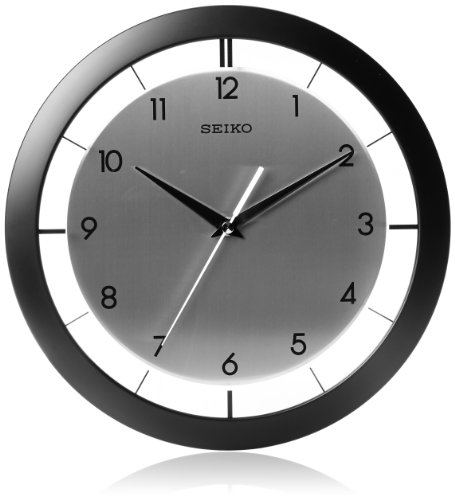
Analog clocks offer a familiar visual layout and can blend into traditional, modern, rustic, or industrial rooms. The SEIKO St James uses a round black case and clear black numerals for a restrained look. The Foxtop adds a bronze retro finish and a glass-covered face, while the DEMACYA uses a printed MDF face for a more artistic effect. These choices are suitable when the clock should function as wall decor as well as a timepiece.
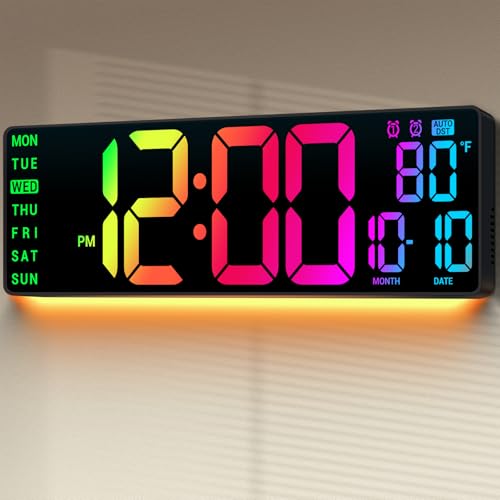
Digital clocks are often easier to scan from farther away because the time is presented in large numerals. The WallarGe atomic model uses an LCD display, while the WallarGe electric model uses an LED display and adds day, date, and temperature information. Digital displays can be especially useful in hallways, classrooms, offices, garages, and bedrooms, but shoppers should check whether the available wall has a convenient outlet. The electric model requires continuous plug-in power, whereas the atomic LCD model uses batteries.
Prioritize readability for the room
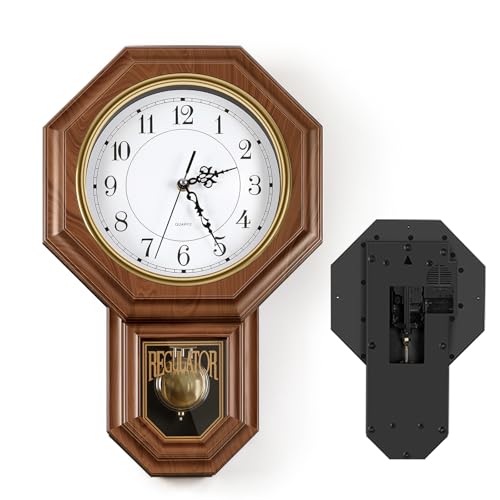
Size is only one part of readability. Numeral contrast, face layout, lens reflections, and display height all matter. The 15-inch CLXEAST provides a large face, but its exposed gears also occupy visual space. The Sunexinlo has a tall 17.7-inch profile with a crisp white dial and bold Roman numerals. Those traits can help on a larger wall or when the clock will be viewed across a room.
For compact areas, an 8-inch clock may be sufficient. The atomic WallarGe uses large bold LCD digits, and the electric WallarGe specifies 2.5-inch time digits on its full-screen display. The DEMACYA’s black hour and minute hands contrast with its artwork, while the Foxtop lists large black numbers. When possible, position an analog clock where glare will not obscure the dial, especially when the design uses a glass cover.
Decide how much silence matters
Many selected models document quiet or non-ticking operation. This is useful in bedrooms, nurseries, offices, study rooms, and other spaces where a recurring tick can be distracting. The Foxtop, YIJIDECOR, WallarGe electric, and DEMACYA all describe silent or non-ticking movement. The SEIKO and La Crosse listings identify quartz or atomic analog operation but provide less detailed wording about sound, so they are better treated as conventional timekeeping choices rather than specifically silent picks.
A pendulum appearance does not automatically mean audible operation. The Sunexinlo listing describes its pendulum clock as silent and non-chiming, while also explaining separate battery locations for the movement and optional functions. The CLXEAST’s moving gears are decorative and operate separately from the clock hands. Buyers who want the quietest setup should read the power and movement details carefully instead of assuming every decorative feature is silent.
Check batteries, cords, and setup
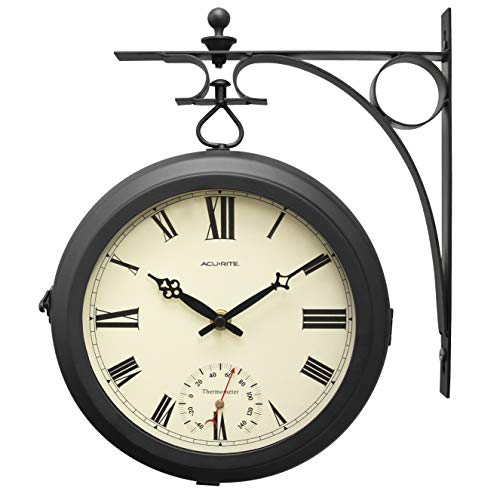
Battery operation makes placement more flexible, but battery requirements vary. The SEIKO uses one AA battery and includes it. The Foxtop, DEMACYA, and many simple analog models require one AA battery that is not included. The AcuRite uses two AA batteries and adds wireless placement, while the atomic WallarGe requires four AA batteries.
Plug-in models avoid frequent primary battery replacement but introduce cord placement considerations. The WallarGe electric model includes an adapter and power cord, and its battery preserves settings during an outage. The other LED models in the source data also require an outlet, so they are most practical where a cord can be routed neatly. Before buying, measure the wall, locate the mounting point, and confirm that the clock’s depth and cable needs work for the intended position.
Match the clock to the wall style
For a simple, versatile appearance, consider the SEIKO, Foxtop, or DEMACYA. The first uses a black case, the second a bronze retro finish, and the third a colorful forest design. Industrial rooms may suit the CLXEAST, whose metal body and exposed aged-gold gears create a more prominent focal point. Traditional rooms can accommodate the Sunexinlo’s imitation-wood pendulum profile.
The AcuRite is a specialized choice for areas where people approach from different directions because its two faces rotate 360 degrees. Its metal frame and thermometer also make it more than a basic round dial. The YIJIDECOR offers a large geometric arrangement with engineered wood, acrylic, and metal accents for contemporary interiors. These design types are documented by the selected products and should be compared with the surrounding furniture, wall color, and available clearance.
Final recommendation
WallarGe 8-Inch Digital Atomic Wall Clock ranks first overall in this specification-based comparison under the published weighted criteria.
The final choice among the best hanging wall clocks depends on the documented features that match your intended use.
The SEIKO 11-Inch St James Wall Clock is the highest-scoring returned product and the first overall specification-based choice. It combines clear numerals, quartz movement, a compact round case, and an included battery without requiring a cord. For the top hanging wall clocks with extra utility, choose the AcuRite when two-sided viewing and temperature information matter, or the La Crosse when radio-controlled time and automatic DST adjustment are priorities.
Choose the Foxtop for a quiet retro look, the WallarGe atomic model for large digital digits in a compact body, and the WallarGe electric model when day, date, temperature, and dimming are more important than cordless placement. The CLXEAST and YIJIDECOR are better suited to statement walls, while the Sunexinlo provides a classic pendulum profile. The DEMACYA offers decorative artwork and desk-or-wall flexibility.
Frequently Asked Questions
What size should I choose for a hanging wall clock?
Choose a size based on viewing distance and available wall space. The selected range includes compact 8-inch models, standard 10- to 12-inch clocks, and larger designs such as the 15-inch CLXEAST and the YIJIDECOR, which measures about 13.8 by 21.3 inches. Larger faces can occupy a feature wall more effectively, but they also need more visual and physical clearance.
Are the best hanging wall clocks battery operated?
Many are, but not all. The SEIKO, Foxtop, DEMACYA, AcuRite, and atomic WallarGe use batteries according to their listings. The WallarGe electric model requires an adapter and power cord for continuous operation. Battery models offer more freedom when no outlet is nearby, while plug-in models may reduce routine primary battery changes.
Which selected clocks are designed to be quiet?
The Foxtop, YIJIDECOR, WallarGe electric, and DEMACYA explicitly describe silent or non-ticking movement. The Sunexinlo also describes silent, non-chiming operation. These claims come from supplied listing information rather than hands-on measurement, so room placement and individual sensitivity should still guide the choice.
What is the difference between atomic and quartz wall clocks?
A quartz clock uses a quartz movement for timekeeping and generally requires manual setting. Atomic models such as the La Crosse and WallarGe atomic clock are described as syncing with the WWVB signal; the La Crosse also lists automatic daylight-saving adjustment. Signal reception and setup conditions can affect how those features work in a particular location.
Which clock is suitable for a wall viewed from multiple directions?
The AcuRite is the clearest fit because it has two faces and a 360-degree spin function. Its design is intended to make the time visible from different angles, including locations such as porches, kitchens, lobbies, and corridors. It also includes a thermometer, giving it additional utility beyond a single-face clock.