Buying Guide
The best heavy-duty colored file folders are not defined by color alone. A useful comparison should start with the folder’s construction, then consider how much paper it can hold, how easily the contents can be identified, and whether it fits the filing equipment already in use. The products above fall mainly into two design types: heavyweight paper folders and polypropylene folders. Both can organize letter-size documents, but their documented features point to different use cases.
Choose paper or polypropylene
Heavyweight paper folders are the traditional choice for file drawers, desktop sorters, file boxes, and hanging-file systems. Pendaflex’s 50-pack and 100-pack models, PANDRI, and Staples all describe paper construction intended for routine filing. Paper can be a sensible choice when the folders will remain indoors and the main priorities are quantity, familiar handling, and compatibility with existing filing equipment. Reinforced or heavyweight stock may provide more structure than ordinary paper, but the listings do not establish that any one folder will resist every type of wear.
Polypropylene folders offer a different set of documented properties. Smead’s SuperTab Poly model is described as waterproof, tear-resistant, acid free, PVC free, and archival quality. Binditek, Dunwell, Better Office Products, Sooez, and KTRIO also describe plastic construction with various combinations of water, tear, stain, scratch, or wear resistance. These features make poly folders worth considering for papers that may encounter spills, frequent handling, or longer storage. They do not eliminate the need to protect documents from extreme conditions, and the comparison does not include hands-on durability testing.
Match capacity to the paperwork
Capacity claims vary considerably, so do not treat every expansion score as interchangeable. The Sooez 36-pack lists three expansion scores and a capacity of about 200 sheets or a 1.06-inch stack. Dunwell lists three expansion scores and up to 150 sheets, while KTRIO lists 0.8-inch expansion and more than 150 pages. Binditek gives a lower stated capacity of up to 80 sheets. Better Office Products documents two expansion depths, 1/2 and 1 inch, rather than a sheet count.
Paper options also expand, but their supplied evidence is less uniform. Pendaflex’s 50-pack and 100-pack descriptions say the bottoms are scored for thick paperwork. Smead’s heavyweight paper folder specifies 3/4-inch expansion, while PANDRI lists up to 120 sheets. If your files contain receipts, forms, or multiple reports, prioritize a product with an explicit capacity or expansion measurement. For thin records, a deep expandable folder may take more space than necessary inside a crowded drawer.
Evaluate tab and label design
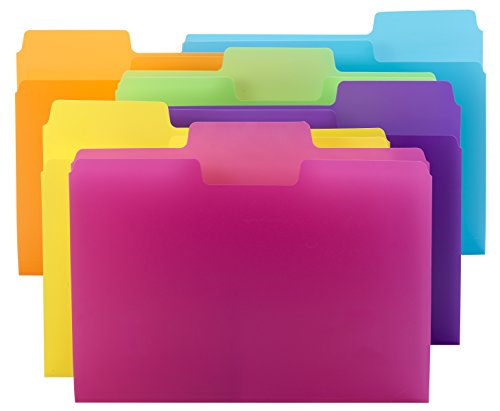
Tabs determine how quickly a filing system can be scanned. The selected products mostly use 1/3-cut tabs, with left, center, and right positions available on several paper models. Staggered positions prevent every label from sitting in the same place, which can make a row easier to read. Smead’s SuperTab Poly model specifically documents oversized tabs, and the listing says they provide 90% more labeling room. That is useful when labels need longer descriptions or larger writing.
Supplied labels can reduce setup time, but label counts differ. Dunwell includes 48 labels for 48 folders, PANDRI includes 120 for 120, and Better Office Products includes 12 for 12. Sooez includes 18 sticky labels with 36 folders. KTRIO emphasizes erasable and reusable tabs, which may be preferable when project names change. Follow each listing’s writing guidance: some plastic tabs are described as writable with pencil or whiteboard marker and caution against permanent markers.
Use color coding deliberately
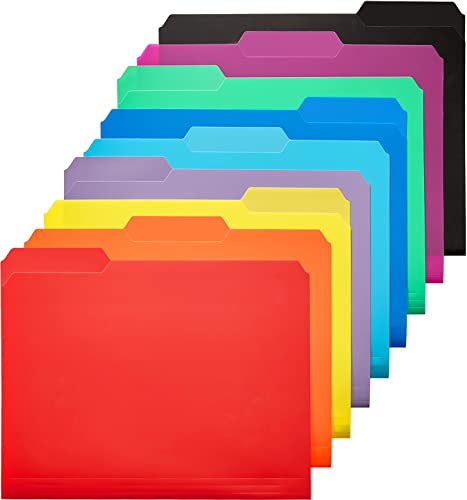
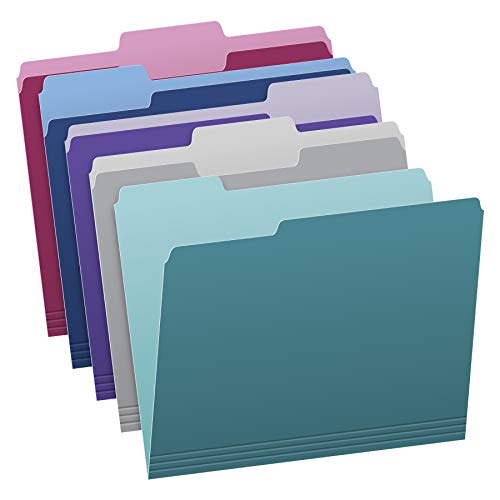
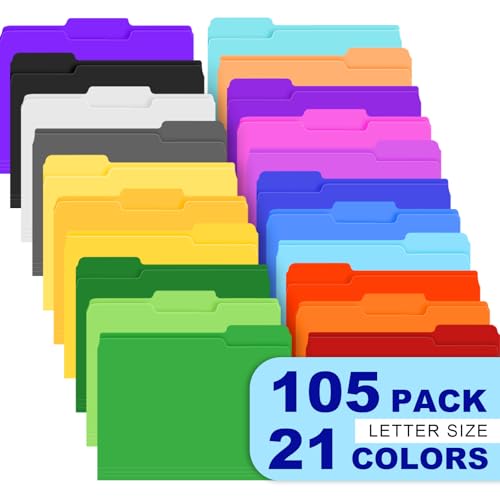
Color coding works best when each color has a defined meaning. Six-color assortments appear in Binditek, Better Office Products, Dunwell, Sooez, PANDRI, and several other sets. KTRIO supplies nine colors in a smaller pack, while the Pendaflex jewel-tone model uses teal, violet, gray, navy, and burgundy. Bright colors may be easier to distinguish quickly, while darker or jewel-tone colors can create a more subdued office system. The evidence supports color variety, but it does not prove that one palette is universally easier to read.
Before buying, decide whether colors will represent departments, subjects, clients, years, or workflow stages. A large pack is useful only if the colors can be assigned consistently. For a small project, nine distinct folders may be more useful than 100 folders in five colors. For a classroom or office archive, a 100- or 120-folder set may reduce the need to mix products later.
Confirm size and filing compatibility
Letter-size compatibility is important because standard documents measure 8.5 by 11 inches. Several products explicitly state letter-size use, including Smead, Pendaflex, Sooez, KTRIO, PANDRI, and Staples. The listings also mention compatibility with file drawers, file boxes, desktop sorters, or hanging folders for selected models. Check the stated exterior dimensions when your storage space is tight, especially for expanded plastic folders.
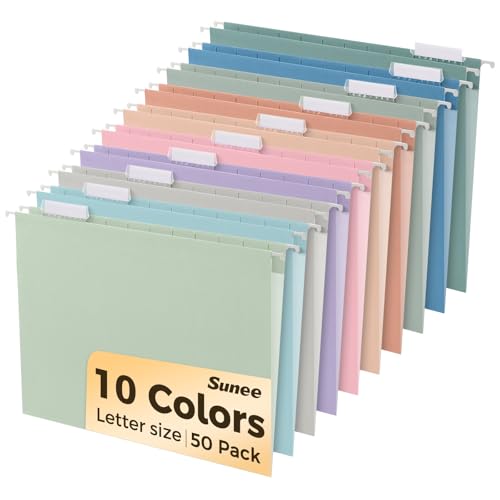
A standard top-tab folder is not the same as a pocket folder, prong folder, or hanging folder. Pocket products are designed to hold loose papers in interior pockets, while prong products add fastening hardware. Hanging folders are designed to suspend from a frame. Those designs can be useful, but they solve different filing problems. This comparison focuses on folders that independently function as top-tab file folders for loose documents.
Consider pack size and replenishment
Pack utility depends on the size of the filing project. A nine- or 12-folder set can be a manageable starting point for household records, a course, or a single office project. Sets of 36, 48, or 54 folders provide more room for color-coded categories without committing to a very large box. The 100- and 120-folder options are better suited to centralized records, classrooms, and ongoing administrative filing.
Do not choose by quantity alone. A larger paper box may be less useful than a smaller plastic set if spills are a realistic concern. Conversely, a small poly set may not be efficient when every department needs multiple folders. Compare folder count, color count, label count, stated capacity, and the type of filing hardware you use.
Final Recommendation
Sooez 36 Pack Plastic File Folders with Labels ranks first overall in this specification-based comparison under the published weighted criteria.
Smead SuperTab Poly Plastic File Folders 10515 is the first overall specification-based choice among these best heavy-duty colored file folders. Its documented waterproof polypropylene, oversized tabs, bright colors, letter-size compatibility, and archival-oriented construction give it the most specification-aligned all-around feature profile. It is particularly compelling when moisture resistance and detailed labeling matter more than maximum pack size.
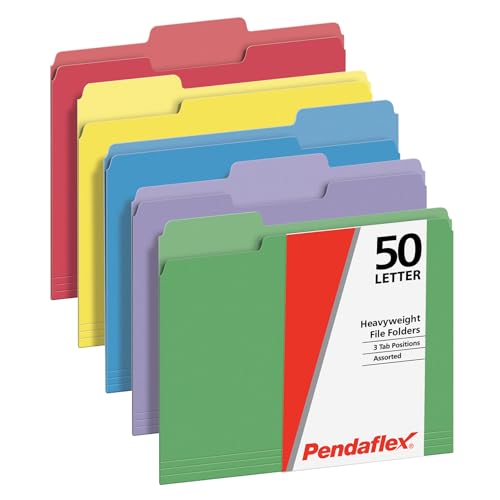
Choose Dunwell if you need a larger plastic set with a stated capacity of up to 150 sheets and one label per folder. Choose Binditek for 54 folders across six colors and a stated capacity of up to 80 sheets. Sooez is the better fit when a 36-pack with roughly 200-sheet expansion is the priority. For traditional paper filing, Pendaflex’s 50-pack offers a balanced assortment, while PANDRI, Pendaflex’s 100-pack, and Staples are better matched to bulk filing.
The top heavy-duty colored file folders therefore divide into clear use cases rather than one universal format. Plastic models are the logical starting point for moisture and tear resistance, while paper models remain practical for large indoor filing systems. Confirm the capacity, label method, color scheme, and storage dimensions before ordering.
Frequently Asked Questions
Are plastic or paper folders better for heavy-duty filing?
The answer depends on the environment and filing task. The plastic products selected here document properties such as water resistance, tear resistance, stain resistance, or polypropylene construction. The paper products document heavyweight or reinforced stock and are suited to routine indoor filing. Plastic is the better specification match when moisture exposure is a concern; paper may be sufficient for dry file drawers and high-volume storage.
What does a 1/3-cut tab mean?
A 1/3-cut tab covers roughly one-third of the folder’s top edge. Sets with left, center, and right tab positions can be staggered so neighboring labels remain visible. The exact labeling area varies. Smead’s SuperTab Poly model documents an oversized tab, while several other products simply identify their tabs as 1/3-cut.
How much paper can an expandable folder hold?
Capacity differs by product and should be checked in the listing. Sooez states about 200 sheets, Dunwell states up to 150 sheets, KTRIO states more than 150 pages, Binditek states up to 80 sheets, and PANDRI states up to 120 sheets. These are supplied product claims, not independent measurements, and actual capacity may depend on paper thickness and how the folder is stored.
Are the best heavy-duty colored file folders suitable for hanging files?
Some selected models explicitly say they fit hanging file folders, including Pendaflex’s paper folders and Sooez’s 36-pack. That means they can be placed inside a hanging-folder system, not that they replace hanging folders. Check exterior dimensions and the design of your file frame before filling folders heavily.
How should I use multiple folder colors?
Assign each color one consistent category, such as department, year, project status, or document type. Use labels as the primary identifier and color as a quick visual cue. If categories may change, erasable tabs such as those documented by KTRIO can be useful. If every folder needs its own label, compare label quantities carefully because some sets include labels for only part of the pack.