Buying Guide
Choosing among the best heavy-duty die grinders starts with matching the tool to the available power source and the type of access required. The products here are not hands-on test winners; they are ranked from supplied specifications and listed features. That makes the comparison useful for narrowing options, but it also means a buyer should confirm the current package contents, accessory requirements, and operating instructions before ordering.
Choose the power source first
Electric models are convenient when an outlet is nearby. The DEWALT DWE4887 uses AC/DC power, which the listing says can work from welding machines and generators as well as conventional compatible power sources. That can be useful in fabrication environments. The VEVOR, SENCAN, and other corded options avoid battery charging, but their cords can restrict movement around a vehicle, frame, or large workpiece.
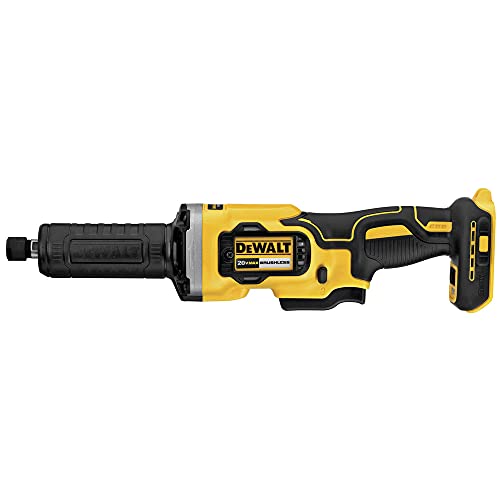
Cordless grinders are more mobile. The DEWALT DCG426B uses the DEWALT 20V MAX platform and is listed as a tool-only product, so it makes the most sense for someone who already has compatible batteries and a charger. The GOTUU model is also designed for DEWALT 20V MAX batteries. Its three speed settings and safety paddle switch provide a different cordless option, but the battery-platform limitation remains important.
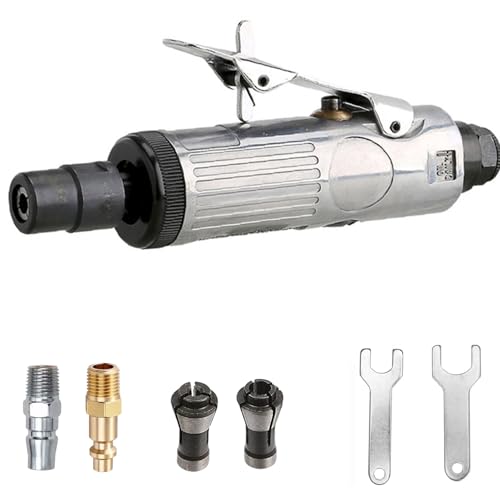
Pneumatic grinders require a compressor, hose, and suitable air fittings. They can be a good fit for a shop already equipped for air tools. The Chicago Pneumatic CP872 lists 20 CFM air consumption at load, while the CP7405 lists a 90 PSI operating requirement. These details matter more than a general claim that a tool is heavy duty: the compressor must be able to support the intended workload.
Compare speed with control
A high maximum RPM can help with finishing, polishing, and smaller abrasives, but maximum speed is not the only selection factor. The SENCAN corded model lists six speeds reaching 33,000 RPM, and the VEVOR provides six settings with a stated range reaching 30,000 RPM. These tools offer a broad adjustment range for users working across several materials or accessory types.
The DEWALT DCG426B uses a variable-speed trigger, which can provide more immediate control than a small set of preset positions. The AIRCAT 6260 lists a feather trigger, and the CP7405 lists a lock-off throttle. On pneumatic tools, speed control also depends on the air supply and regulator arrangement. Use the accessory maker’s speed limits and the grinder’s safety instructions rather than assuming the highest setting is suitable for every wheel, burr, or polishing attachment.
Match the configuration to access
Straight grinders are the most common shape in this selection. They place the collet directly ahead of the motor and are suited to general grinding, weld cleanup, polishing, deburring, and related work. The CP872, CP7405, AIRCAT 6260, VEVOR, and SENCAN models document this straight format.
A right-angle design can be more useful when the work surface is confined or approached from the side. The Ingersoll Rand 301B is specifically listed as a compact right-angle grinder for tight or hard-to-reach spaces. Its configuration is the clearest reason to choose it over a faster straight model. Before selecting any angle tool, consider whether its head can physically reach the target without interfering with the surrounding material.
Collet size is another practical filter. Most selected products use a 1/4-inch collet, which suits many common die-grinder accessories. The VEVOR listing includes both 1/4- and 1/8-inch collets, while the Chicago Pneumatic CP9104Q candidate was not selected because its 1/8-inch pencil format is oriented more toward intricate precision work than this heavy-duty comparison. Always verify that the collet matches the shank size of the accessories you intend to use.
Consider handling and fatigue factors
Weight, grip shape, throttle placement, and tool length affect how easy a grinder may be to position. The CP7405 lists a 1.1-pound weight and compact dimensions, and the 301B lists the current price. Those designs may be easier to maneuver in confined work, although the lighter specification does not by itself establish superior performance.
The DEWALT DCG426B offers multiple grasping options and a dual-position rocker switch. The Ingersoll Rand 5208MAX lists an enhanced ergonomic grip and low-profile lever throttle. The VEVOR and SENCAN electric models describe soft or rubberized grips. These features are relevant when a task involves repeated repositioning, but gloves, work angle, accessory balance, and air-hose or cord routing also affect real-world handling.
Look for maintenance and protection details
Heavy-duty use places emphasis on construction and service features. The CP7405 lists a robust aluminum alloy body, and the Ingersoll Rand 301B lists rugged aluminum housing and precision ball-bearing construction. The AIRCAT 6260 documents a quiet-tuned exhaust system, while the CP872 includes a safety throttle lever designed to prevent accidental start-ups.
For electric tools, cooling and brush access can be useful specification points. VEVOR lists a convection-style ventilation system, a dust-proof body, external carbon brushes, and a cooling structure. SENCAN lists double precision bearings, a head cooling vent structure, and a shaft-offset specification. These descriptions indicate design intentions, not independently verified endurance results, so they should be weighed alongside warranty information and the demands of the application.
Use the ranking carefully
The top heavy-duty die grinders in this comparison cover different priorities rather than one universal design. The DEWALT DCG426B leads for cordless flexibility, the CP872 for a compact pneumatic power balance, and the DEWALT DWE4887 for AC/DC shop versatility. A right-angle tool such as the Ingersoll Rand 301B may be the better functional choice when access matters more than speed. Confirm power compatibility, collet size, accessory limits, and required protective equipment before use.
Final Recommendation
VEVOR Heavy-Duty Electric Die Grinder ranks first overall in this specification-based comparison under the published weighted criteria.
The final choice among the best heavy-duty die grinders depends on the documented features that match your intended use.
DEWALT DCG426B 20V Max Die Grinder is the highest-scoring returned product and the first overall specification-based choice. Its brushless motor, variable-speed trigger, 25,000 RPM ceiling, nose LEDs, and multiple grasping options create the broadest cordless feature set in this comparison. Choose the Chicago Pneumatic CP872 instead when a compressor is already available and a compact pneumatic grinder with a higher listed horsepower rating is preferred. For AC/DC flexibility, the DEWALT DWE4887 remains a practical corded alternative.
Among the top heavy-duty die grinders, the right product depends on workflow. The Ingersoll Rand 301B is the access specialist, while the VEVOR and SENCAN models emphasize adjustable electric speed and collet flexibility. Buyers should treat these as specification-based recommendations, not proof of measured job-site performance.
Frequently Asked Questions
What should I check before buying the best heavy-duty die grinders?
Check the power source, collet size, speed-control method, tool configuration, listed weight, and any stated air or battery requirements. Also confirm whether batteries, chargers, accessories, or reducing sleeves are included. A grinder that matches the available infrastructure is usually more useful than one selected only for its maximum RPM.
Are pneumatic or electric die grinders better for heavy-duty work?
Neither format is automatically better for every task. Pneumatic models such as the Chicago Pneumatic CP872 and Ingersoll Rand 5208MAX require a suitable compressor but can fit established shop-air systems. Electric models avoid compressor requirements, while cordless models improve portability. Compare the tool’s documented power and control features with the workspace rather than assuming one power source is universally superior.
Is a right-angle die grinder useful?
Yes, when the work area is confined or approached from the side. The Ingersoll Rand 301B documents a right-angle configuration for tight or hard-to-reach spaces. Straight grinders may be more natural for open, direct access. The choice should follow the geometry of the job and the accessories being used.
Do I need a variable-speed die grinder?
Variable speed can be useful when switching among grinding, polishing, deburring, and finishing tasks. The DEWALT DCG426B uses a variable-speed trigger, while the VEVOR and SENCAN models list multiple speed settings. Even with adjustment available, follow accessory speed limits and use a setting appropriate for the material and attachment.
What does a 1/4-inch collet indicate?
It indicates the stated shank capacity for compatible accessories. Most products in this comparison use a 1/4-inch collet, while the VEVOR listing also includes a 1/8-inch collet. The collet size does not identify the tool’s overall power; it simply helps determine which burrs, wheels, and other accessories can be secured.