Buying Guide
The best self-adhesive industrial warning signs should be selected by the hazard they identify, the distance from which workers must read them, and the surface and environment where they will be installed. This comparison uses listing specifications only. It does not confirm regulatory compliance at a particular site, and it does not represent hands-on testing.
Match the message to the hazard
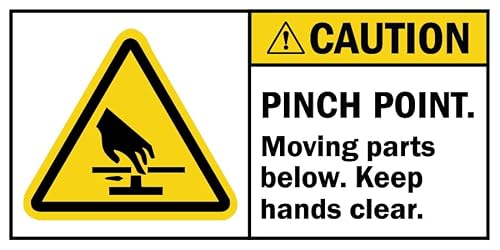
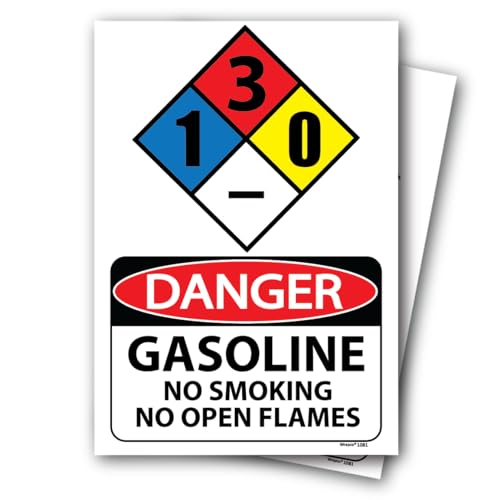
Start with the exact behavior or material that needs attention. Fuel products in this selection identify gasoline or diesel and add NFPA information. The acid-storage sign names the stored chemical category, while the flammable-storage option identifies a broader class of storage hazard. For machinery, the Keep Hands Clear and Pinch Point signs address contact with moving equipment. The arc-flash sticker is directed at energized electrical equipment, and the electrical-panel label addresses a required clear area.
A general caution label may be less useful than a sign that names the hazard. A worker approaching an electrical cabinet needs different information from a pedestrian entering a forklift lane. Choose wording that matches the risk assessment, facility procedures, and any required workplace signage program. Where a product uses OSHA-style, ANSI-style, or NFPA terminology, treat the listing language as a product description rather than proof that the sign alone satisfies every applicable rule.
Choose a readable size and placement
The 7 x 10-inch signs in this group are useful when a warning must be seen across a room, near a storage area, or on a tank. They include the acid, gasoline, diesel, flammable-storage, forklift, and electrical-panel products. Smaller formats, such as the 3.5 x 5-inch bilingual machinery sign, the 2.5 x 5-inch pinch-point sign, and the 5 x 3.5-inch arc-flash labels, are better suited to equipment housings, control panels, doors, or other limited surfaces.
Measure the target area before ordering. A wide sign may not fit between panel hardware or on a narrow machine frame. Conversely, a compact label may lose effectiveness if workers must read it from a distance. Place the sign at the point where the hazard is encountered, not only at a remote entrance. Follow the product’s documented surface guidance; most listings refer to clean, dry, smooth, or oil-free surfaces.
Check material and environmental claims
Vinyl is common in this category because several listings describe resistance to water, weather, moisture, fading, scratches, UV exposure, or abrasion. Laminated products add a stated protective layer, as seen with the flammable-storage and gasoline options. The diesel product also lists a protective coating and UV protection. These details are useful when signs will be exposed to sunlight, washdowns, oil, or changing weather.
Do not treat every durability phrase as interchangeable. Waterproof, water-resistant, weatherproof, UV-resistant, and laminated describe different listing claims. If the sign will be exposed to solvents, fuel splashes, heavy abrasion, or repeated cleaning, compare the exact claims and consider whether the manufacturer provides additional documentation.
Consider adhesive and removability
Self-adhesive application generally means cleaning the surface, peeling the backing, positioning the sign, and pressing it down. This avoids drilling and hardware, which is useful on cabinets, doors, equipment panels, walls, tanks, and vehicles. Several selected products specifically describe residue-free removal, including the StickerJet machinery and storage signs and the YIKIADA electrical-panel option.
Removability can be helpful when equipment changes or a sign needs replacement, but adhesive performance depends on surface preparation and conditions. A clean, smooth surface is a recurring requirement in the supplied evidence. Curved, textured, dusty, oily, or unusually cold surfaces may need separate evaluation because the listings do not establish performance on every substrate.
Plan pack coverage
Pack size matters when a facility has repeated hazards. The Sutter Signs arc-flash product provides 100 compact labels, while the YIKIADA electrical-panel option supplies 10 large stickers. Five-packs cover several storage points or repeated machinery locations, and the two-pack oxygen sign is suited to a smaller number of clearly defined areas. Buy enough to mark every relevant approach, door, cabinet, or piece of equipment consistently, but avoid placing duplicate warnings where they could obscure operating information.
Final recommendation
StickerJet Acid Storage Danger Sign ranks first overall in this specification-based comparison under the published weighted criteria.
StickerJet Acid Storage Danger Sign is the highest-scoring returned product and the first overall specification-based choice. It combines a precise chemical-storage message, large 7 x 10-inch dimensions, durable self-adhesive vinyl, and a five-sign pack. For fuel areas, choose the Wrapco Gasoline No Smoking Sign or Wrapco Diesel Fuel NFPA Placard according to the stored fuel. The top self-adhesive industrial warning signs for warehouses include the StickerJet Forklift Area Caution Sign, while electrical facilities may prefer Sutter Signs Arc Flash Warning Stickers or YIKIADA Electrical Panel Clear Stickers. For machinery, the bilingual Keep Hands Clear and StickerJet Pinch Point products provide more targeted wording than a generic caution label.
The best self-adhesive industrial warning signs are not necessarily the largest or the most numerous. The right choice is the one whose message, dimensions, material claims, adhesive instructions, and pack coverage fit the documented location and hazard. Verify site-specific requirements before installation.
Frequently Asked Questions
Among the best self-adhesive industrial warning signs, are self-adhesive industrial warning signs suitable for outdoor use?
Several selected products are listed as waterproof or weatherproof and include UV-resistance claims. The acid, gasoline, diesel, forklift, flammable-storage, arc-flash, and electrical-panel options document some form of outdoor or environmental durability. Outdoor performance still depends on surface preparation and exposure conditions, so compare the exact product claims rather than assuming every adhesive sign has the same resistance.
What surface preparation is recommended?
The supplied listings commonly recommend cleaning and drying the target surface before application. Smooth metal, walls, doors, equipment panels, tanks, cabinets, and containers are repeatedly identified as suitable surfaces. Remove dirt, oil, and moisture, then apply the decal evenly. The evidence does not establish adhesion on every porous, rough, or heavily textured material.
Should I choose a large sign or a compact label?
Use a large 7 x 10-inch sign when the warning must be visible around a storage area, tank, panel, or traffic zone. Compact 3.5 x 5-inch, 5 x 3.5-inch, or 2.5 x 5-inch labels are more practical on machinery, control panels, and confined surfaces. Consider viewing distance, available surface area, and whether equipment or other notices could block the message.
Are NFPA or OSHA-style signs automatically compliant?
No conclusion of automatic compliance can be made from these public listings alone. Some products describe NFPA placards or OSHA-style layouts, but site requirements may depend on the material stored, workplace rules, location, language needs, and applicable regulations. Use the sign as part of the facility’s documented safety program and verify requirements with the responsible safety professional.
When is a bilingual sign useful?
A bilingual sign can help when the workforce or visitors use both English and Spanish. The selected StickerJet Keep Hands Clear sign provides both languages for a specific machinery hazard. Language coverage should reflect the people who need to understand the warning, and the translated wording should be checked against the facility’s safety procedures.