Buying Guide
Selecting the best high-pressure engine oil pumps is primarily an application-matching task. An oil pump can be correctly described as high pressure and still be wrong for the engine because the mounting pattern, drive arrangement, pickup, relief system, or volume specification differs. Start with the engine family and reference number, then confirm the exact model year, displacement, engine code, and any listed RPO or serial-number requirement.
Match pressure and volume separately
Pressure and volume are related but not interchangeable specifications. The Melling 10295 is listed as stock volume with a 10 PSI increase over the M295, while the VIPCAR 03002 is described as standard volume with a 20% pressure increase. These examples show why a buyer should not assume that every high-pressure pump is also high volume.
The VIPCAR 03004 adds 10% pressure and 18% volume, making it a different design choice from the 03002. The Melling M365HV is presented as a high-volume Gen 4 LS pump that flows 20% more than the standard GM DOD/AFM pump. For an engine originally equipped with an M365-equivalent pump, that specific application evidence matters more than a generic high-volume label.
Verify engine-family fitment
Fitment is the most important screening step for the best high-pressure engine oil pumps. GM LS listings in this comparison cover different generations and pump references. The Michigan Motorsports F6100 names Gen III and Gen IV LS engines from 4.8L through 6.2L, while the A-Premium LS pump references 10295 and also lists those common displacements. The M365HV is more specific to selected Gen 4 engines and RPO codes.
Chrysler-family applications also vary. The A-Premium 10342 covers listed 5.7L and 6.1L vehicles, whereas the AULINK AUOPS103 lists a broader range of 5.7L and 6.4L Chrysler, Dodge, Ram, and Jeep applications. Compare the vehicle list with the engine code and reference number rather than relying only on the vehicle name.
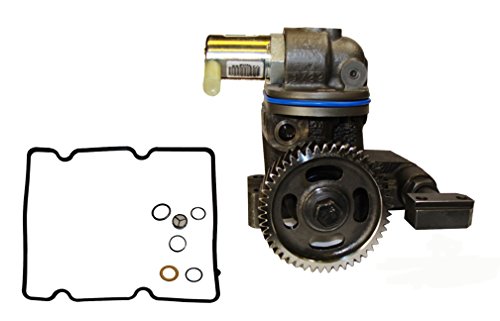
The TamerX HP122IPR follows a different fitment method. It is for listed 2005–2010 Ford Powerstroke 6.0L and Navistar VT365 engines, but the listing adds a serial-number cutoff. That detail should be checked before selecting the pump because the same engine family may use another housing design outside the stated range.
Check the included parts
Package contents can affect installation planning. The Melling M-99HV-S includes a drive shaft and pickup, giving it a more complete Small Block Chevy package than a pump-only listing. The TamerX product includes an IPR valve and updated one-piece STC fitting. The M365HV package includes a cam-install gasket kit, while the A-Premium 10342 lists a gasket or O-ring.
By contrast, some products provide the pump without clearly listing a pickup, drive component, or seal. The Melling 10295 identifies compatibility with a 7/8-inch standard bolt-on screen, but the supplied evidence does not say that the screen is included. Treat compatibility information and package contents as separate questions.
Review construction and quality details
Construction descriptions are useful when they are specific. The Michigan Motorsports F6100 cites high-quality materials and hardened internal components. The A-Premium LS pump lists an aluminum-alloy housing with a sandblasted finish. The A-Premium 10342 specifies cast aluminum, and the TamerX unit is described as a remanufactured cast-iron pump.
Several listings describe quality-control procedures rather than giving laboratory results. VIPCAR lists pressure, flow, fatigue, temperature, metallographic, salt-spray, and swing-machine testing. AULINK states that its pump is function and leakage tested and manufactured in TS16949-certified facilities. These are listing claims, not independent verification, but they are relevant specification details.
Plan installation carefully
Oil pumps commonly require priming and correct sealing, alignment, and pickup selection. Among the selected products, the TamerX serial-number instruction and the M365HV RPO guidance are particularly important pre-installation checks.
Do not infer that a direct-fit claim eliminates all engine-specific checks. Confirm the pump drive, pickup or screen, relief-spring configuration, gasket requirements, and clearance according to the engine service information. Professional installation may be appropriate for an engine rebuild or any application where pump access requires major disassembly.
Use the ranking as a specification shortcut
This comparison ranks products by documented pressure design, volume information, fitment clarity, construction details, and installation support. The best high-pressure engine oil pumps for one engine family may not suit another. The ranking therefore favors clear evidence and useful application detail rather than treating a universal label as proof of compatibility.
Final Recommendation
TamerX Powerstroke 6.0L HPOP with IPR Valve ranks first overall in this specification-based comparison under the published weighted criteria.
Melling 10295 is the first overall specification-based choice among these best high-pressure engine oil pumps because it combines a stated pressure increase, stock volume, LS fitment, and screen information. For a Small Block Chevy package with supporting components, the Melling M-99HV-S is the more complete selection because its drive shaft and pickup are listed as included.
For Gen 4 LS engines, the Melling M365HV offers the clearest high-volume and RPO-based application information, while the VIPCAR 03002 is better suited to a standard-volume, higher-pressure LS requirement. The VIPCAR 03004 and A-Premium LS pump add alternative pressure-volume or relief-spring configurations.
Hemi owners should compare the narrower 10342 fitment with the broader AUOPS103 list and verify the engine details before installation. For the Ford Powerstroke 6.0L and Navistar VT365, TamerX stands apart as a pump-and-valve package with an updated fitting and serial-number guidance. Together, these are the top high-pressure engine oil pumps when judged by the supplied specifications and application evidence.
Frequently Asked Questions
What should I verify before choosing the best high-pressure engine oil pumps?
Verify the engine family, displacement, model year, engine code, reference number, pump drive, volume type, and pickup or screen compatibility. Also check whether the listing specifies a gasket, valve, fitting, or other installation component.
Is a high-pressure pump always a high-volume pump?
No. The Melling 10295 and VIPCAR 03002 demonstrate high-pressure, standard-volume or stock-volume configurations, while the VIPCAR 03004 and Melling M365HV document increased volume. Pressure and volume should be matched separately to the engine application.
Which selected pump includes the most supporting components?
The TamerX HP122IPR includes an IPR valve and updated one-piece STC fitting. The Melling M-99HV-S includes a drive shaft and pickup, and the M365HV package includes a cam-install gasket kit. These contents are different, so the relevant choice depends on the engine and repair scope.
Are the listed testing claims independent test results?
No. The comparison uses public listing data. VIPCAR and AULINK describe their own manufacturing or testing procedures, but the supplied evidence does not provide independent hands-on measurements or verification.
Why does exact fitment matter for a high-pressure engine oil pump?
Pump references can vary within one engine family by generation, displacement, emissions equipment, vehicle year, or engine code. The TamerX listing also uses an engine serial-number cutoff. Matching those details helps distinguish a documented application from a merely similar-looking part.