Buying Guide
Choosing among the best gas pressure washer pumps starts with compatibility, not the headline PSI number. These products are replacement pumps, so the correct shaft, orientation, mounting pattern, and hose connections determine whether the pump can work with the existing engine and frame. A pump with a higher published rating is not automatically a better match for a machine designed for lower output.
Confirm the shaft size and orientation
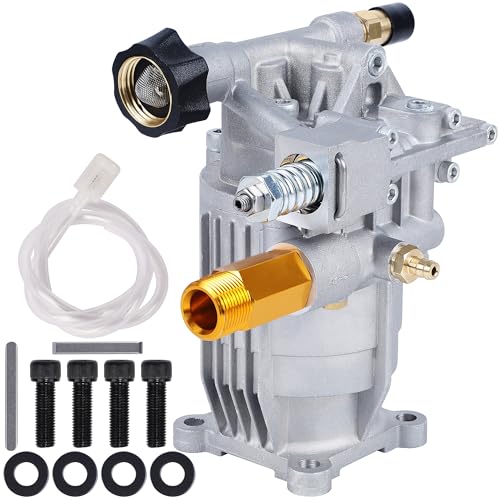
Start by identifying whether the original pump uses a horizontal or vertical engine arrangement. The selected horizontal designs include models with 3/4-inch and 1-inch shafts, while vertical replacements use a 7/8-inch shaft. Shaft diameter is not interchangeable, and the pump’s inlet and outlet position must also match the washer frame and hose routing.
Measure the original shaft, inspect the keyway, and compare the bolt pattern. Several listings specifically advise matching engine orientation, shaft diameter, PSI, GPM, and inlet and outlet connections. Brand compatibility lists can help narrow the search, but they should not replace measurements. A machine from a listed brand may still use a different pump configuration.
Match pressure and flow
Pressure and flow describe different parts of cleaning output. PSI indicates pressure, while GPM indicates the amount of water moving through the pump. The selected products range from residential-oriented output around 2500 PSI to larger triplex designs reaching 4400 PSI and 4 GPM or more. Choose a pump whose working range is supported by the engine and washer hardware.
For routine siding, vehicles, patios, fences, and similar work, a 2.5 GPM replacement may be a sensible specification match when the original machine uses that flow. Larger engines and 1-inch shafts support the higher-flow products in this guide. Do not treat maximum PSI as a target setting for every job; adjustable unloaders and pressure controls can make it easier to lower output for more delicate surfaces.
Compare axial and triplex designs
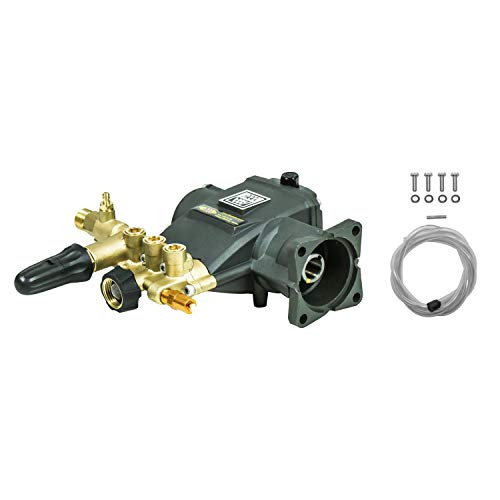
Axial cam or axial plunger pumps appear throughout the common 3/4-inch replacement category. They are represented here by products such as the OEM Technologies 90029, WOJET PA3023, YAMATIC 10P2923HA, and Biswing horizontal pump. These models emphasize replacement compatibility, standard connections, easy installation, and, in several cases, maintenance-free crankcases.
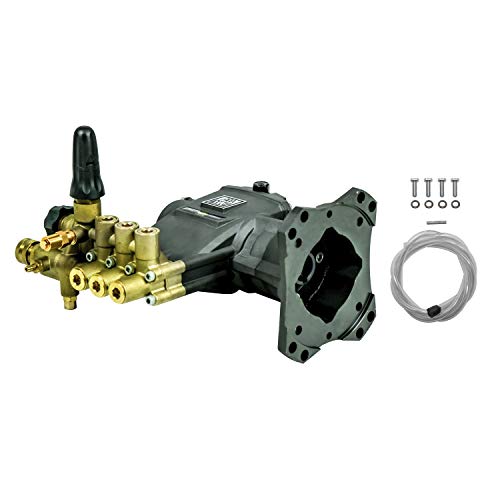
Triplex pumps are documented in the larger-output selections, including the AAA 90037, TOOLCY 1-inch model, Biswing 1-inch pump, AAA 90038, AAA 90039, and COYARDOR pump. Their listings describe features such as brass pump heads, stainless steel components, sight glasses, and adjustable unloaders. A triplex design may be attractive for a compatible higher-output machine, but it can also require a different shaft, engine size, oil routine, and mounting arrangement.
Look for thermal protection and service features
A thermal relief valve appears in many of the selected products. It is intended to help protect the pump when water becomes hot during bypass operation. This feature is useful, but it does not remove the need to follow the pump’s operating instructions and maintain a continuous water supply.
Maintenance details vary. Several axial models advertise maintenance-free crankcases or arrive with oil already installed. The TOOLCY and Biswing triplex options use a sight glass so the operator can monitor oil level or condition, and some require oil changes. A sight glass is helpful for service awareness, but it also means the owner must pay attention to the recommended maintenance routine. Check whether the package is pre-filled before starting a new pump.
Check connections and included parts
Most selected replacement pumps document a garden hose inlet and a high-pressure outlet, but outlet formats differ. M22 threaded connections, quick-connect outlets, chemical injection ports, siphon tubes, detergent hoses, nozzle tips, shaft keys, bolts, pads, and other hardware may be included depending on the model. Compare the old pump’s fittings with the listing before ordering.
Included hardware can simplify installation, but it does not guarantee a fit. The Biswing horizontal kit includes mounting hardware and shaft keys, while the AAA 90037 includes a siphon tube, hardware, and instructions. The WOJET pump includes installation instructions and a video. These details are useful when replacing a pump at home, though the actual installation still depends on the existing machine.
Use pressure adjustment carefully
Adjustable unloaders are useful when one washer must handle different surfaces. The AAA 90037, COYARDOR pump, TOOLCY triplex products, and WOJET model document ways to reduce or adjust pressure. Lower settings may be appropriate for vehicles, siding, or fences, while harder surfaces can call for a higher setting supported by the machine.
Pressure adjustment should remain within the pump and washer specifications. Use the correct nozzle and avoid assuming that a higher setting is appropriate for every material. The documentation supports comparing adjustment features, but it does not establish a universal setting for a particular surface.
Final Recommendation
AAA 3700 PSI 2.5 GPM Pump Kit 90037 ranks first overall in this specification-based comparison under the published weighted criteria.
AAA 3700 PSI 2.5 GPM Pump Kit 90037 is the highest-scoring returned product and the first overall specification-based choice among the best gas pressure washer pumps. Its combination of 3/4-inch horizontal compatibility guidance, strong output, PowerBoost adjustment, thermal relief, sight glass, and included hardware makes it a well-rounded replacement when the measurements match.
For larger machines, the Biswing 4400 PSI 4 GPM Triplex Pump and TOOLCY 4400 PSI Triplex Pump with Unloader offer the highest documented flow and pressure ranges. The WOJET 3400 PSI 2.5 GPM Self-Priming Pump is the more specialized pick for flexible water sources. For a simpler standard horizontal replacement, OEM Technologies 3400 PSI Pump Kit 90029 and YAMATIC 3400 PSI 2.5 GPM Horizontal Pump provide useful maintenance and easy-start features.
The top gas pressure washer pumps are not interchangeable by brand or PSI alone. Before choosing, verify shaft diameter, orientation, bolt pattern, engine size, inlet, outlet, and cold-water requirements. That check is more important than a nominal output advantage.
Frequently Asked Questions
How do I choose the best gas pressure washer pumps for my machine?
Compare the original pump’s shaft diameter, orientation, bolt pattern, engine size, pressure, flow, and hose connections with the listing. A model’s brand compatibility list is only a starting point; physical measurements and connection positions still need to match.
Are horizontal and vertical pressure washer pumps interchangeable?
No. The selected products document separate horizontal and vertical configurations, including different shaft sizes and inlet or outlet positions. A horizontal 3/4-inch pump should not be treated as a replacement for a vertical 7/8-inch pump without confirmed compatibility.
Is a triplex pump better than an axial pump?
Neither design is universally better for every replacement. Axial models in this guide focus on common residential shaft configurations and convenient maintenance features. Triplex models document higher-flow options, sight glasses, brass components, and adjustable control, but they often require larger engines and different shaft sizes.
Do these pumps work with hot water?
The supplied evidence identifies several products as cold-water pumps or specifically says they are for cold water only. Unless the selected pump’s documentation expressly supports another use, treat it as a cold-water replacement and follow the manufacturer’s instructions.
Do replacement pumps arrive ready to install?
Some do. Hardware and accessories also vary, so check the package details and confirm fittings before installation.