Buying Guide
Choosing among the best oem electric fuel pumps starts with compatibility rather than a general claim about quality. These products are application-specific replacement parts, and a pump that fits one engine, wheelbase, emissions configuration, or tank size may not fit another version of the same vehicle. Use the vehicle year, make, model, engine, drivetrain, emissions equipment, tank configuration, connector shape, and original part number as a combined checklist.
Confirm the vehicle configuration
The most important evidence is the fitment description. The AutoExact assembly is listed for select 2014-2018 Chevrolet Silverado and GMC Sierra 1500 models, while the Oktiger E3500M listing covers earlier Silverado and Sierra applications across multiple engines and heavy-duty versions. Those are not interchangeable simply because both names include Silverado or Sierra.
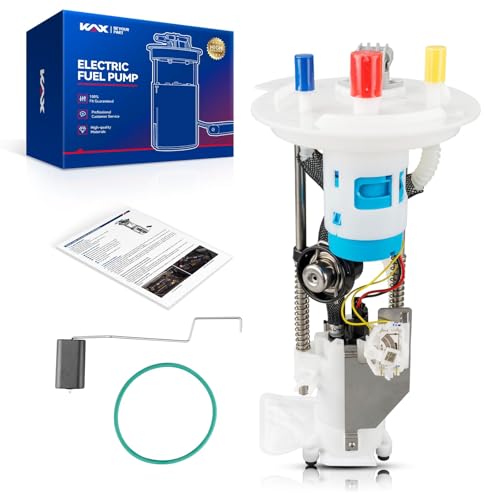
The same caution applies to passenger vehicles. The KAX FG0879 module specifies a 119.0-inch wheelbase for the listed Ford Expedition and Lincoln Navigator applications. The A-Premium Ford assembly adds wheelbase and naturally aspirated restrictions for F-150 and F-250 versions. The Vurkcy Camry listing distinguishes engine, sedan, build-location, and California-emissions details. These restrictions are useful evidence, not minor footnotes.
For the Mitsubishi option, EVERESTWAY separates Eclipse and Galant engines and years and excludes certain 2010-2011 California Galant models. The Subaru, Hyundai, and Kia modules are similarly limited to stated model-year and engine ranges. A correct-looking connector or similar body shape is not enough. Compare the complete original assembly, the OE number, and the vehicle record before installation.
Decide between a complete module and a pump replacement
A complete module can combine the electric pump with components such as a sending unit, strainer, seal ring, clips, or sensor. The AutoExact listing describes a fuel pressure sensor and sending-unit assembly. The Oktiger truck option identifies a fuel pressure sensor and sending unit, while the KAX modules list a seal ring and strainer among related parts. The A-Premium Ford assembly lists a standard interface, sending unit, strainer, and two clips.
A module may be appropriate when the sending unit or strainer is also worn, but the supplied evidence does not establish that every listed item is included in every package. Read the package-contents language carefully. For example, the A-Premium Subaru listing states one fuel pump assembly and separately identifies the sending unit and strainer as related parts. EVERESTWAY explicitly says its Mitsubishi assembly does not include the pressure regulator. That distinction can affect the parts needed for a repair.
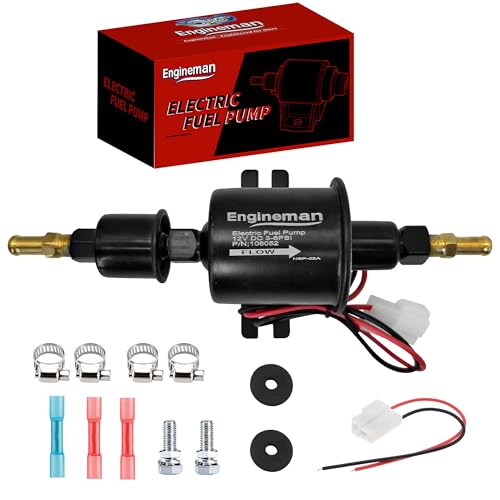
The YONEDA Kawasaki Mule product is a different design choice: it is presented as an electric pump replacement with operating figures, not as a complete automotive tank module. It may suit a buyer who needs the specified pump and already has compatible sending and tank components. Do not compare it as though it included the same hardware as a full module assembly.
Use technical data when it is available
Most listings provide fitment and reference numbers but do not publish numeric fuel-flow or pressure data. That limits direct performance comparison. The YONEDA Mule pump is the exception among these selected products, listing 12-volt input, 1-2 psi pressure, 60 liters per hour flow, and 1.0 amp current. Those figures are valuable only when they match the vehicle’s required specifications.
Other products describe construction or design rather than measured output. KAX identifies POM plastic, gold-palladium sensor contacts, and precision ceramic resistive elements. AutoExact describes multilayer filtration and an optimized reservoir and pickup design for low fuel levels. Oktiger describes an upgraded commutator and high-strength turbine impeller. These details can inform a part comparison, but they are not substitutes for the vehicle’s required pressure and flow ratings.
The best oem electric fuel pumps for a particular vehicle are therefore the ones whose documented specifications match that vehicle. Avoid treating terms such as efficient, durable, quiet, or OEM-standard as universal test results. They are listing descriptions, and this article has not independently verified them.
Check installation and replacement requirements
Installation evidence varies. AutoExact describes factory-style mounting points and connectors and advises comparing the original part number, connector, and vehicle configuration. Oktiger supplies a comparison step and discusses installing the seal ring and assembly. Vurkcy recommends professional installation. The KAX FG1550 listing advises confirming exact part numbers and consulting a mechanic when uncertain.
Before removing the old part, record the connector arrangement, hose routing, locking-ring position, float-arm location, and tank configuration if applicable. Compare the new module side by side with the old one. A direct-replacement description does not remove the need to verify physical and electrical details.
Also check whether the replacement includes a strainer, seal, pressure regulator, sensor, clips, or sending unit. Reusing a contaminated strainer or an unsuitable seal can undermine an otherwise correct pump installation. Follow the vehicle manufacturer’s fuel-system safety procedures and use professional assistance when the work exceeds your tools or experience.
Consider warranty boundaries
Warranty coverage differs across the group. KAX FG0879 and KAX FG1550 list two-year manufacturer warranties. YONEDA lists a two-year guarantee, while AutoExact, Vurkcy, EVERESTWAY, Oktiger, and Masday’s excluded products should not be assumed to have identical coverage. The selected A-Premium Subaru and Ford listings describe one-year guarantees, with the Ford terms limiting coverage to the item cost and excluding labor and related expenses.
A warranty is useful only after fitment is established. Keep the order information, original part comparison, and installation documentation. Read exclusions for labor, towing, additional repairs, and installation-related costs. The supplied listing evidence supports warranty comparisons, but it does not establish claim outcomes.
Final recommendation
AutoExact Silverado/Sierra 1500 Fuel Pump Assembly ranks first overall in this specification-based comparison under the published weighted criteria.
The final choice among the best oem electric fuel pumps depends on the documented features that match your intended use.
AutoExact Silverado/Sierra 1500 Fuel Pump Assembly is the first overall specification-based choice among this selected group because it combines clear fitment guidance, complete module-oriented information, filtration details, low-fuel pickup design, testing categories, and warranty coverage. It is still only the right choice for a compatible 2014-2018 Chevrolet Silverado or GMC Sierra 1500 configuration.
For earlier Silverado and Sierra trucks, Oktiger E3500M offers broad listed coverage and substantial replacement-number detail. KAX FG0879 is a strong fit-specific option for the stated Expedition and Navigator wheelbase, while KAX FG1550 is the better-documented choice for its listed BMW applications. A-Premium’s Ford assembly is useful where its naturally aspirated and wheelbase restrictions match.
Among the top oem electric fuel pumps, EVERESTWAY stands out for openly stating its Mitsubishi pressure-regulator limitation, Vurkcy for focused Camry restrictions, and the Subaru A-Premium module for concise Legacy and Outback coverage. Aumzong is the cross-brand option for the listed Sonata and Optima ranges. For a powersports application requiring published numbers, YONEDA’s Kawasaki Mule pump supplies the clearest pressure, flow, and current data.
Selection methodology
This is a specification-based comparison using the supplied public listing data. Editorial scores weigh fitment and reference-number clarity at 30%, assembly completeness at 20%, technical specification detail at 20%, installation guidance at 15%, and warranty or fuel-system protection evidence at 15%. No hands-on testing, customer sentiment, review information, popularity signals, or marketplace labels were used in the published evaluation.
Frequently Asked Questions
What should I verify before buying the best oem electric fuel pumps?
Verify the exact year, make, model, engine, drivetrain, emissions configuration, wheelbase or tank size where relevant, connector, and OE part number. A listing can cover one version of a vehicle while excluding another. The Vurkcy Camry and EVERESTWAY Mitsubishi listings demonstrate why emissions and build restrictions deserve special attention.
Are complete fuel pump assemblies better than pump-only replacements?
Neither format is universally better. A complete assembly may include a sending unit, strainer, seal ring, sensor, or clips, while a pump-only replacement may be appropriate when the remaining module components are compatible and serviceable. Confirm package contents. YONEDA’s Kawasaki Mule listing provides pump specifications but does not present the same complete automotive module format as AutoExact or the A-Premium Ford assembly.
Do all of these products include a pressure regulator?
No. EVERESTWAY specifically states that its Mitsubishi assembly does not include a pressure regulator. Other listings identify different included or related parts, so do not infer that a regulator, strainer, seal, sensor, or sending unit is included unless the product evidence says so.
The selected YONEDA Kawasaki Mule pump lists 1-2 psi pressure and 60 liters per hour flow, along with 12-volt input and 1.0 amp current. These figures should be compared with the vehicle or equipment requirement rather than treated as generally superior.
Can I install a direct-replacement fuel pump myself?
That depends on the vehicle, tools, access to the tank, and your fuel-system experience. Vurkcy recommends professional installation, and several listings emphasize exact part-number and configuration checks. Follow the vehicle’s safety procedures and use a qualified technician when you cannot confidently verify the electrical, sealing, and physical fit.