Buying Guide
Choosing the best inline fuel filters starts with the fuel line, not the brand name. An inline filter sits in the hose between the fuel source and the engine, so the filter must match the hose’s inside diameter and the vehicle or equipment’s fuel system. The products above cover 1/4-inch, 5/16-inch, and 3/8-inch connections, along with marine, automotive, powersports, and small-engine applications.
Confirm the hose size first
Measure the inside diameter of the existing fuel hose before ordering. The selected products use several connection standards: the WIX 33012 and WIX 33002 specify 5/16-inch inlet and outlet connections; WIX 33033 uses a 3/8-inch clamp-on format; the EVIL ENERGY filter and Podavelle filter use 3/8-inch barbs; and the YAMAKATO and Strongthium 691035 kits target 1/4-inch lines. A filter that looks similar can still be unsuitable if its barbs do not match the hose.
Marine products also require application-specific checking. Quicksilver 879885Q is listed for Mercury and Mariner outboards, while Quicksilver 816296Q2 is for marine engines using 5/16-inch or 8-millimeter fuel line. The attwood 12562-6 is listed for 3/8-inch lines and most outboard motors. These descriptions are useful starting points, but the engine’s fitment information remains the final check.
Compare the filtration specification
A stated micron rating makes products easier to compare. Lower micron numbers generally describe finer nominal filtration, but the supplied listings do not establish a universal performance ranking between different filter media. WIX 33012, WIX 33002, and Quicksilver 879885Q list 20-micron filtration. EVIL ENERGY and Podavelle list reusable 30-micron sintered bronze elements. Strongthium 691035 and attwood 12562-6 list 40-micron filtration.
Several products do not publish a micron rating in the supplied evidence. That does not automatically make them unsuitable; it means the available specification is less complete. WIX 33033 emphasizes its clamp-on connection, built-in gaskets, and 60-PSI maximum pressure rather than a micron value. Quicksilver 816296Q2 describes removal of fuel-borne particles but does not give a micron rating. Match the filter to the engine maker’s requirements where those requirements are known.
Choose a housing and element style
Housing material affects the design trade-off. EVIL ENERGY and Podavelle use billet aluminum bodies, with Podavelle specifically identifying 6061-T6 aluminum and an anodized finish. These compact metal-bodied options are aimed at EFI or carbureted systems and document reusable sintered bronze elements. Reusability can reduce the need for immediate replacement, but the element still needs appropriate cleaning and the connections should be checked for leaks after installation.
The WIX options provide metal or plastic formats. WIX 33012 uses a metal housing, while WIX 33002 uses a plastic housing. The listings identify both as gasoline-only filters with 5/16-inch connections. WIX 33033 is another universal option with high-strength materials and built-in gaskets, but its construction details are less extensive than the billet filters.
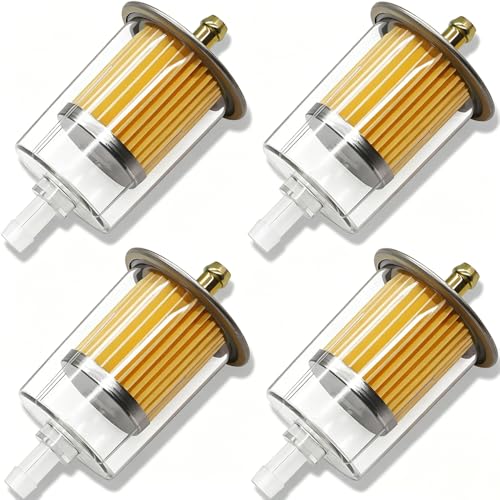
The small-engine kits use different priorities. YAMAKATO describes a gasoline-resistant nylon housing and backflushing, while Strongthium 691035 supplies a see-through filter body. The marine filters also emphasize application-specific construction: attwood describes an impact-resistant and shatter-resistant body, and Quicksilver 879885Q uses a translucent body.
Decide whether visibility matters
A clear or translucent filter allows the owner to inspect fuel content or debris without opening the line. This feature is documented for attwood 12562-6, Quicksilver 879885Q, YAMAKATO, and Strongthium 691035. It can make maintenance checks more convenient, but it does not replace the engine manufacturer’s replacement guidance.
Opaque filters may still be appropriate when their connection, fuel type, and filtration specifications are the better match. The EVIL ENERGY and Podavelle filters trade direct visibility for compact billet housings and reusable elements. WIX 33012 and WIX 33002 provide clear connection and micron specifications but do not list transparent bodies.
Match the filter to the fuel system
Do not treat a universal label as proof of universal compatibility. EVIL ENERGY explicitly lists gasoline, diesel, E85, and other common fuels, and supports EFI and carbureted systems. Podavelle is described for high-volume EFI or carbureted systems. In contrast, WIX 33012 and WIX 33002 are specifically labeled gasoline only.
Marine and small-engine use should be separated from general vehicle use. The Quicksilver products and attwood filter are documented for marine or outboard applications. YAMAKATO and Strongthium 691035 list equipment such as lawnmowers, generators, ATVs, motorcycles, snowmobiles, tillers, and small tractors. Select from the category that matches your equipment rather than relying only on line diameter.
Consider installation and maintenance
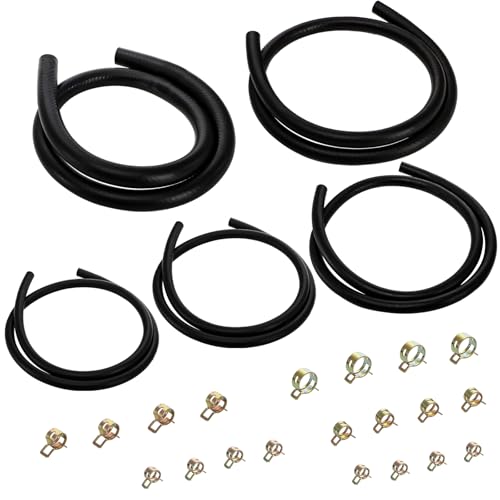
Some filters are sold as standalone components, while others include clamps. YAMAKATO includes two adjustable screw clamps, Strongthium 691035 includes four fuel-hose clamps, and the EVIL ENERGY listing specifies a reliable O-ring seal between fittings and end caps. WIX 33033 uses built-in gaskets, and Quicksilver 879885Q is described as replaceable with existing hose clamps and no additional hardware.
Reusable filters are not automatically easier in every installation. They require access for cleaning and careful resealing. Disposable filters, including attwood 12562-6, are simpler to replace but cannot be cleaned for another service cycle. In every case, verify flow direction if marked, secure the hose connection, and inspect for leaks before normal operation. The supplied evidence specifically tells EVIL ENERGY users to check the connection after installation.
Methodology
This is a specification-based comparison using the supplied public listing titles, features, and technical specifications. Editorial scores cover connection fitment, filtration details, housing design, documented application range, installation or serviceability, and inspection features. Products were grouped by non-empty parent identifier before selection, and no customer sentiment, review metric, marketplace label, or hands-on test result was used in the published scores.
Final Recommendation
Strongthium 691035 40-Micron Fuel Filter Kit ranks first overall in this specification-based comparison under the published weighted criteria.
The final choice among the best inline fuel filters depends on the documented features that match your intended use.
EVIL ENERGY 3/8-Inch Billet Inline Fuel Filter is the first overall specification-based choice for buyers who need a compact reusable filter with a clearly documented 30-micron element, broad fuel compatibility, and stated flow information. Its lack of a transparent body is the main trade-off.
For marine use, attwood 12562-6 is a strong clear-body option for compatible 3/8-inch outboards, while Quicksilver 879885Q is the more targeted choice for Mercury and Mariner applications. Podavelle is a close alternative to EVIL ENERGY for high-volume EFI or carbureted systems, with similar reusable-element and flow specifications.
For small engines, YAMAKATO adds adjustable clamps and backflushing in a two-filter pack. Strongthium 691035 offers 40-micron media, a see-through body, and supplied clamps. WIX 33012 and WIX 33002 are straightforward 5/16-inch gasoline filters, with the metal WIX 33012 offering the more substantial housing specification. WIX 33033 is worth considering when its 3/8-inch clamp-on format and built-in gaskets fit the installation. These are practical alternatives among the top inline fuel filters, but line size and fuel-system fitment should decide the final purchase.
Frequently Asked Questions
What should I check before choosing the best inline fuel filters?
Check the fuel hose’s inside diameter, fuel type, engine or equipment application, and the filter’s inlet and outlet style. The selected products cover 1/4-inch, 5/16-inch, and 3/8-inch connections, so visual similarity is not enough. Also check whether the product is intended for marine, small-engine, carbureted, or EFI use.
Are reusable inline fuel filters better than disposable filters?
They offer a different maintenance trade-off. EVIL ENERGY, Podavelle, and YAMAKATO document reusable or cleanable elements, while attwood 12562-6 is explicitly disposable. A reusable design may reduce replacement frequency, but it requires cleaning and careful reinstallation. A disposable filter may be simpler when the correct replacement interval and fitment are known.
What does a micron rating tell me?
It identifies the filtration specification supplied by the listing, but it does not by itself establish overall filter performance. In this comparison, documented ratings range from 20 microns for WIX 33012, WIX 33002, and Quicksilver 879885Q to 40 microns for attwood 12562-6 and Strongthium 691035. Follow the engine or equipment maker’s requirements when available.
Do I need a clear fuel filter?
Not necessarily. A clear or translucent body, as documented for attwood 12562-6, Quicksilver 879885Q, YAMAKATO, and Strongthium 691035, helps with visual inspection. Opaque filters can still be suitable when their connection, fuel compatibility, and filtration details match the application. Visibility is one selection factor rather than a substitute for correct fitment.
Can an inline fuel filter be used on any gasoline engine?
No. The listings use application limits even when a product is called universal. WIX 33012 and WIX 33002 are gasoline-only, the Quicksilver products target marine engines or outboards, and several kits focus on small equipment. Confirm the hose size, fuel type, pressure or system requirements, and stated application before installation.