Buying Guide
Choosing the best iridium spark plugs starts with fitment, not with the material name alone. Spark plugs that share an iridium label can still differ in thread dimensions, heat range, electrode shape, gap, and intended engine application. The listings in this comparison show that the useful evidence ranges from a simple part number and pack count to detailed construction notes covering the center electrode, ground electrode, insulator, sealing, and threads.
Confirm the exact part number
Start with the vehicle manufacturer’s specification, service information, or a reliable parts catalog. Match the complete part number rather than choosing by brand alone. For example, Bosch 96321, Bosch 9621, and Bosch 96337 are all double-iridium products, but their supplied application notes cover different vehicle groups. NGK LFR6AIX-11, IZTR5B11, IZFR6K-11S, and ZFR5FIX-11 are also distinct specifications.
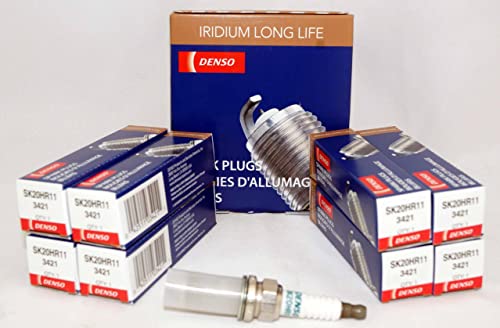
The same caution applies to Denso products. Denso 3421 is listed as an Iridium Long Life direct replacement with a 1.1 mm gap, while Denso SK20R11 is a different direct-replacement specification. A part number that looks similar may not be interchangeable. Check the engine, drivetrain where relevant, required quantity, and the original plug specification before installation.
Compare electrode construction
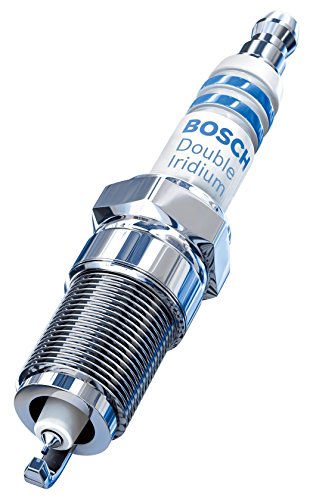
Iridium is a useful category identifier, but the electrode design adds important detail. Bosch 96321 documents both an iridium firing pin and an iridium ground-electrode inlay. Bosch 9621 and Bosch 96337 identify a fine-wire iridium firing pin and double-iridium construction. These listings provide more construction information than a product page that only states “iridium.”
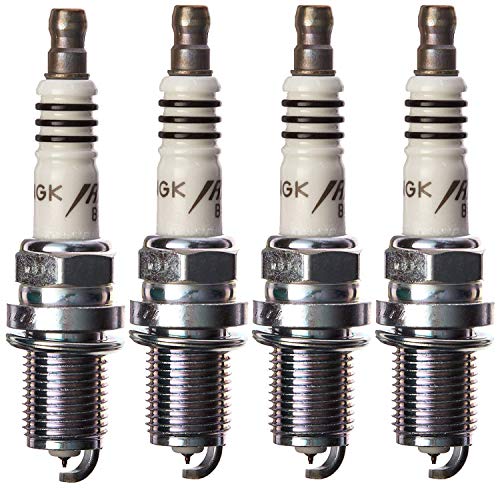
NGK 5266 specifies a laser-welded iridium center electrode tip and a platinum disc welded to the rear of the ground electrode. NGK LKAR6AIX-11 identifies a 0.6 mm laser-welded fine iridium tip and tapered ground electrode. Such descriptions help explain the design being compared, but they do not replace vehicle-specific fitment instructions.
Look for sealing and protection details
A spark plug operates in a hot, pressurized engine environment, so sealing and corrosion information can be useful specification checks. NGK 6619 and NGK 1465 list a triple-gasket sealing process and describe resistance to carbon buildup or pre-ignition. NGK 5266 adds a longer insulator nose, corrugated insulator ribs, triple-gasket sealing, and trivalent metal plating.
The LKAR6AIX-11 listing also documents a longer insulator nose, corrugated ribs, triple-gasket sealing, and trivalent plating. Bosch 96321 is distinctive for its nickel-plated rolled threads, which the listing says resist corrosion and galling and do not require anti-seize. These are documented design statements, not independent test findings, so treat them as comparison points rather than guarantees.
Check the gap carefully
Gap information is especially important because it can be part-specific. Denso 3421 lists a 0.043-inch, or 1.1 mm, gap. Bosch 96321 says the plugs are factory pre-gapped and ready to install, while the Bosch 9621 and Bosch 96337 listings do not provide the same level of gap detail. Do not assume that one plug’s gap applies to another plug from the same manufacturer.
Use the gap specified for the engine and part number. If the product listing and vehicle documentation differ, pause and resolve the discrepancy before installation. Avoid changing a fine-wire or specialty electrode without following the manufacturer’s instructions, since the electrode geometry is part of the plug’s design.
Match the pack quantity to the service
Pack size is a simple but important practical detail. The comparison includes four-, six-, and eight-plug sets. NGK 6619 and Denso 3421 are eight-unit options, NGK 6619 is a six-unit set, and Bosch 96321, NGK 5266, Denso SK20R11, and NGK ZFR5FIX-11 are four-plug listings. Confirm how many cylinders the engine has and whether the application uses one plug per cylinder.
A correct pack quantity does not establish fitment, but it helps prevent an incomplete service or an unnecessary surplus. Product dimensions shown in listings can describe packaging rather than the installed plug, so use the part number and application data for compatibility decisions.
Weigh documentation quality appropriately
The higher-ranked products provide more actionable technical evidence. Bosch 96321 stands out for double-iridium construction, fine-wire firing-pin information, factory-gap language, thread treatment, and application coverage. NGK 5266 and NGK LKAR6AIX-11 also provide unusually detailed electrode and protection descriptions.
Other products remain legitimate iridium spark plugs but have shorter listings. Denso SK20R11 gives clear direct-replacement and genuine-parts information without extensive electrode detail. NGK ZFR5FIX-11 identifies an OEM-oriented Iridium IX part but leaves more technical questions for the buyer to verify. Less listing detail does not prove a product is unsuitable; it means the buyer should rely more heavily on the exact vehicle specification.
Final Recommendation
Bosch 96321 OE Double Iridium ranks first overall in this specification-based comparison under the published weighted criteria.
The final choice among the best iridium spark plugs depends on the documented features that match your intended use.
Bosch 96321 OE Fine Wire Double Iridium is the highest-scoring returned product and the first overall specification-based choice. Its double-iridium construction, fine-wire firing pin, factory-gap statement, nickel-plated rolled threads, and modern gasoline-engine application notes make it the most fully documented listing for comparison.
NGK 5266 Laser Iridium IZFR6K-11S is a suitable alternative when its part number matches the vehicle, particularly for buyers who want documented laser-welded construction, a platinum-backed ground electrode, and triple-gasket sealing. NGK LKAR6AIX-11 is another technically detailed option, with a 0.6 mm fine iridium tip, tapered ground electrode, and anti-corrosion plating.
The remaining selections cover different application and pack requirements. Bosch 9621 and Bosch 96337 provide double-iridium OE-style designs, with Bosch 96337 supplying useful Jeep, Ram, and Volkswagen application notes. NGK 6619 and NGK 1465 offer clear NGK part numbers, pack quantities, and heat-range or sealing information. Denso 3421 is notable for its stated 1.1 mm gap and long-life designation, while Denso SK20R11 and NGK ZFR5FIX-11 are straightforward part-number-led options. Among these top iridium spark plugs, the correct vehicle match should decide the final selection.
Frequently Asked Questions
How do I choose the best iridium spark plugs for my vehicle?
Use the exact engine and vehicle specification first, then compare the matching part numbers. Check thread size, heat range, electrode design, gap, and required quantity. The product brand alone is not enough because the products in this guide use different specifications.
Are double-iridium and laser-iridium plugs the same design?
No. Bosch 96321, Bosch 9621, and Bosch 96337 are described as double-iridium products with an iridium firing pin and, in the supplied evidence, a ground-electrode iridium element. NGK 5266 is identified as laser iridium with a laser-welded center tip and platinum-backed ground electrode. These are different construction descriptions.
Should I adjust a factory-gapped plug?
Follow the instructions for the exact plug and engine. Bosch 96321 is described as factory pre-gapped and ready to install, while Denso 3421 lists a 1.1 mm gap. Do not transfer either detail to another product without checking its specification.
What pack size should I buy?
Match the pack to the engine’s cylinder count and the application’s required quantity. The listings here include four-, six-, and eight-plug packs. Also verify whether the listed unit count refers to individual plugs or a multi-piece set.
Do sealing features guarantee a particular result?
No. Features such as NGK’s triple-gasket process, longer insulator nose, and Bosch’s nickel-plated rolled threads are supplied design information. They should be considered alongside correct fitment, installation instructions, and the vehicle manufacturer’s specification.