Buying Guide
Choosing the best girls’ jazz dance shoes is primarily a matter of matching construction to the dancer’s class, foot shape, and required movement. The products above are all documented as jazz or dance shoes, but they are not identical. Some emphasize a close, flexible fit; others provide more information about heel stability, lining, cushioning, or the material touching the studio floor.
Start with the sole design
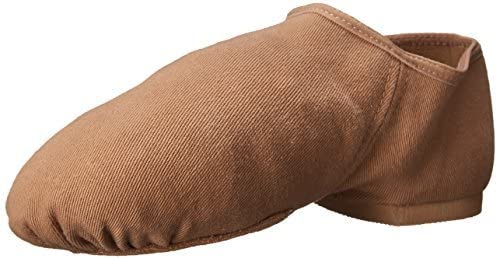
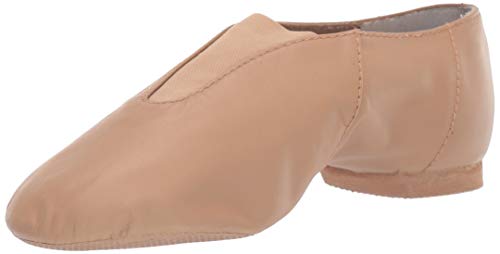
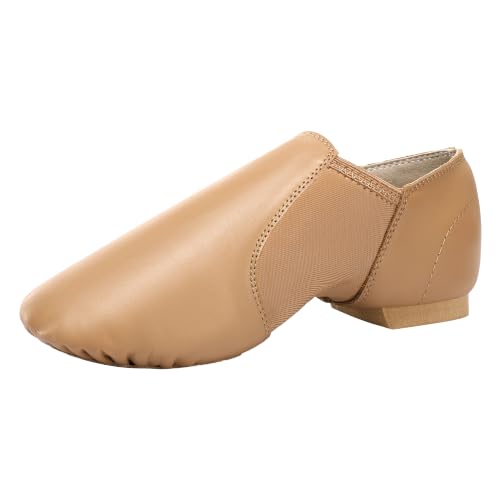
A split sole is a recurring feature across this comparison. It separates the forefoot and heel sections so the shoe can flex with the foot. Bloch Neo-Flex, Bloch Spark, Bloch Phantom, Bloch Pulse, Capezio Series EJ2C, Super Jazz, Future Star, Dynadans, Stelle, and Linodes all document split-sole construction. That makes these models relevant for jazz movements that require foot articulation rather than a stiff, continuous outsole.
Split sole alone does not describe the complete floor feel. The Phantom lists a combination of suede and rubber and a moldable suede front sole. The Pulse also identifies a moldable suede front sole and connects it with spinning and turning. Those descriptions provide more specific information about how the forefoot is intended to interact with the floor. By comparison, models with EVA or synthetic sole components may still flex well, but the supplied evidence does not describe their turning behavior in the same detail.
Compare the upper and arch construction
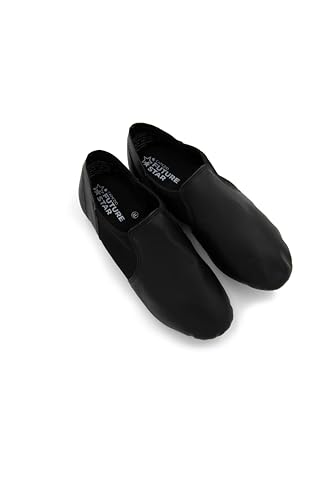
Leather is used in many of the selected models. It can provide a structured upper while remaining flexible, but the listings do not establish identical softness or fit across brands. The Neo-Flex combines leather with neoprene, while the Spark uses supple leather with an arch-hugging neoprene midsection. Capezio’s EJ2C lists a soft leather upper and neoprene arch. Future Star also combines a soft leather upper with a neoprene arch.
Stretch fabric appears in the Phantom, whose four-way stretch canvas is described as following the contours of the foot. The Stelle model uses genuine leather with a neoprene stretch arch, and Dynadans lists a neoprene stretch arch insert. These details can be useful when a dancer needs a shoe that follows the arch rather than sitting like a rigid street shoe. They do not, however, replace checking the actual size chart or width guidance.
Look for support details without overreading them
Support features vary considerably. The Neo-Flex is the only selected model with an explicitly stated high arch and cushioned insole. The EJ2C lists a padded insole and non-slip heel counter. The Spark specifies a full heel counter and heel notch, while the Pulse uses a low-profile heel intended to create a closer-to-the-floor feeling. Dynadans and Linodes both list a flat heel of approximately 0.4 inches.
These specifications describe design intent, not a guarantee that a shoe will suit every foot. A dancer with a high instep may need special attention to the EJ2C guidance, which says to choose a wide width for a high instep. The Neo-Flex listing also shows a particular width in its supplied size information. Always compare the child’s measured foot with the manufacturer’s instructions rather than relying only on a street-shoe number.
Consider lining, cushioning, and changing speed
Young dancers often need to change shoes between activities. Slip-on construction appears in most of the selected models, including the Neo-Flex, EJ2C, Super Jazz, Future Star, Dynadans, Stelle, and Linodes. The Phantom and Pulse listings focus more on performance construction than on quick-change details.
Lining and cushioning are useful secondary considerations. The EJ2C lists absorbent cotton lining and a foam-padded insole. Dynadans specifies fabric lining, while Linodes lists fabric lining and EVA components. The Neo-Flex describes a cushioned insole and breathable materials. These details may matter during longer classes, but the supplied data does not establish how any shoe feels during extended wear.
Check sizing and width before ordering
Sizing guidance is not uniform. Capezio’s EJ2C says to begin one-half size up from street-shoe size and gives separate guidance for a high instep. Capezio Future Star also says to begin one-half size up. Bloch’s Spark, Phantom, and Pulse listings use different starting guidance depending on the child-size range. Stelle says the shoes may appear small because of their intended stretch, while Linodes asks shoppers to measure foot length and choose from its size information.
The most suitable evidence-based process is to measure both feet, review the exact model’s chart, and check whether the listing specifies medium or wide sizing. Do not assume that two shoes marked with the same US size will fit identically. A snug dance-shoe fit can be intentional, but it should not be confused with an unverified need to size down.
Match the shoe to the class environment
For general jazz classes, the best girls’ jazz dance shoes will usually be the model whose documented split sole, upper, and fit guidance align with the dancer’s needs. The Neo-Flex and EJ2C are broadly specified choices with leather, neoprene, and support details. The Phantom and Pulse are more technically described around turning and floor contact. Spark emphasizes heel structure and close fit.
For a straightforward beginner design, Future Star and Dynadans provide the essential split sole, flexible upper or arch insert, and slip-on format. Stelle and Linodes offer similar core construction with different material and sole details. A studio may also have rules about color, sole material, or shoe style, so confirm those requirements before choosing between black, tan, or brown options.
Final Recommendation
Bloch Neo-Flex Leather Neoprene Jazz Shoe ranks first overall in this specification-based comparison under the published weighted criteria.
Bloch Neo-Flex Leather Neoprene Jazz Shoe is the highest-scoring returned product and the first overall specification-based choice among these top girls’ jazz dance shoes. Its documented split sole, leather-and-neoprene upper, cushioned insole, high-arch support, and breathable construction create the most complete feature set in this comparison.
Choose the Bloch Phantom when the listing’s specific suede-and-rubber sole information and moldable suede front are more important than cushioning details. Choose the Bloch Spark for its full heel counter, heel notch, and arch-hugging neoprene section. The Capezio EJ2C is a sensible alternative when a padded insole, cotton lining, and clear high-instep guidance are priorities.
The best girls’ jazz dance shoes are not determined by a brand name alone. Fit, width, studio requirements, and the dancer’s preferred floor contact should guide the final decision. Treat the scores as a structured reading of supplied specifications, then verify the size chart for the exact color and size being considered.
Frequently Asked Questions
What features matter most in the best girls’ jazz dance shoes?
Look first for a documented split sole, an upper that can flex with the foot, and fit details that match the dancer’s size and width. A stretch arch, leather or canvas upper, and clearly described sole patch can help compare designs. Support details such as a heel counter, cushioned insole, or flat heel are useful secondary specifications.
Are split-sole jazz shoes suitable for young dancers?
The selected listings show split soles across a range of children’s jazz shoes. A split sole is designed to allow foot articulation, but suitability still depends on the class requirements, studio floor, and fit. Confirm that the instructor permits the design and use the model-specific sizing guidance.
The Bloch Phantom and Bloch Pulse provide the clearest turning-related descriptions. Phantom lists a suede-and-rubber outsole and moldable suede front sole, while Pulse also lists a moldable suede front sole and a low-profile heel. These statements describe intended construction rather than a hands-on performance result.
How should parents approach jazz-shoe sizing?
Measure the child’s foot and compare it with the exact product chart. The listings differ: some recommend beginning above street-shoe size, some provide special high-instep guidance, and Stelle notes an intended stretch factor. Check width as well as length, especially when the listing identifies a medium or wide size.
Should a child wear jazz shoes for other dance styles?
Several selected listings describe broader use, including contemporary, lyrical, modern, or other dance activities. The Neo-Flex, Phantom, Stelle, and Linodes listings mention uses beyond jazz. Whether a shoe is appropriate for another class depends on that activity’s surface, movement requirements, and instructor rules.