Buying Guide
The best kitchen window films solve different problems: some obscure the view, some preserve a daytime view outside, and others mainly add decorative color. Start by identifying the window’s job before comparing patterns or tint. A street-facing kitchen may need stronger privacy, while a sunny sink window may benefit more from reflective heat control. For cabinets or sidelights, appearance and easy trimming can matter more than maximum solar blocking.
Choose the privacy design first
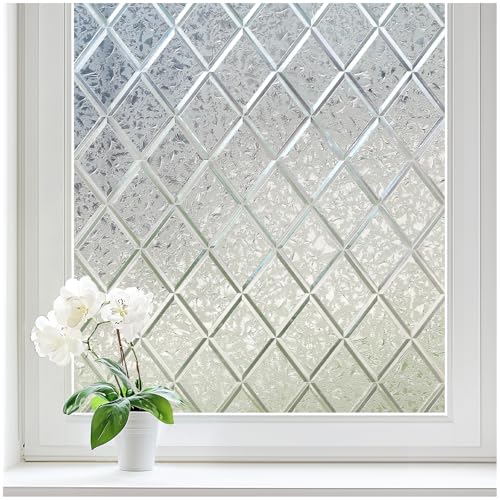
Frosted films are the simplest choice when the priority is obscuring the view. rabbitgoo Frosted Glass Privacy Film is positioned for strong privacy while still allowing soft light. Coavas Frosted Glass Privacy Film takes a similar approach and documents visibility blocking. These designs do not preserve a clear outside view, but they can make a kitchen feel brighter than a fully covered window.
Reeded films create a more directional, textured appearance. VELIMAX Reeded Glass Film simulates reeded glass and is intended to add privacy without replacing the pane. SUNBABY Reeded Glass Privacy Film uses vertical grooves with a Moroccan pattern, making it more decorative. Both are static-cling products for smooth glass, so they are relevant when you want a designed surface rather than plain white frosting.
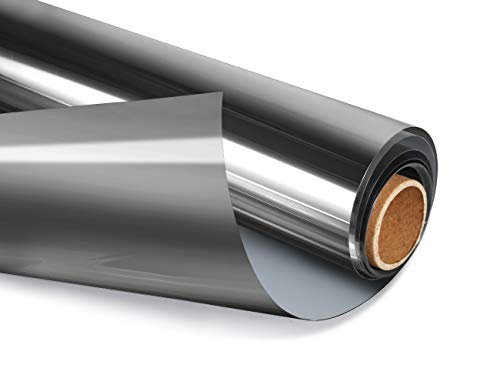
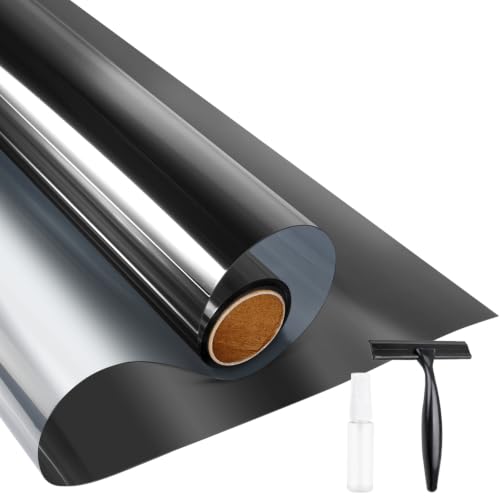
Reflective films work differently. FILMGOO One-Way Mirror Privacy Film, HIDBEA One-Way Privacy Window Film, KESPEN One-Way Static-Cling Tint, and Dwersty Upgraded One-Way Window Film all describe daytime privacy with an outside-facing reflective appearance. This effect depends on lighting: it works when the exterior is brighter than the interior and may not provide privacy at night when indoor lights are on. Treat these as daytime solar-control films, not universal privacy coverings.
Match light control to the window
If the kitchen receives direct sun, examine the documented UV and infrared claims as well as the privacy style. rabbitgoo Frosted Glass Privacy Film states 99% UV blocking, while Coavas and Haton Frosted Lattice Privacy Film document UV protection. These figures are listing claims, not independent test results, but they help distinguish the options on paper.
Reflective films provide more specific heat-control language. FILMGOO states up to 81% infrared heat reflection and up to 93% UV blocking. HIDBEA states 85% infrared and 90% UV blocking, while Dwersty states 85% infrared and 93% UV blocking. KESPEN states 82% infrared and 90% UV blocking. These products may be more appropriate for bright windows where glare and heat are as important as privacy.
Decorative films can filter light without making the window look plain. SOMWISE Rainbow Stained-Glass Privacy Film is designed to create a rainbow effect in sunlight and states 92% UV blocking. Haton uses a lattice and floral appearance while maintaining soft illumination. The more visible the pattern, the more carefully you should compare it with cabinets, counters, and backsplash colors.
Check installation and glass compatibility
Every selected product uses a no-glue or static-cling approach, but installation still requires preparation. The listings generally call for smooth, clean glass and water during application. Clean the pane thoroughly, measure it, cut the film, wet both surfaces as directed, and remove trapped water with a squeegee or similar tool. Buying a slightly larger sheet can make trimming easier, but confirm the actual roll dimensions before ordering.
Coavas adds printed grid lines and backing tabs, which can help with measuring and separating layers. Dwersty also documents one-inch backing grids and complementary tools. rabbitgoo Frosted Glass Privacy Film describes trimming for different shapes and applications. These details are useful for first-time installers, but they do not guarantee a perfect finish; careful surface preparation remains important.
KESPEN gives clear restrictions: it is not intended for double-paned, frosted, cut, or curved glass. The other products also center on smooth, flat, clean surfaces. Do not assume a film will adhere to textured, patterned, or uneven glass merely because it is labeled for windows. Cabinet panels may work when their glass is smooth, but measure each panel independently.
Consider coverage and orientation
Most selected rolls are approximately 17.5 inches wide and about 78.7 inches long. That format suits many individual kitchen panes, but a wide window may require multiple sections or a wider product. Measure the glass, account for trimming, and plan seams before installation.
Pattern direction also matters. Haton documents horizontal or vertical installation, while reeded designs such as VELIMAX and SUNBABY may look different depending on how their grooves run. For a narrow sidelight, vertical lines can emphasize height; for a broad cabinet panel, pattern alignment may be more noticeable. Decorative films should be dry-fitted conceptually before the backing is removed.
Use a practical selection checklist
For strong visual privacy, begin with rabbitgoo Frosted Glass Privacy Film or Coavas Frosted Glass Privacy Film. For a decorative privacy surface, compare Haton, VELIMAX, SUNBABY, and SOMWISE. For daytime privacy that keeps an exterior view, compare FILMGOO, HIDBEA, KESPEN, and Dwersty. Then check the lighting limitation of reflective designs, the glass restrictions, the roll dimensions, and whether the stated UV or heat-control feature addresses your specific window.
No product in this comparison was hands-on tested, and the ranking does not summarize customer sentiment. It is based on supplied specifications and feature descriptions, including privacy approach, light behavior, solar-control claims, installation method, and design or coverage utility.
Final Recommendation
Coavas Frosted Glass Privacy Film ranks first overall in this specification-based comparison under the published weighted criteria.
rabbitgoo Frosted Glass Privacy Film is the first overall specification-based choice among these best kitchen window films because it combines strong privacy positioning, soft light, 99% stated UV blocking, reusable static cling, and flexible trimming. Coavas is the more installation-focused alternative, especially with its grid lines and backing tabs. Choose FILMGOO when retaining a daytime outside view is more important than nighttime privacy, or SOMWISE when a rainbow decorative effect is central to the project. Among the top kitchen window films, the right choice depends most on whether your window needs privacy, solar control, or visual decoration.
Frequently Asked Questions
Are the best kitchen window films suitable for cabinets?
Some are. rabbitgoo Frosted Glass Privacy Film is described for doors and cabinets, and Coavas is listed for kitchen cabinets. The glass should still be smooth, clean, and flat, and the panel should be measured before cutting. A film designed for glass should not automatically be applied to painted wood, acrylic, or textured surfaces without compatibility information.
Do one-way films provide kitchen privacy at night?
Not reliably. FILMGOO, HIDBEA, KESPEN, and Dwersty describe a daytime reflective effect that depends on brighter exterior light. When interior lighting is stronger, the effect may diminish or reverse. If nighttime privacy is essential, a frosted design such as rabbitgoo or Coavas is the more directly supported type.
How should I prepare glass before installing a film?
Use a clean, smooth pane and follow the product’s water-application instructions. The supplied descriptions commonly recommend spraying water, positioning the film, and removing excess water and air. Coavas and Dwersty document grid aids, while rabbitgoo describes trimming and repositioning. Confirm the surface is suitable before installation and leave extra material for final trimming.
Can kitchen window film reduce fading?
Several selected listings state UV blocking intended to help protect furniture, flooring, or fabrics from fading. The stated figures vary by product, including 90% to 99% claims across several options. These are supplied listing specifications rather than independent test findings, so treat them as comparison information and consider the window’s exposure and existing glazing.