Buying Guide
The best pet window films are not a single design type. A clear safety film can address claws and impact concerns while preserving the view; a reflective film can add daytime privacy and reduce sun exposure; a frosted film can provide privacy in both lighting conditions; and a blackout film can reduce incoming light more aggressively. Start with the problem your window creates rather than choosing by appearance alone.
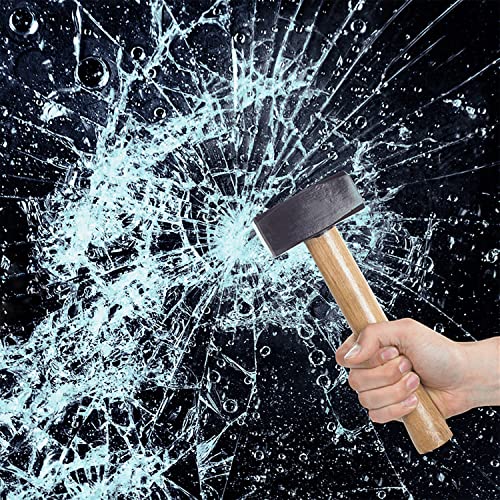
If a dog scratches at a back door or a pet jumps against a sliding door, prioritize a product whose listing directly discusses glass protection or scratches. NIDOJP documents a 4-mil clear safety layer, pet-claw protection, and the ability to hold broken glass together. MAKIOTEKO also specifies 4-mil PET material, an anti-scratch surface, and shatter retention. These are the most directly supported choices for impact and claw-related concerns.
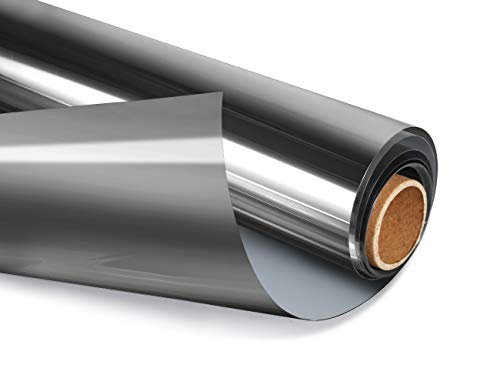
Reflective PET products take a different approach. rabbitgoo Black Silver, FuFin, and Flueen describe impact-resistant or fragment-retention features alongside privacy and solar control. Those claims make them relevant where pets share a sunny room, but they should not be treated as a substitute for replacing damaged glass or for professional safety work. The supplied listings describe film functions, not independent testing or a structural guarantee.
Decide how much privacy you need
One-way films are designed around a lighting relationship. rabbitgoo Black Silver, FuFin, Flueen, and HIDBEA describe a mirror effect or see-out, not-in effect during the day. Their listings also warn, directly or indirectly, that the effect changes when interior lighting is stronger. Curtains or another privacy layer may still be needed at night.
Frosted films are more consistent when privacy is needed around the clock. Coavas and Haton describe views being obscured from both sides while soft or natural light passes through. That makes them sensible for bathrooms, entry sidelights, and windows where a pet can enjoy daylight without a clear street-facing view. The trade-off is that the outdoor scene becomes obscured.
Blackout designs are appropriate when privacy and light blocking matter more than visibility. Blackout coverage works best when the glass is covered closely, because gaps at the edges can allow light through. Consider whether the room needs daylight before selecting this type.
Compare sun, glare, and UV specifications
UV and heat language varies by product, so compare the documented figures and the type of control described. The reflective films list UV and infrared blocking, with rabbitgoo Black Silver, FuFin, Flueen, and HIDBEA also discussing glare or heat control. Clear safety films such as NIDOJP and MAKIOTEKO preserve the transparent appearance while still listing UV protection, making them better fits when a visible tint is undesirable.
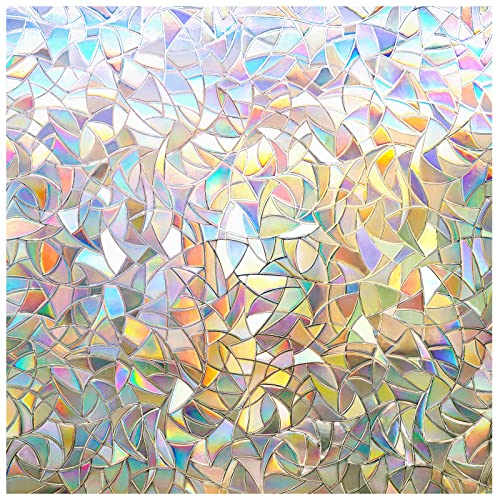
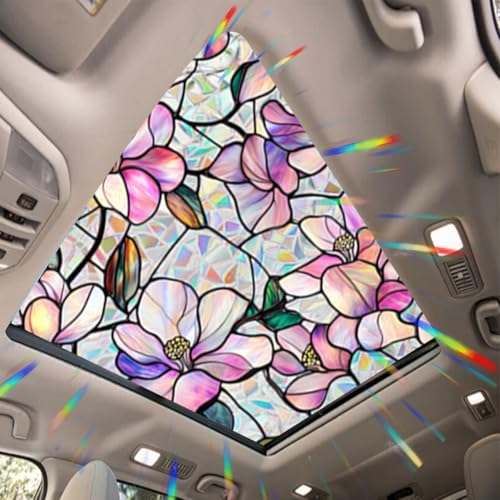
Frosted and decorative films can soften sunlight while maintaining some natural illumination. Coavas and Haton list UV reduction and glare or heat benefits. rabbitgoo Rainbow uses filtered light and UV reduction as part of its decorative design. These features may help protect furnishings and make bright glass more comfortable, but the listings do not establish room-specific temperature results.
Check installation type and glass compatibility
Static cling is the most removable approach in this group. Coavas, Haton, HIDBEA, rabbitgoo Rainbow, and rabbitgoo Blackout describe water-assisted installation without glue. This can be useful for renters, seasonal changes, or households still deciding where a film belongs. Static-cling products generally call for smooth, clean, flat glass; follow each listing’s surface guidance rather than assuming compatibility with textured or curved glass.
Adhesive films can support safety-oriented designs, but installation requires more care. NIDOJP, MAKIOTEKO, FuFin, and rabbitgoo Black Silver use adhesive or glue-based language. Some kits include a spray bottle, squeegee, or utility knife. MAKIOTEKO specifically says two people may install it better, which is worth noting for a long roll. Measure the glass first, clean away dust, and use the supplied instructions.
Measure coverage before ordering
Several selected products are approximately 17.5 or 17.7 inches wide and about 6.5 feet long, including many reflective, frosted, blackout, and decorative choices. NIDOJP is listed at 17.7 inches by 6.56 feet, while MAKIOTEKO offers a 20-inch by 10-foot roll. Coavas and Haton are listed at 17.5 by 78.7 inches. These dimensions may suit a single pane or door section, but the correct quantity depends on your glass measurements and cutting plan.
Coverage also affects installation quality. A roll that is too narrow may leave uncovered edges, while a large sheet can be awkward to position. For blackout film, the listing specifically emphasizes minimizing edge gaps. For decorative films, align the pattern and account for the direction of sunlight before making final cuts.
Practical selection checklist
- Identify whether the priority is claw and impact protection, privacy, UV control, glare reduction, room darkening, or decoration.
- Choose clear, reflective, frosted, or blackout construction based on the view and privacy schedule you want.
- Confirm the roll size against every pane, door, or sidelight you plan to cover.
- Check whether the product is static cling or adhesive and whether the glass is smooth and flat.
- Note nighttime limitations for one-way films and visibility limitations for frosted or blackout films.
- Treat technical claims as listing specifications, not as independent test results.
Final Recommendation
rabbitgoo Black Silver One-Way Window Tint ranks first overall in this specification-based comparison under the published weighted criteria.
The final choice among the best pet window films depends on the documented features that match your intended use.
NIDOJP 4 Mil Clear Window Safety Film is the focused choice for households that put pet-claw and impact-related glass protection first. Its clear finish, 4-mil specification, cut-to-size format, and explicit pet-use language give it the most specification-aligned safety-oriented case.
For sunny rooms with a need for daytime privacy, rabbitgoo Black Silver and FuFin provide a feature-dense reflective approach, while Flueen suits buyers wanting a darker window and glare reduction. Coavas and Haton are better matches for consistent frosted privacy, especially when a pet needs a softly lit area without a direct view outside. rabbitgoo Blackout is the specialist choice for room darkening, and rabbitgoo Rainbow adds decorative light diffusion when partial privacy is enough.
Among the top pet window films, the best match depends on whether your priority is safety, privacy, light control, or a removable installation. Measure carefully, confirm glass compatibility, and remember that one-way privacy is normally a daytime effect.
Frequently Asked Questions
Are the best pet window films claw-proof?
No selected listing establishes that any film is claw-proof. NIDOJP explicitly describes scratch and pet-claw protection, while MAKIOTEKO specifies an anti-scratch surface. Those features support a more scratch-focused choice, but they do not establish that severe or repeated scratching cannot damage the film or glass.
Which film is best for a pet window that still needs an outdoor view?
A clear film such as NIDOJP or MAKIOTEKO preserves transparency. A reflective film such as rabbitgoo Black Silver or FuFin can preserve a daytime see-out effect while adding privacy, but the listing limitations matter: the one-way effect can reverse at night when interior lighting is stronger.
Is frosted film better than blackout film for a pet room?
It depends on whether you want daylight. Coavas and Haton describe frosted privacy with soft light transmission, so they can make a private viewing area without fully darkening the room. rabbitgoo Blackout is more appropriate when blocking light and outside views is the main goal.
Can these films be removed from rental windows?
Several selected products use static cling and describe clean removal, including Coavas, Haton, HIDBEA, rabbitgoo Blackout, and rabbitgoo Rainbow. Adhesive products may also describe removability, but follow the individual installation guidance and test a small area if the glass or finish is sensitive.
What should I measure before buying window film?
Measure each smooth glass section’s width and height, then compare those measurements with the roll dimensions. Plan for trimming where appropriate, and avoid assuming that one roll will cover multiple panes. Blackout designs require particular attention to edge coverage because gaps can allow light through.