Buying Guide
The best electric fuel pump modules are not universal parts in the practical sense. Each assembly is designed around a particular tank, electrical connector, engine family, sending-unit layout, and replacement-number group. A module can look similar to another unit and still be unsuitable. Use the comparison above as a specification-based shortlist, then verify the vehicle details against the complete fitment information before selecting a replacement.
Start with the complete vehicle match
Year, make, model, engine, body style, and drivetrain are the first checks. The selected products show why this matters. The DOLKSN E8738M listing separates Volkswagen Passat and CC configurations by body style, engine, and front-wheel-drive details. The OTO-K E8642M assembly adds a four-pin limitation for Honda Odyssey applications. The VANBOL E8874M covers Corolla, Matrix, and Vibe vehicles but spans both 1.8L and 2.4L engines.
For trucks and SUVs, tank and chassis differences can be equally important. The Tutor Auto E3621S is aimed at specific 1988–1995 Chevrolet and GMC C/K pickups, while the BDFHYK E7116M covers a defined Dodge Dakota generation with several engines. Do not treat a vehicle name alone as sufficient evidence of compatibility. Confirm the model year, engine displacement, tank configuration where listed, and connector arrangement.
Use OE and replacement numbers together
Reference numbers are useful because they provide a second way to validate fitment. Compare the original module’s number, the vehicle service record, and the candidate listing. The KacuYelin E7272M lists E7272M, P76743M, FG0890, SP7080M, and 68060507AB. The Tutor Auto 5136023 assembly supplies a long group of Chrysler and Dodge references. The Aumzong 31110-D5500 listing includes 31110-D5500, 31110-C2500, SP3087M, and several related numbers.
A matching reference number is helpful but should not override a vehicle mismatch. Some manufacturers use different assemblies within the same model year or engine family. Treat the OE number as a cross-check, not as permission to ignore connector, tank, sending-unit, or trim information.
Understand what the module includes
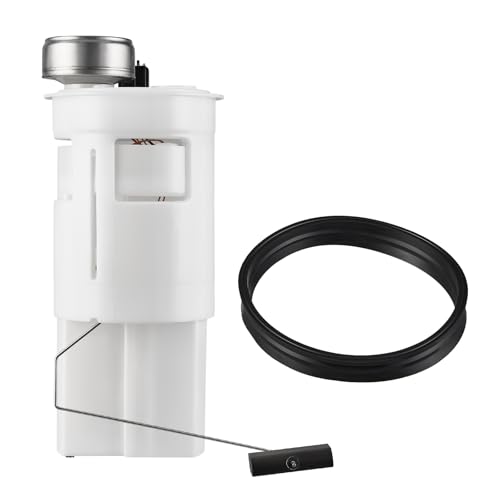
A fuel pump module may include more than the electric pump motor. Depending on the design, it can incorporate a sending unit, filter or strainer, pressure-sensing hardware, wiring, housing, and mounting components. The Tutor Auto 5136023 listing specifically identifies left and right sending units. The Aumzong listing identifies a sending unit. The BDFHYK Dakota and Land Rover LR2 listings describe built-in filter elements.
In contrast, the KacuYelin listing cautions that some fuel-pump versions may not include a fuel filter and that some oil-level sensors may need to be installed separately. Those details show why the phrase module assembly does not guarantee identical contents across products. Review the package description and compare it with the components being replaced.
Compare construction claims carefully
Public listing data can identify design details, but it cannot establish real-world service life through this comparison. Look for specific information rather than relying only on broad quality language. The KacuYelin E7272M documents a carbon commutator, scoop impeller, and oil-level signal. The BDFHYK products identify POM plastic, precision components, and filter elements. The Vurkcy Ram 1500 listing describes injection molding used to reinforce plastic components.
These details help explain the intended design, but they are not substitutes for checking fitment or inspecting the old assembly. A construction feature is useful only when it belongs to the correct application and the necessary components are included.
Check installation requirements
Several listings describe OE-style or direct-replacement mounting. The BDFHYK Dakota and LR2 modules state that their designs use original-equipment mounting points without special tools or modifications. The Tutor Auto 5136023 listing also describes a no-modification installation approach. These statements describe the intended fit, not a claim that every installation will be identical.
Connector details, sensor installation, seals, fuel-line connections, and tank access can affect the work. The OTO-K four-pin restriction and the KacuYelin sensor warning are especially important examples. If the listing recommends professional installation, consider that guidance when the vehicle requires tank removal or when fuel-system connections are difficult to access.
Match the module to the vehicle’s role
The top electric fuel pump modules in this comparison serve different applications rather than one universal design. The KacuYelin E7272M and Tutor Auto 5136023 prioritize broad multi-model coverage. The VANBOL E8874M is aimed at several related compact vehicles. The Vurkcy Ram 1500 and BDFHYK Dakota modules are more focused truck choices. The OTO-K Odyssey and BDFHYK LR2 products are narrow application-specific assemblies.
Choose the product whose documented fitment most closely matches the vehicle, not the product with the longest title or the largest reference-number list. A focused module with the correct connector and engine application is generally a better specification match than a broader-looking unit that lacks the required configuration.
Final recommendation
KacuYelin E7272M Fuel Pump Module ranks first overall in this specification-based comparison under the published weighted criteria.
KacuYelin E7272M Fuel Pump Module is the first overall specification-based choice among the best electric fuel pump modules in this comparison. Its broad 3.6L coverage, detailed reference numbers, carbon-commutator and impeller information, and documented sensor behavior give it the most complete evidence profile. For classic GM pickups, the Tutor Auto E3621S is the focused alternative; for Toyota Corolla, Matrix, and Pontiac Vibe applications, the VANBOL E8874M offers the widest documented range. The top electric fuel pump modules still require exact vehicle and part-number confirmation before installation.
Frequently Asked Questions
What should I verify before choosing one of the best electric fuel pump modules?
Confirm the year, make, model, engine, body style, drivetrain, tank configuration, connector or pin count, and original part number. The OTO-K Odyssey module, for example, is identified specifically for four-pin applications. Use all available fitment details together rather than relying on the vehicle name alone.
Does every fuel pump module include a sending unit and filter?
No. The selected listings document different contents. The Tutor Auto 5136023 and Aumzong 31110-D5500 listings identify sending units, while the BDFHYK Dakota and LR2 listings describe built-in filter elements. KacuYelin warns that some versions may not include a fuel filter and that some sensors may require separate installation. Confirm the exact package contents.
Are OE reference numbers enough to confirm compatibility?
They are an important cross-check but not the only one. A reference number should agree with the vehicle’s year, engine, connector, tank, and module layout. If any of those details conflict, consult the full fitment information or a qualified parts specialist before installation.
Which selected module has the broadest vehicle coverage?
The KacuYelin E7272M listing covers specified Dodge Grand Caravan, Chrysler Town & Country, Ram C/V, and Volkswagen Routan applications with 3.6L engines. The VANBOL E8874M also covers several vehicle lines, including Toyota Corolla, Toyota Matrix, and Pontiac Vibe, with multiple engine configurations.
Can a direct-replacement claim replace professional fitment checking?
No. Direct-replacement or OE-style mounting claims describe the intended installation design. They do not remove the need to confirm connector type, wiring, seals, sending-unit arrangement, and vehicle-specific fitment. Follow the listing’s installation guidance and seek professional help when the fuel-system work requires it.