Buying Guide
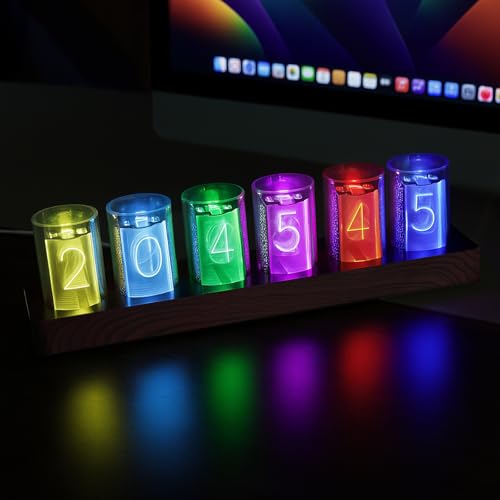
The best nixie tube alarm clocks are not a single technology category. Public listings use the term for authentic gas-discharge tubes, fluorescent tube designs, and modern IPS displays shaped to resemble glowing tubes. That difference matters more than styling alone. If the tube material is important, look for a named type such as IN-12, IN-14, or IN-4. If you mainly want the visual effect, an IPS or RGB simulation can provide more colors, images, and animations.
Authentic tubes versus simulated displays
Authentic tube models in this comparison include the TPHRAVAL IN-14, Nixie Star IN-14 bundle, Nixie Star IN-12, and handmade IN-4 clock. These listings identify specific tube families and, in some cases, describe replaceable tubes. The Nixie Star products are notable because the listings mention replaceability, while the bundle includes a spare tube. That construction may matter to collectors who want a clock designed around serviceable display components.
The TPHRAVAL IV-6 listing is more precisely described as using fluorescent tubes. It still belongs in a retro tube-clock comparison, but shoppers should distinguish VFD technology from traditional cold-cathode nixie tubes. By contrast, ClocTeck, Tikonir, Lonyiabbi, JoFomp, and MOSHOU emphasize RGB or IPS displays. Those products can offer more colors, images, and animations, but the supplied evidence does not support calling them authentic gas-discharge tube clocks.
Alarm functions to compare
A clock can be visually impressive yet weak as an alarm. Check whether the listing states one alarm, multiple programmable alarms, snooze, voice announcements, melodies, or only a general alarm-clock label. The TPHRAVAL IV-6 model documents four programmable alarms, snooze, multiple melodies, and independent volume control. JoFomp lists six digital alarms, making it a useful option for households with different schedules.
Other models are more basic. Tikonir documents alarm and countdown functions, while ClocTeck lists an alarm and a 99-minute timer. The authentic IN-14 and IN-12 models document alarm functionality but provide less detail about scheduling. If you need several wake times or different alarm sounds, favor the listings that specify those controls rather than assuming every digital alarm clock has the same programming.
Wi-Fi, apps, and manual setup
Automatic time correction can be useful when a clock is moved between rooms or when daylight-saving settings change. ClocTeck, Lonyiabbi, JoFomp, MOSHOU, and the TPHRAVAL smart models document Wi-Fi-based calibration or synchronization. Some also provide browser or app control. JoFomp emphasizes web control across several platforms, while MOSHOU requires attention to the supported 2.4G Wi-Fi connection described in its listing.
Not every clock needs a network connection. Traditional tube designs may be preferable if you want a simpler decorative object with remote or physical controls. However, do not assume automatic correction, battery backup, or power-loss memory unless the listing says so. Tikonir explicitly states that its time must be reset after power loss, while MOSHOU states that it is USB-powered and has no built-in battery.
Brightness and nighttime viewing
Brightness control is important when a clock will sit beside a bed. Tikonir documents five brightness levels, and TPHRAVAL IN-14 documents adjustable ambient lighting. The Nixie Star models add motion sensing, which can activate or dim the clock based on proximity. The TPHRAVAL IN-14 model also documents automatic brightness adjustment, giving it a more clearly specified approach to changing room conditions.
RGB simulation models generally offer more visual control. Lonyiabbi lists six flash modes, while ClocTeck and Tikonir describe several color effects. These features are useful for desk decor, but colorful lighting is not the same as tube brightness management. Buyers who want a calmer bedside display should prioritize explicit brightness controls or sensor features.
Power, assembly, and placement
Review the power and setup details before choosing a model. ClocTeck and Tikonir require a Type-C connection and do not require assembly. The TPHRAVAL IN-14 listing also specifies Type-C power. JoFomp is different: it is a DIY kit with multiple components and requires external USB power. That can benefit makers, but it is less suitable if you want to plug in the clock immediately.
Physical dimensions also vary. Traditional models are generally compact desk objects, while some IPS designs are longer or taller. Use the supplied dimensions as a planning guide, and leave room for a power cable, remote, and surrounding decorative lighting. A clock with a wider base may be better on an office desk, while a smaller design may fit a nightstand more easily.
How this comparison was made
This is a specification-based comparison using public listing evidence. Products were considered when their titles, features, and specifications identified a nixie, nixie-style, or related glowing-tube clock and documented an alarm function. Accessories and unrelated products were excluded. Scores use only category-specific evidence for tube or display authenticity, alarm functionality, time synchronization and control, display customization, and practical utility. No customer opinions, popularity signals, marketplace labels, or hands-on performance claims were used.
Final recommendation
TPHRAVAL IN-12 VFD Nixie-Style Clock ranks first overall in this specification-based comparison under the published weighted criteria.
TPHRAVAL IN-14 Nixie Tube Clock is the first overall specification-based choice among these best nixie tube alarm clocks. It documents genuine IN-14 tubes, alarm operation, countdown, timer, date display, Type-C power, and adjustable backlighting, giving it a well-rounded traditional-tube feature set in this comparison.
Choose the Nixie Star IN-14 bundle if replaceability and a spare tube matter most. The handmade Nixie Star IN-12 is a useful alternative when motion, temperature, and humidity readings are more important than smart synchronization. For a distinctive collector design, the handmade IN-4 with Dekatron is a notable option, but it documents fewer convenience features.
The TPHRAVAL IV-6 model is a compelling alternative for shoppers who prioritize smart controls, voice announcements, and multiple alarms over strict cold-cathode tube authenticity. Among simulated designs, JoFomp provides the most detailed documented alarm and web-control package, while ClocTeck is simpler to set up. The top nixie tube alarm clocks therefore divide into three practical groups: authentic tube clocks, smart retro tube displays, and IPS or RGB simulations.
Before ordering, confirm the tube technology, alarm programming, power connection, brightness behavior, and whether the clock remembers its settings after an outage. Those checks will help match the visual style to the daily routine rather than relying on the product title alone.
Frequently Asked Questions
Are all of the best nixie tube alarm clocks in this comparison made with real nixie tubes?
No. Some selected products document authentic IN-12, IN-14, or IN-4 tubes, while others use IV-6 fluorescent tubes, IPS screens, or RGB components that simulate the tube appearance. The display technology is identified in each product verdict so buyers can separate collector-oriented hardware from modern visual replicas.
Which best nixie tube alarm clocks offer automatic time synchronization?
ClocTeck, Lonyiabbi, JoFomp, MOSHOU, and the selected TPHRAVAL smart models document Wi-Fi-based timing or synchronization. The traditional Nixie Star and handmade IN-4 listings do not document automatic network calibration, so their time-setting process should not be assumed to match the smart models.
Which model is better for several daily wake-up times?
The TPHRAVAL IV-6 model documents four programmable alarms, while JoFomp lists six digital alarms. Those are the clearest choices when multiple schedules are important. Other selected clocks document an alarm but provide less detail about the number of alarm slots or programming options.
Do these clocks work without a battery?
Several listings describe USB or Type-C power, and MOSHOU specifically states that it has no built-in battery. Power behavior differs by model. Tikonir states that its time must be reset after power loss, so buyers who want uninterrupted settings should look for explicit memory or backup documentation rather than assuming it is included.
What should I choose for a bedside table?
Prioritize documented brightness control, motion sensing, and a clear alarm interface. Tikonir offers five brightness levels, the Nixie Star models document motion sensing, and TPHRAVAL IN-14 includes adjustable ambient lighting. If colorful animations or photo displays are distracting at night, an authentic tube model with simpler controls may be a better fit than an IPS model with extensive visual modes.