Buying Guide
The best organic herbal tea is usually the one whose botanical identity, certification information, and preparation format match how you plan to drink it. The products above are not hands-on test winners; they are ranked from supplied listing evidence. That means the comparison emphasizes what is documented rather than making claims about cup strength, aroma performance, or personal results.
Start with the base herb or blend style
Single-herb products keep the flavor and ingredient profile easy to understand. Numi Organic Rooibos is identified as 100 percent real organic rooibos with no added flavorings, artificial fragrances, or blended fillers. Traditional Medicinals Organic Chamomile and Organic Lemon Balm provide similarly focused options, with chamomile described as floral and honey-noted and lemon balm described as mild with subtle citrus notes.
Blends create more layered profiles. Organic India Tulsi Sweet Rose uses three named tulsi varieties with sweet rose. TAZO Refresh Mint combines peppermint, spearmint, and sweet tarragon. Gardenika Flamma-tea lists turmeric, ginger, peppermint, Amalaki, rosemary, cinnamon, black pepper, and oregano. Pukka Night Time Berry adds berry, floral, sweet, and herbal elements through elderberry, blackcurrant, echinacea, chamomile, lavender, licorice, and valerian.
Check how organic status is documented
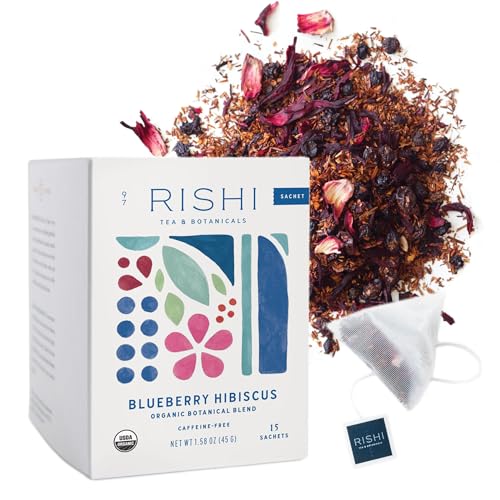
Look for the level of certification language supplied by the listing. Several selections specifically state USDA Certified Organic or USDA Organic, including Rishi Lavender Mint, Numi Rooibos, Traditional Medicinals teas, Organic India Tulsi Sweet Rose, and Rishi Blueberry Hibiscus. Gardenika describes its blend as 100 percent organic, while TAZO and Pukka identify their products as organic in their titles or descriptions.
Organic wording is only one part of the comparison. Some listings also document Non-GMO or Kosher credentials. Rishi products add details about biodegradable BPA-free sachets, and Traditional Medicinals describes compostable tea bags. These are useful specification differences, but they should not be treated as proof of taste or brewing performance.
Decide between tea bags, sachets, and loose leaf
Tea bags are the simplest format represented here and include the Traditional Medicinals, TAZO, Taylors-style category examples, and Pukka formats, although not every candidate is selected. Sachets are also pre-portioned, with Rishi products specifying sachet construction. Gardenika is the selected loose-leaf option and recommends one teaspoon in hot water for five to seven minutes. Loose leaf can offer a different preparation routine, but the listing does not establish that it produces a superior cup.
Pack size also varies. The selected products range from 15 sachets to 20 tea bags, while Gardenika provides a 4-ounce loose-leaf package and an estimated 40 to 50 cups. Treat those counts as listing specifications, not as a guarantee of serving consistency, since loose-leaf quantity and steeping preferences can differ.
Use caffeine status as a filter
Every selected product is documented as caffeine-free or naturally caffeine-free. Numi explicitly describes rooibos as naturally caffeine-free. The Traditional Medicinals, Rishi, TAZO, Organic India, Gardenika, and Pukka listings also state caffeine-free status. This makes the group suitable for shoppers specifically filtering for herbal infusions without listed caffeine, while keeping the comparison grounded in supplied product information.
Compare brewing instructions
Preparation guidance ranges from highly specific to general. TAZO specifies 212 degrees Fahrenheit, eight fluid ounces, and five minutes. Rishi Lavender Mint specifies 200 degrees Fahrenheit for five minutes, while Rishi Blueberry Hibiscus specifies 200 degrees Fahrenheit for five to seven minutes. Gardenika gives one teaspoon and five to seven minutes. Pukka provides a broader two-to-fifteen-minute range. When a listing does not provide a temperature or steep time, avoid assuming one from another product.
Match flavor notes to your preference
Choose floral and gentle profiles through chamomile or lemon balm. Choose mint-forward options through Rishi Lavender Mint or TAZO Refresh Mint. For tart fruit notes, Rishi Blueberry Hibiscus and Pukka Night Time Berry are more explicit. Ginger appears alone in Traditional Medicinals Organic Ginger and alongside lemon in Lemon Ginger, while Gardenika combines ginger and turmeric with mint, cinnamon, and other botanicals.
Final Recommendation
Numi Organic Rooibos Tea ranks first overall in this specification-based comparison under the published weighted criteria.
The final choice among the best organic herbal tea depends on the documented features that match your intended use.
Rishi Organic Lavender Mint Herbal Tea is the highest-scoring returned product and the first overall specification-based choice. It combines USDA Organic certification, a named lavender-peppermint-sage formula, caffeine-free status, biodegradable BPA-free sachets, and concrete brewing directions. Numi Organic Rooibos is the cleaner single-ingredient alternative, particularly when ingredient simplicity matters more than blend variety.
For a top organic herbal tea with a berry direction, Rishi Blueberry Hibiscus and Pukka Night Time Berry offer different interpretations: the former emphasizes tart hibiscus and forest berries, while the latter combines berry, floral, sweet, and herbal notes. Gardenika is the clearest loose-leaf choice because it supplies a lengthy ingredient list and a defined preparation method. Traditional Medicinals Organic Chamomile and Organic Lemon Balm are more focused options for shoppers who want a simple herb identity.
Frequently Asked Questions
What makes the best organic herbal tea different from a conventional herbal infusion?
This comparison prioritizes products that document organic status alongside a clearly identified herbal formula. USDA Organic or USDA Certified Organic wording appears on several selected listings, while other products use explicit organic wording in the supplied title or description. The comparison does not independently verify certification beyond the supplied evidence.
Are all of these organic herbal teas caffeine-free?
Yes, each selected listing states caffeine-free status or describes the botanical as naturally caffeine-free. Numi identifies rooibos as naturally caffeine-free, and the other selected products use caffeine-free wording in their supplied listing data. Always check the current package information if formulation details are important to you.
Which best organic herbal tea is easiest to prepare?
Pre-portioned tea bags and sachets are the most direct formats in this selection. TAZO, Rishi Lavender Mint, and Rishi Blueberry Hibiscus provide especially specific water-temperature or steeping guidance. Gardenika is loose leaf, so it requires measuring and a way to strain the botanicals.
Which selected tea has the clearest ingredient list?
Numi Organic Rooibos is the clearest single-ingredient option because it states 100 percent real organic rooibos with no added flavorings, artificial fragrances, or blended fillers. Gardenika also supplies a detailed list of named botanicals, including turmeric, ginger, peppermint, cinnamon, black pepper, and oregano.
Which option suits a tart flavor preference?
Rishi Organic Blueberry Hibiscus is described as vibrant and refreshingly tart, with forest-berry notes. Traditional Medicinals Hibiscus was not selected for the final ten, so it is not included as a recommendation here. Among the returned products, Rishi Blueberry Hibiscus provides the most direct tartness description.