Buying Guide
When comparing the best organic sesame oils, focus on the specifications that actually change how an oil performs in your kitchen or routine, not on marketing language. The picks below share three things: documented organic certification, a documented extraction method, and packaging designed to protect freshness. From there, the differences come down to seed type, flavor intensity, smoke point, and intended use.
Understanding Seed Type: Toasted vs Untoasted
Sesame oil flavor changes dramatically with seed handling. Toasted sesame oil, like the Kevala Organic Toasted Sesame Oil, is made from seeds roasted before pressing, which produces the deep, smoky aroma associated with Korean and Chinese finishing dishes. Untoasted or virgin sesame oils, such as the Eden Organic Extra Virgin Sesame Oil and the US Organic Sesame Seed Oil, keep a lighter, more neutral sesame character that suits sautés, dressings, and baking. If you want one bottle that leans toward Asian finishing, a toasted oil is the better match; if you want a versatile everyday cooking oil, an untoasted extra virgin option is more flexible.
Extraction Method and What It Means
Cold-pressing and expeller-pressing both avoid chemical solvents, but the terminology matters. The 365 by Whole Foods Market Organic Sesame Seed Oil and Eden Organic Extra Virgin Sesame Oil are explicitly cold-pressed, while La Tourangelle Organic Virgin Sesame Oil is expeller-pressed from high-quality seeds. Cold-pressed oils tend to retain more of the natural antioxidants, which is why Eden highlights sesamol and sesamin as naturally occurring preservatives. For raw applications like dressings, marinades, or drizzling over finished dishes, cold-pressed is usually the better-documented route.
Smoke Point and Cooking Style
Smoke point dictates how aggressively you can heat an oil. La Tourangelle lists a medium smoke point for its organic virgin sesame oil, while Kevala Organic Extra Virgin Sesame Oil in the 128 fl oz size documents a naturally high smoke point for stir-frying, roasting, and grilling. Toasted sesame oils, including the Kevala Organic Toasted Sesame Oil, typically sit in the medium range and are best used for flavoring at the end of cooking rather than as the primary cooking fat. Match the smoke point to your technique: low and medium heat for finishing oils, higher heat for explicitly high-smoke-point refined or extra virgin options.
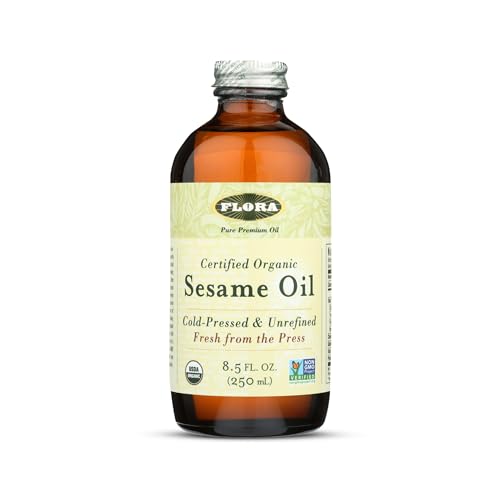
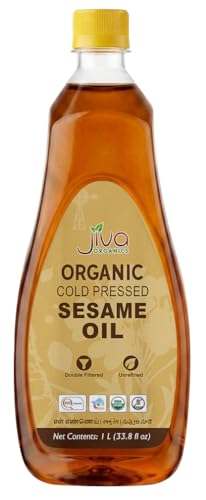
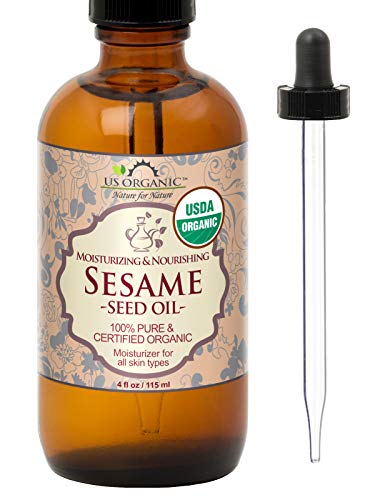
Sesame oil is sensitive to light and air. Several picks address this directly: Flora Certified Organic Sesame Oil uses a dark glass bottle that is nitrogen-flushed and light-resistant, and the 365 by Whole Foods Market bottle is also dark glass. Format size affects how often you finish a bottle. A 4 fl oz dropper bottle is well suited to skin care, an 8.4 to 16.9 fl oz bottle fits most home pantries, and the 33.8 fl oz Jiva Organics or 128 fl oz Kevala containers serve households and small kitchens that cook with sesame oil frequently.
Certification and Purity Documentation
USDA organic certification appears across the lineup, including the Kevala Organic Extra Virgin Sesame Oil, DAANA Sesame Oil for Skin, and Daana Organic Sesame Oil. Beyond organic, several bottles add extra documentation: Kevala lists gluten-free, kosher, and non-GMO Project verifications, while the Kevala Organic Toasted Sesame Oil is also vegan. The Eden listing goes further by documenting specific omega 3, 6, and 9 levels per tablespoon, which is useful for cooks and wellness users who want a clearer fatty acid picture. When comparing options, weigh which certifications matter for your household, such as kosher, vegan, gluten-free, or non-GMO, alongside the organic seal.
Matching the Oil to the Task
Different products in this top 10 are built for different jobs. Eden Organic Extra Virgin Sesame Oil and La Tourangelle Organic Virgin Sesame Oil are the most documented cooking and finishing options, while the Kevala Organic Toasted Sesame Oil brings the deep nutty flavor suited to finishing Asian dishes. The DAANA and Daana bottles cross over between cooking and Ayurvedic topical routines, with Daana’s 34 fl oz size giving more room for both. For pure skin and hair routines, the US Organic Sesame Seed Oil dropper and the DAANA Sesame Oil for Skin are designed with that single focus. Among top organic sesame oils, the best match depends on whether your priority is kitchen performance, dual kitchen-and-topical use, or dedicated personal care.
Final Recommendation
Eden Organic Extra Virgin Sesame Oil 16 fl oz ranks first overall in this specification-based comparison under the published weighted criteria.
The final choice among the best organic sesame oils depends on the documented features that match your intended use.
For a specification-driven, versatile kitchen choice, Eden Organic Extra Virgin Sesame Oil leads on extraction method, fatty acid documentation, and listed culinary uses, making it the most specification-aligned overall pick among the top organic sesame oils in this comparison. If you want a finishing oil with explicit flavor and smoke point notes, La Tourangelle Organic Virgin Sesame Oil is a close runner-up. For households that need volume, the Kevala Organic Extra Virgin Sesame Oil in the 128 fl oz format documents a high smoke point and multiple certifications. Among the organic sesame oils, choose based on the use case that dominates your routine: Eden for documented versatility, La Tourangelle for documented flavor finish, Kevala toasted for aroma, and Daana or DAANA for combined kitchen and topical use.
Frequently Asked Questions
Among the best organic sesame oils, what makes an organic sesame oil worth choosing for cooking?
Look for documented organic certification, a documented extraction method such as cold-pressed or expeller-pressed, and a smoke point that matches your cooking style. The Eden Organic Extra Virgin Sesame Oil and La Tourangelle Organic Virgin Sesame Oil both document extraction method and culinary uses, which makes them strong starting points for daily cooking.
Are toasted sesame oils suitable for high-heat cooking?
Toasted sesame oils, including the Kevala Organic Toasted Sesame Oil, are typically documented with a medium smoke point. They are best used as finishing oils over noodles, rice, vegetables, or grilled proteins rather than as the main fat for deep-frying or high-heat searing.
Can the same organic sesame oil be used for skin care and cooking?
Some oils, like the Daana Organic Sesame Oil 34 fl oz, document both cooking finishing and Ayurvedic skin and hair applications in a single product. Others, such as the DAANA Sesame Oil for Skin and the US Organic Sesame Seed Oil, are positioned primarily for personal care. When sharing one bottle between kitchen and topical use, dispense carefully to keep the cooking portion free from skin-contact contamination.
Small formats such as the 4 fl oz US Organic Sesame Seed Oil or the 8.4 fl oz 365 by Whole Foods Market Organic Sesame Seed Oil suit occasional finishing. Mid-range bottles from 12 to 16.9 fl oz, including the Kevala Organic Toasted Sesame Oil and the La Tourangelle Organic Virgin Sesame Oil, balance frequency and shelf life.
How do I store organic sesame oil to protect freshness?
Store sesame oil in a cool, dark place away from direct sunlight, and keep the cap tightly closed between uses. Oils in dark glass, such as the Flora Certified Organic Sesame Oil and the 365 by Whole Foods Market bottle, are designed to limit light exposure. Toasted varieties may keep their aroma longer when stored away from the stove and other heat sources.