Buying Guide
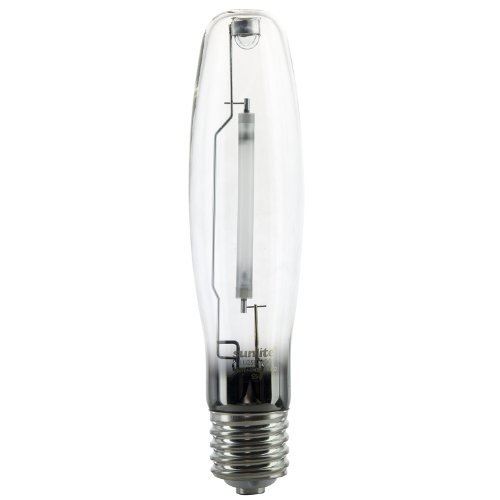
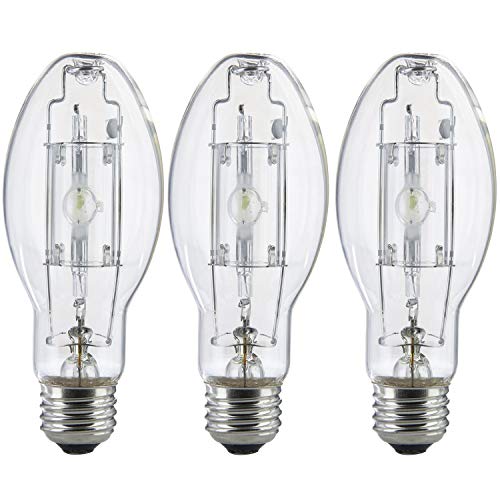
The best outdoor high-intensity discharge bulbs are not interchangeable simply because they share the HID label. A replacement must match the fixture’s ballast, socket, wattage, lamp shape, and any enclosure or burn-position requirements. The products above include high pressure sodium and metal halide designs, so begin by identifying the technology already installed rather than choosing by lumen number alone.
This is a specification-based comparison using public listing data. It is not a hands-on test and does not summarize customer opinions. Listed figures can help narrow the options, but the existing fixture and ballast remain the final compatibility check.
Start with the ballast and ANSI code
Ballast compatibility is the first filter. The Sunlite LU250/MOG identifies an S50 ballast, while the Sunlite LU150/MOG and GE Lucalox 150W HPS identify S55 use. The Sunlite LU150/MED also lists S55, but its E26 medium base differs from the mogul-base lamps. These codes are not interchangeable labels; they describe the system the lamp is designed to operate with.
Metal halide products likewise require careful matching. The Diodesy MH400/U/MOG names M59 ballast compatibility, and the Bluex Bulbs MP/U/MED specifies M57/O. The protected Diodesy MH175/C/U/MED identifies probe-start technology but does not provide an ANSI code in the supplied listing. That means the lamp should be compared with the fixture documentation or the ballast label before purchase.
Do not assume that a physically similar bulb will operate correctly. A wrong ballast match may make the replacement unsuitable even when the wattage and base appear close. If the fixture label is unreadable, record the existing lamp’s ANSI code, base, wattage, and shape before selecting a replacement.
Match the base and envelope
Base type determines whether the lamp can screw into the socket. E26 is the medium-base format shown on the Sunlite LU150/MED and the Diodesy MH100/U/MED, MH175/C/U/MED, and MH70/U/MED. E39 is the mogul base used by the Sunlite LU250/MOG, Sunlite LU150/MOG, OHLECTRIC 1000W Metal Halide HID, and Diodesy MH400/U/MOG.
The envelope shape and dimensions also matter, particularly in enclosed fixtures or tight reflectors. The selected listings identify ED17, ED18, ED23, ED37, and BT56 forms across different products. A replacement with the correct screw base can still be a poor fit if the bulb is too long or too wide for the fixture. Compare the product dimensions with the old lamp and the luminaire’s clearance.
The OHLECTRIC lamp additionally lists universal burn position, while the other products do not make that same claim in the supplied evidence. Treat that as a product-specific feature rather than a general HID characteristic. Follow the fixture’s enclosure and operating instructions whenever they are available.
Choose output for the coverage area
Lumen figures indicate the amount of light listed by the manufacturer, but they do not by themselves predict how bright a particular parking lot, street, or high bay will appear. Reflector shape, mounting height, spacing, and optical control affect the result. Still, output is useful for sorting the candidates.
For very large areas, the GE LU1000/ECO lists 130,000 initial lumens and 117,000 mean lumens, while the OHLECTRIC 1000W lamp lists up to 110,000 lumens. These are high-wattage choices for systems designed to handle that load. The Diodesy MH400/U/MOG lists 36,000 lumens, and the Sunlite LU250/MOG lists 28,000 lumens, offering substantial output at lower wattages than the 1000-watt options.
For medium coverage, the 150-watt HPS lamps list 16,000 lumens, and the 175-watt metal halide selections list 13,000 or 14,400 lumens. The 70-watt options list 5,600 or 6,000 lumens, making them more appropriate when the fixture and coverage plan call for a smaller lamp. Avoid increasing wattage merely to obtain more lumens; the fixture, ballast, heat handling, and electrical system must support it.
Consider color temperature and lamp type
High pressure sodium products in this selection generally list a 2100K color temperature, producing a warmer appearance. The GE LU1000/ECO and both selected Sunlite HPS models use that warm HPS specification. This may suit roadway, perimeter, and parking applications where the existing system is already designed for HPS operation.
Metal halide options list cooler light: the Diodesy MH100/U/MED and MH400/U/MOG are 4000K, the OHLECTRIC lamp is 4000K, the Bluex Bulbs lamp is 4000K, and the protected Diodesy MH175/C/U/MED is 4200K. These products may be preferable when a neutral or cool-white appearance is part of the installation plan. Color temperature alone does not establish ballast compatibility, however.
Weigh lifespan and replacement access
Rated life is especially relevant when lamps are installed high above a floor, road, or parking area. The Sunlite LU250/MOG lists 24,000 hours, the GE Lucalox lists 24,000 hours, and the GE LU1000/ECO lists 24,000 rated life hours. The Sunlite LU150/MOG lists 20,000 hours, while several selected metal halide products list 12,000 or 15,000 hours.
A longer rating may reduce planned replacement frequency, but it does not remove the need for correct operation. The listing for the Diodesy MH70/U/MED provides a 15,000-hour lifespan, while the Diodesy MH100/U/MED lists 12,000 hours. Compare those figures with access costs and the maintenance schedule, then verify that the lamp is appropriate for the fixture.
Check pack quantity and replacement purpose
Pack quantity is a practical detail. The Sunlite and GE selections are listed as single bulbs, while the Diodesy MH175/C/U/MED is a two-pack, the Diodesy MH70/U/MED is a two-pack, and the Bluex Bulbs MP/U/MED is a three-pack. A multi-pack can support several matching fixtures or keep a documented spare available, but it may be unnecessary for one lamp.
Also distinguish a direct replacement from a retrofit claim. The products selected here are lamps, but some listings describe particular replacement relationships or fixture applications. Never treat a retrofit description as permission to bypass ballast, enclosure, or electrical requirements. Confirm the complete system before installation.
Final recommendation
Sunlite LU250/MOG 250W HPS ranks first overall in this specification-based comparison under the published weighted criteria.
Sunlite LU250/MOG 250W HPS is the first overall specification-based choice among these best outdoor high-intensity discharge bulbs. Its 28,000-lumen output, 24,000-hour life, E39 base, and S50 ballast identification create a well-documented fit for compatible large-area fixtures. It is not a universal selection: the warm 2100K output and S50 requirement must match the installation.
For the largest documented lumen requirement, GE LU1000/ECO 1000W HPS and OHLECTRIC 1000W Metal Halide HID are the leading high-wattage alternatives. Choose between HPS and metal halide based on the existing system and desired color specification, not output alone. For a 150-watt mogul-base installation, Sunlite LU150/MOG offers a clear S55 match and long rated life, while GE Lucalox provides another 150-watt HPS option with a stated point-source design.
Among the top outdoor high-intensity discharge bulbs for cooler light, the Diodesy MH400/U/MOG, Bluex Bulbs MP/U/MED, and Diodesy MH175/C/U/MED offer documented 4000K or 4200K specifications. The Diodesy MH100/U/MED and MH70/U/MED are lower-wattage medium-base choices. In every case, verify the ballast code, base, envelope clearance, and fixture requirements before ordering or installing.
Frequently Asked Questions
What should I verify before buying the best outdoor high-intensity discharge bulbs?
Verify the ballast or ANSI code, lamp wattage, base type, envelope shape, physical dimensions, color temperature, and whether the fixture requires an enclosed or approved luminaire. A correct-looking screw base does not guarantee electrical compatibility.
Not automatically. They are different HID lamp types, and the listings identify different ballast requirements, wattages, bases, and color temperatures. Replace a lamp with a product designed for the existing ballast and fixture system unless a qualified retrofit plan specifically changes those components.
Is an E26 base the same as an E39 base?
No. E26 is the medium-base format, while E39 is the larger mogul base. The Sunlite LU150/MED and Diodesy MH100/U/MED use E26, whereas the Sunlite LU250/MOG and Diodesy MH400/U/MOG use E39. Confirm the socket before purchasing.
What does a higher lumen rating tell me?
It indicates a higher listed light output, but not necessarily better illumination in every installation. Fixture optics, mounting height, spacing, reflector design, and the surrounding area affect the result. Higher wattage also requires a suitably rated electrical and thermal system.
Is longer rated life always the best choice?
A longer rated life can be useful where replacement access is difficult, but only when the lamp is compatible and operated in the intended fixture. Compare the life rating with the ballast, wattage, base, application, and maintenance requirements rather than using lifespan as the sole decision factor.