Buying Guide
Choosing the best plastic nursery pots comes down to matching pot format to your stage of growing, the plant types you work with, and how often you transplant. Below is a practical breakdown of the features that matter most when comparing plastic nursery pots side by side.
Drainage Design
Drainage is the most important specification on any nursery pot. Pots like the JNYONG 60 Pack and Bluepro 36 Pack use base openings that allow excess water to escape, which is essential for preventing waterlogging and root rot. Larger formats such as the RooTrimmer 5 Pack 5 Gallon 12 Inch Plastic Nursery Pots list dedicated drainage holes for similar protection at higher soil volumes. When comparing pots, look for explicit mentions of base holes and how their size or count scales with pot size.
Material and Construction
Construction quality determines how a pot holds up to repeated handling. The WandaQueen 30 Pack Clear Nursery Pots 3.5 4 5 Inch with Labels documents a 6 mm food-grade PET wall that resists deformation.
Root Visibility vs Opaque Finishes
Clear plastic lets you observe root development and moisture levels without disturbing the plant, which is useful for propagation and cuttings. Examples include the FUIJOL 20 Pack Clear Nursery Pots with Saucers 4 5 6 7 Inch and the MeiVista 8 Pack Clear Nursery Pots 5 6 6.7 7.5 Inch with Labels.
Size and Pack Coverage
Consider whether you want a single size in high volume, a focused propagation trio, or a broad multipack. Single-size bulk options such as the RAOOKIF 100 Pack 4 Inch Nursery Pots suit standardized workflows.
Included Accessories and Saucers
Saucers and labels add practical value, especially for indoor use. The FUIJOL 20 Pack Clear Nursery Pots with Saucers 4 5 6 7 Inch ships with matching saucers to catch drainage water, while the MeiVista 8 Pack and WandaQueen 30 Pack include plant labels for organizing seedlings. If you plan to use pots on furniture or shelves, bundled saucers can simplify setup.
Transplanting Ease and Reusability
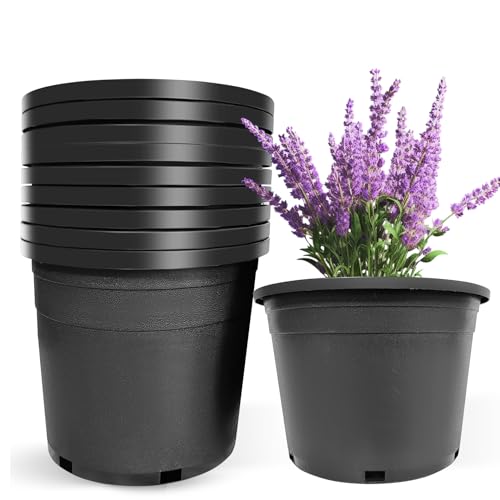
If you move plants frequently, flexible walls make it easier to release the root ball. For rigid formats, look for reinforced rims and textured surfaces, like those on the RooTrimmer 5 Pack 5 Gallon 12 Inch Plastic Nursery Pots, to make handling safer.
Small clear pots from 3 to 5 inches are ideal for seed starting, cuttings, and succulents. Mid-size formats from 6 to 8 inches fit herbs, foliage houseplants, and vegetable seedlings. The 5 gallon pots handle larger ornamentals and indoor trees.
Final Recommendation
JNYONG 60 Pack Clear Nursery Pots 3.5 to 7 Inch ranks first overall in this specification-based comparison under the published weighted criteria.
The final choice among the best plastic nursery pots depends on the documented features that match your intended use.
The JNYONG 60 Pack Clear Nursery Pots 3.5 4 5 6 7 Inch stands out as the first overall specification-based choice because it covers the widest range of sizes in a single pack while using transparent PP with documented drainage. It offers the flexibility to move plants through multiple growth stages without changing product lines. For growers who want bundled saucers, the FUIJOL 20 Pack Clear Nursery Pots with Saucers 4 5 6 7 Inch is a strong alternative. For larger plants, the RooTrimmer 5 Pack 5 Gallon 12 Inch Plastic Nursery Pots provides the volume and reinforced rims needed for patio container work. Among top plastic nursery pots, these three cover propagation, indoor mid-stage growing, and large container formats respectively.
Frequently Asked Questions
Among the best plastic nursery pots, what size plastic nursery pots are best for starting seeds?
Pots in the 3 to 5 inch range, like the Bluepro 36 Pack Clear Nursery Pots 3.5 4 5 Inch, are well suited for seed starting because they hold enough soil for early roots while keeping moisture levels easy to manage with smaller volumes.
Are clear plastic nursery pots better than opaque ones?
Clear pots allow direct observation of root growth and soil moisture, which helps with propagation and cuttings as seen in the FUIJOL 20 Pack Clear Nursery Pots with Saucers. Opaque pots block light from reaching the root zone, which some growers prefer for established plants and outdoor use.
How many drainage holes should a plastic nursery pot have?
Larger pots typically need more drainage holes to handle greater water volumes. The Anyumocz 60 Pack 1 Gallon Flexible Nursery Pots documents 16 base holes per pot, while smaller clear pots such as the JNYONG 60 Pack use appropriately scaled openings for their size.
Can plastic nursery pots be reused?
Many plastic nursery pots are designed for reuse across seasons.
When should I move a plant into a larger plastic nursery pot?
Plants are typically ready to move up when roots fill the current pot or begin circling the base. Moving from a 3.5 or 4 inch starter pot into a 6 or 8 inch mid-size pot, such as those in the JNYONG 60 Pack Clear Nursery Pots 3.5 4 5 6 7 Inch, is a common step before transplanting outdoors or into a larger container like the RooTrimmer 5 Pack 5 Gallon 12 Inch Plastic Nursery Pots.