Buying Guide
The best pneumatic framing nailers should be matched to the fastener system, framing tasks, and compressor arrangement you already use. Pneumatic tools need a suitable air source, but the supplied listings do not provide a single compressor requirement for every model. Compare the stated nail angle, collation type, length, and diameter before choosing a tool.
Fastener compatibility is the most heavily weighted criterion because a framing nailer is only useful when it accepts the nails required for the project. Several selected tools use 21-degree plastic-collated nails. The BOSTITCH F21PL, Metabo HPT NR90AES1, Makita AN924, Freeman PFR2190, Estwing EFR2190, and 3PLUS HFN90SP document compatibility with common framing lengths around 2 to 3-1/2 inches, although their exact diameter ranges differ.
The Metabo HPT NR90ADS1 uses a 30-degree paper-collated format, so it is not a direct consumable substitute for the 21-degree plastic-collated models. The MAX SuperFramer CN890F3 uses wire-welded coil nails. Coil loading can be useful when a large magazine is more important than using stick-style collated nails. The 3PLUS HFN90SP is unusual because its adjustable magazine supports 21-, 28-, and 34-degree nails. That flexibility can reduce the need to change tools when a project uses multiple angles, but the listing does not establish that every angle uses the same nail type or range.
Match firing control to the work
Selectable actuation is useful when a project alternates between careful placement and faster repetitive fastening. The Metabo HPT NR90AES1, NR83A5, NR90ADS1, Freeman PFR2190, Estwing EFR2190, and MAX CN890F3 document sequential and contact modes. Sequential firing is the more controlled setting for positioning individual nails. Contact or bump firing is intended for faster repetitive work, but the supplied evidence does not establish real-world firing speed or productivity.
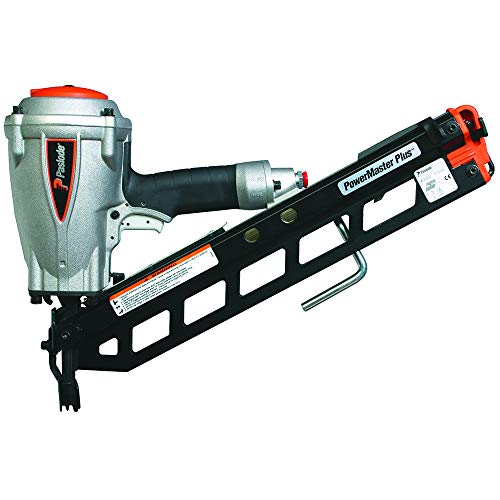
The Paslode 501000 is included for its balance and compact form, but its supplied listing does not specify selectable firing modes, so buyers who need that feature should favor a model that documents it clearly.
Look for depth adjustment and protective features
Tool-less depth adjustment appears on the Metabo HPT NR90AES1 and NR90ADS1, Freeman PFR2190, Estwing EFR2190, 3PLUS HFN90SP, and MAX CN890F3. This allows the user to change the drive setting without a separate tool. The BOSTITCH F21PL has a push-button adjustable depth guide. The Makita AN924 and Paslode 501000 do not have a depth-adjustment feature documented in the supplied evidence, so their scores reflect that information gap rather than a claim that the feature is absent.
Protection and access features also differ. Freeman and Estwing listings document anti-dry-fire mechanisms. The BOSTITCH F21PL, Metabo HPT NR83A5, and 3PLUS HFN90SP document design features for angled work, including rafter hooks or hardened claw tips. The Freeman and Estwing include no-mar tips that can be removed for more aggressive contact. An open-nose design is not documented for every selected model, so it should not be assumed when comparing jam-access features.
Consider weight, balance, and access
Weight matters when fastening overhead, moving around roof framing, or working through a long shift. The selected listings identify the Metabo HPT NR90ADS1 at the current price, the NR90AES1 at the current price, the Estwing EFR2190 at the current price, and the MAX CN890F3 at the current price. These figures come from product specifications and should not be treated as hands-on fatigue results. The 3PLUS HFN90SP is listed at the current price, while the Paslode 501000 emphasizes compact access and balance instead of providing a nail-format range.
A reversible or adjustable rafter hook is useful for temporary placement. The BOSTITCH F21PL, Metabo HPT NR83A5, Estwing EFR2190, and MAX CN890F3 document hook features. The NR83A5 allows the hook to be positioned on either side, and the F21PL identifies an adjustable hook for rafters and joists. If toe-nailing is part of the work, look for a hardened claw tip or pointed contact arm, as documented on the NR83A5, 3PLUS HFN90SP, and MAX CN890F3.
Compare magazine capacity and reload approach
Magazine details can influence interruptions, but capacity is not supplied for every model. The MAX CN890F3 has the clearest high-volume specification with a 300-nail coil magazine. The 3PLUS HFN90SP documents an adjustable magazine for multiple angles, while the Metabo HPT NR83A5 uses a rear-loading magazine and a two-piece design. The Makita AN924 has a solid top-loading aluminum magazine.
A larger magazine may mean fewer reloads, but it can also affect tool shape and consumable choice. Check whether the available nails match the exact angle and collation type before prioritizing capacity. Reload convenience should be considered alongside fastener availability, not in isolation.
Final recommendation
Metabo HPT NR90ADS1 30-Degree Nailer ranks first overall in this specification-based comparison under the published weighted criteria.
The final choice among the best pneumatic framing nailers depends on the documented features that match your intended use.
Metabo HPT NR90ADS1 is the highest-scoring returned product and the first overall specification-based choice. Among the top pneumatic framing nailers, the Metabo HPT NR90AES1 is a strong alternative for users who want a lighter general-purpose 21-degree tool with clearly documented selective actuation and tool-less depth adjustment.
Choose the Metabo HPT NR83A5 when rear loading and angled fastening matter, the Makita AN924 when broad nail diameter support is important, or the Freeman PFR2190 and Estwing EFR2190 for combinations of firing control, depth adjustment, and protective tips. The 3PLUS HFN90SP is the specialist pick for multiple nail angles. For paper-collated nails, consider the Metabo HPT NR90ADS1; for coil nails and a 300-nail magazine, the MAX SuperFramer CN890F3 is the clearest fit. The Paslode 501000 remains relevant when compact framing access and balance are the priority, but its listing leaves more fastener details unspecified.
Frequently Asked Questions
What should I check before buying the best pneumatic framing nailers?
Confirm the nail angle, collation material, length range, and diameter range. Then compare the tool with the nails available for your project. Also verify that your compressor, hose, and fittings are appropriate; the supplied listings identify pneumatic operation, but they do not provide a universal compressor specification for all selected models.
Are 21-degree and 30-degree framing nailers interchangeable?
No. The Metabo HPT NR90AES1 and several other selected tools are specified for 21-degree plastic-collated nails, while the Metabo HPT NR90ADS1 is specified for 30-degree paper-collated clipped and offset round-head nails. The angle and collation system must match the nailer.
Is a coil framing nailer better for high-volume work?
A coil model can reduce reload interruptions when its magazine capacity suits the job. The MAX SuperFramer CN890F3 documents a 300-nail magazine and 15-degree wire-welded coil nails. That does not establish superior speed or results, and coil nails are not the same consumable format as stick-style collated nails.
Does every selected nailer have depth adjustment?
No. Tool-less depth adjustment is explicitly documented for models including the Metabo HPT NR90AES1, Metabo HPT NR90ADS1, Freeman PFR2190, Estwing EFR2190, 3PLUS HFN90SP, and MAX CN890F3. The BOSTITCH F21PL documents a push-button adjustable depth guide. The supplied evidence does not specify depth adjustment for the Makita AN924 or Paslode 501000.
When is selectable actuation useful?
It is useful when the work alternates between controlled single placement and faster repetitive fastening. Models such as the Metabo HPT NR90AES1, Freeman PFR2190, Estwing EFR2190, and MAX CN890F3 document sequential and contact modes. The listings do not provide hands-on comparisons of speed, recoil, or accuracy.