Buying Guide
The best pressure-sensitive industrial warning signs are selected by matching the hazard message and installation environment, not simply by choosing the largest label or the largest pack. The products above are specification-based options drawn from public listing details. They include flexible vinyl labels, coated paper labels, specialized ISO graphics, and electrical identification panels.
Start with the hazard message
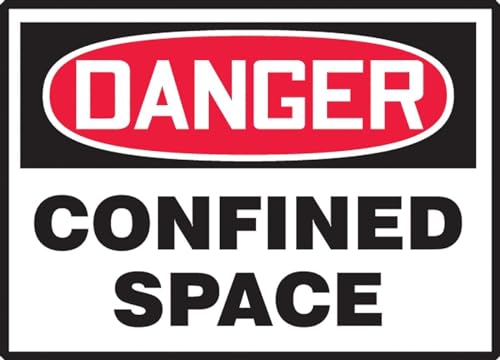
A warning sign should identify the condition clearly enough that the intended audience can understand it at the point of exposure. The YooNotee Danger Do Not Wear Gloves sticker is specific to entanglement and glove-use risks around equipment. The Lerheedi asbestos label gives a more detailed exposure warning, including dust avoidance and airborne-fiber language. AccuformNMC Danger Confined Space Label is similarly direct for confined-space access points.
For electrical equipment, the Littversions Emergency Service Disconnect Labels and Littversions Emergency Disconnect Labels are narrower choices. Their long panel format is designed for disconnect identification rather than general hazard communication. Review the exact wording, color treatment, and local requirements before installation. The listing for both Littversions products advises checking state NEC requirements.
Choose vinyl or paper for the setting
Vinyl appears across most of the selected products because it can be flexible and suitable for equipment, panels, containers, and curved surfaces. The NMC HMS12ALV Right to Know Label is described as vinyl and suitable for smooth, curved, or irregular surfaces. The NMC ISO258AP Strong Magnetic Field Label and NMC ISO239AP Tipping Hazard Label also use pressure-sensitive vinyl and are listed for indoor and outdoor use.
The NMC HMS14L Right to Know Label uses paper with a pressure-sensitive adhesive. Its Sign Muscle coating is described as protecting the text and image from fading, scratches, scuffing, and moisture. That combination may work well for a broad labeling program, but the paper construction deserves closer consideration in areas exposed to repeated abrasion, standing water, or chemical contact.
Consider surface shape and adhesive details
Surface preparation still matters for any peel-and-stick warning sign. The supplied evidence repeatedly refers to clean surfaces, and several products document compatibility with curved or irregular surfaces. The AccuformNMC LELC335XVE Safety Label uses permanent acrylic adhesive and flexible vinyl, while the AccuformNMC Danger Confined Space Label is specifically described for clean curved or uneven surfaces.
The product listings do not provide a universal installation procedure or guarantee adhesion on every substrate. Before ordering, identify whether the sign will be placed on painted metal, plastic, glass, a panel enclosure, a container, or a floor. Confirm that the surface is clean and that the label dimensions leave enough room for complete contact.
Match size to viewing distance
Small 2-by-2-inch labels can work when the warning is placed directly on equipment or near the hazard. The NMC ISO258AP Strong Magnetic Field Label and NMC ISO239AP Tipping Hazard Label use this compact format. The NMC HMS12ALV Right to Know Label is also 2 inches square, making it suitable where space is constrained.
Larger 3.5-by-5-inch and 5-by-3-inch formats provide more room for words and symbols. The YooNotee and AccuformNMC products use these general-purpose dimensions, while the Lerheedi asbestos label uses a 5-by-3-inch layout. The 4-inch NMC HMS14L label offers a larger right-to-know face than the 2-inch version. For panels, the Littversions labels use a long 1.75-by-9-inch shape that follows the proportions of many electrical identification areas.
Review environmental protection claims
Look for evidence that addresses the actual exposure. The AccuformNMC LELC335XVE listing describes resistance to moisture, abrasions, fading, and chemical splash. The YooNotee listing describes laminated vinyl that resists water and abrasion. NMC’s Sign Muscle coating is described as resisting fading, scratches, scuffing, and moisture on the HMS12ALV and HMS14L labels.
Other products document narrower protection. The Littversions labels identify UV-stabilized ink and materials and describe weather resistance. The NMC ISO labels state indoor and outdoor use and provide a maximum temperature of 178 degrees Fahrenheit. These claims are useful for comparison, but they do not replace checking the actual temperature, chemical, cleaning, sunlight, and traffic conditions at the installation site.
Decide between single labels and rolls
Pack format affects rollout planning. The NMC right-to-know products are supplied in rolls, making them appropriate when many locations need the same hazard category. The Lerheedi asbestos label also uses a roll format. By contrast, the NMC ISO products are single-label formats for targeted equipment marking.
The Littversions electrical products use five-packs, and the YooNotee product uses a multipiece pack. These formats can be practical for several panels, machines, or replacement locations. A single sign may be preferable when only one hazard point requires marking, while a roll or multipack can simplify a standardized facility program.
Check compliance language carefully
Some listings state compliance or alignment with workplace requirements, while others provide material and design information without a formal standard claim. AccuformNMC LELC335XVE states OSHA 29 CFR 1910.145 and ANSI Z535 compliance. The Littversions listings describe their labels as NEC compliant but also advise reviewing state requirements. Treat these statements as product-listing evidence and verify the rules that apply to your facility, equipment, and hazard.
Final Recommendation
YooNotee Danger Do Not Wear Gloves Stickers ranks first overall in this specification-based comparison under the published weighted criteria.
AccuformNMC LELC335XVE Safety Label is the first overall specification-based choice among these best pressure-sensitive industrial warning signs because its listing combines permanent acrylic adhesion, flexible laminated vinyl, moisture and abrasion resistance, chemical-splash protection, and stated OSHA and ANSI compliance. The top pressure-sensitive industrial warning signs for specialized needs include YooNotee for equipment-operation warnings, Lerheedi for asbestos messaging, and the Littversions labels for emergency disconnect identification.
For compact hazard communication, compare the NMC HMS12ALV, NMC ISO258AP, and NMC ISO239AP formats against the available mounting space and viewing distance. For repeated right-to-know placement, NMC HMS14L offers a larger face in a roll format. Always confirm the exact legend, substrate, local code requirements, and environmental exposure before ordering.
Frequently Asked Questions
What should I check first when choosing the best pressure-sensitive industrial warning signs?
Start with the exact hazard message and the sign’s intended viewing distance. Then compare material, adhesive details, dimensions, pack format, and any documented protection against moisture, abrasion, chemicals, fading, or weather.
Are pressure-sensitive vinyl signs suitable for curved equipment?
Several selected listings say their vinyl labels can be applied to smooth, curved, irregular, uneven, or slight-curved surfaces. Actual suitability depends on surface cleanliness, curvature, contact area, and the conditions at installation. Confirm the product’s stated surface guidance rather than assuming every vinyl label performs identically.
When is a roll better than a single warning label?
A roll is useful when the same hazard message must be placed at many locations, such as containers, equipment, or designated work areas. A single label is more appropriate for a targeted hazard point, while a multipack can support several panels or replacement installations.
Do NEC or OSHA references eliminate the need for local review?
No. Product listings may state OSHA, ANSI, or NEC-related compliance, but facility requirements and state rules can affect wording, color, placement, and sign selection. The Littversions listings specifically advise checking state NEC requirements before choosing a style.
Which of the top pressure-sensitive industrial warning signs is best for a machine-specific instruction?
YooNotee is the most directly specialized option in this comparison because its listing identifies a no-gloves warning for equipment such as lathes, drill presses, conveyors, roller systems, and automated production lines. Confirm that the message matches the machine hazard before installation.