Buying Guide
The best rectangular kitchen waste bins are not all designed for the same job. A large pedal can may be appropriate beside a food-preparation area, while a small open basket may work better inside a cabinet or under a sink. Start with the location, then compare capacity, access, liner control, and cleaning requirements.
Measure the available space first
Record the maximum width, depth, and height available, including clearance for a lid or pedal. A bin that fits beneath a counter may not work if its lid needs room to swing upward. The Glad Slim is only 9.8 inches wide and holds 45 liters, making it a strong example of a narrow, tall format. The Rubbermaid Swing Top is also relatively slim at 10.75 inches wide, but its listed height is 25.5 inches.
For cabinet and under-counter use, smaller products can be easier to position. The Glad Roomate measures 6.1 by 9.4 inches and is designed to stand alone or hang from a cabinet door. The iDesign Mono is 7.5 inches wide and uses a tapered shape for cabinets, sinks, and other compact areas. Always compare the supplied product dimensions with the usable interior dimensions of the intended space rather than relying on the nominal gallon figure alone.
Match capacity to waste volume
Capacity affects how often the bin needs to be emptied. The EKO Mirage-T and Dowell both list 50-liter capacities, while the Glad Slim lists 45 liters. These larger models are aimed at kitchens producing more daily waste. The Rubbermaid Swing Top and Amazon Basics wastebasket each provide about 10 to 12 gallons, giving them a middle ground for general household use.
Small models have a different purpose. The mDesign pedal bin holds 5 liters, the Glad Roomate holds 9 liters, and the iDesign holds 2.5 gallons. Those sizes may be more manageable for food scraps, light packaging, bathrooms, or a secondary collection point. A smaller bin can also be easier to empty before waste accumulates, but the trade-off is more frequent bag changes.
Choose the access style
Open-top bins offer the fastest disposal because there is no lid to operate. The Dowell, Plexon, Amazon Basics, Rubbermaid 9-gallon, and iDesign models use the simplicity of an open wastebasket design. This is useful when hands are frequently occupied, but an open top does not cover contents or provide lid-based odor containment.
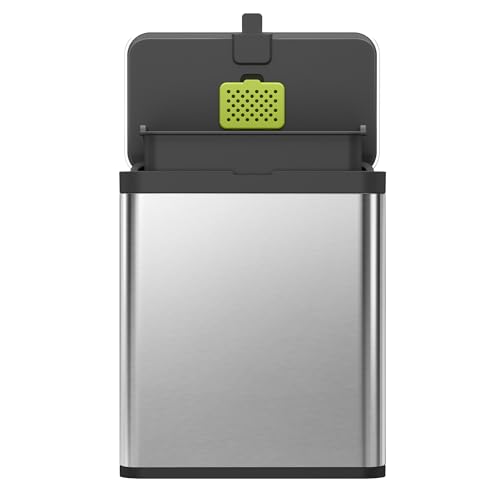
Covered bins provide more separation from the room. The Rubbermaid Swing Top uses a domed lid, the mDesign uses a pedal-operated lid, and the Glad Roomate offers flip-back and slide-front modes. The Glad Slim adds a foot pedal, soft-close movement, and a stay-open option for cooking and cleanup. The EKO Mirage-T uses a motion sensor for touchless disposal. Sensor operation can be convenient, but it depends on batteries and introduces electronic components that manual bins do not require.
Look for useful liner control
A liner that slips or falls into the container can make removal messier. The Glad Slim documents bag rings that secure the bag and prevent fall-through. Rubbermaid’s Swing Top lists integrated LinerLock technology to hold the liner and hide excess material. The EKO Mirage-T describes a no-liner design that increases usable room, but shoppers should confirm how they intend to contain waste because a conventional liner system is not described in the supplied evidence.
The mDesign pedal bin includes a removable plastic bucket insert with a handle. That is different from a dedicated liner ring, but it can make removal and washing more manageable.
Compare materials and cleaning details
Plastic is often a practical choice for lightweight handling and simple wipe-down care. The Rubbermaid Swing Top uses resin and is described as easy to clean. The Dowell has a rolled rim and can be wiped with a damp cloth. Amazon Basics uses polypropylene with a smooth finish, while iDesign specifies BPA-free, shatter-resistant plastic and mild-soap or damp-cloth cleaning.
Metal models can provide a different appearance and structure. The Glad Slim uses a fingerprint-resistant stainless steel body, the EKO uses matte stainless steel, and the mDesign uses a metal body with a plastic insert. These products may better suit kitchens where finish is part of the selection, but the available evidence does not establish long-term results beyond the listed construction and care guidance.
Final Recommendation
Glad Slim Trash Can with Clorox Odor Protection ranks first overall in this specification-based comparison under the published weighted criteria.
Glad Slim Trash Can with Clorox Odor Protection is the first overall specification-based choice among the best rectangular kitchen waste bins. Its 45-liter capacity, narrow 9.8-inch width, foot pedal, soft-close lid, stay-open setting, and bag rings give it the most balanced feature set in this comparison. The EKO Deluxe Mirage-T is the better fit when 50-liter capacity and touchless operation are the priority, while the Rubbermaid Swing Top is a sensible resin alternative with integrated liner control.
For open-top simplicity, consider the Dowell 50L or Amazon Basics rectangular wastebasket. For a cabinet or under-counter location, the Glad Roomate, mDesign pedal bin, or iDesign Mono provides a more compact format. These are the top rectangular kitchen waste bins here by documented specifications, not by hands-on testing or customer sentiment.
Frequently Asked Questions
What should I measure before buying one of the best rectangular kitchen waste bins?
Measure the available width, depth, and height, then allow clearance for the lid, pedal, or sensor opening. Also check whether the bin must pass through a cabinet door or fit around plumbing. The listed exterior dimensions can differ from the usable base area, especially on tapered models such as the iDesign Mono.
Are open-top rectangular bins suitable for kitchens?
They can be suitable for quick disposal, recycling, light waste, or placement inside a cabinet. The Dowell, Plexon, Amazon Basics, and Rubbermaid 9-gallon models are open-top examples in this selection. However, an open top does not provide the covered separation offered by the Glad Slim, Rubbermaid Swing Top, mDesign pedal bin, or EKO Mirage-T.
Which selected bin is best for a narrow kitchen?
The Glad Slim is the most specification-aligned large-capacity narrow option because its supplied width is 9.8 inches and its capacity is 45 liters. For smaller under-counter spaces, the Glad Roomate and iDesign Mono have more compact listed dimensions. Measure the exact location before choosing, particularly where cabinet doors or plumbing reduce clearance.
Do all of these bins include liner-retention features?
No. The Glad Slim lists bag rings, and the Rubbermaid Swing Top lists LinerLock technology. The mDesign includes a removable bucket insert, while several open-top models do not document a dedicated liner-retention system.
Is a touchless bin better than a pedal bin?
The choice depends on the access method you prefer. The EKO Mirage-T uses a motion sensor, while the Glad Slim and mDesign use foot pedals. Touchless access can reduce contact with the lid, but the EKO requires AA batteries. A pedal bin avoids battery dependence but requires foot access and clearance around the pedal.