Buying Guide
Choosing the best small kitchen waste bins starts with the space available, not with capacity alone. A bin that fits beneath a counter may be too tall for a cabinet door, while a countertop compost container may be convenient for scraps but too small for general household waste. The listings in this comparison cover several distinct formats: floor-standing step cans, open wastebaskets, countertop compost pails, and hanging or wall-mounted containers.
Measure the intended location
Measure height, width, and depth before choosing. This is especially important for compact kitchens, where a few inches can determine whether a bin blocks a cabinet, drawer, walkway, or appliance. The EKO Puro Mini is one of the narrowest documented options, with a body measuring 6.58 by 4.8 by 8 inches. The BLUE GINKGO container is also designed around a compact square footprint, measuring about 6.5 by 6.5 by 7 inches.
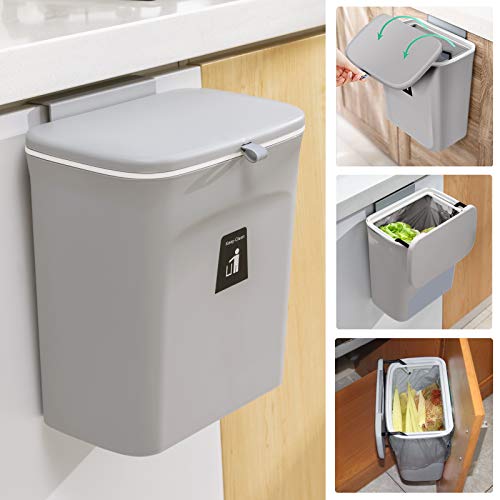
For under-counter or cabinet-door use, check the vertical clearance and the door thickness before ordering. The Glad Roomate offers a hook and adhesive hanger, while the LALASTAR and Tiyafuro models also document hanging or mounting options. These designs can move waste storage away from the floor, but the available evidence does not establish that every cabinet or wall will support them. Treat mounting compatibility as a measurement question.
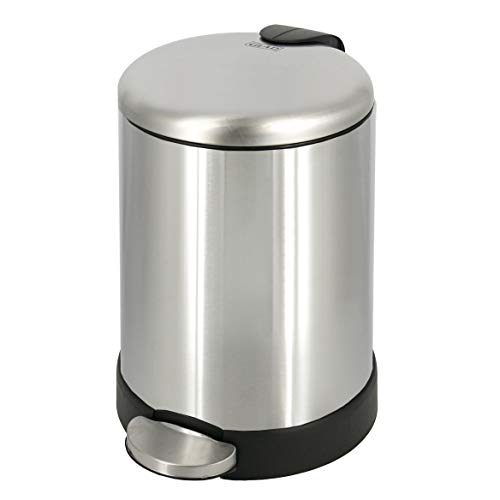
A general waste bin and a food-scrap container solve different problems. The Glad 1.2-gallon step can is a conventional lidded wastebasket with hands-free operation, removable inner bucket, and stay-open lid. It is the more natural fit when the bin will receive mixed small household waste.
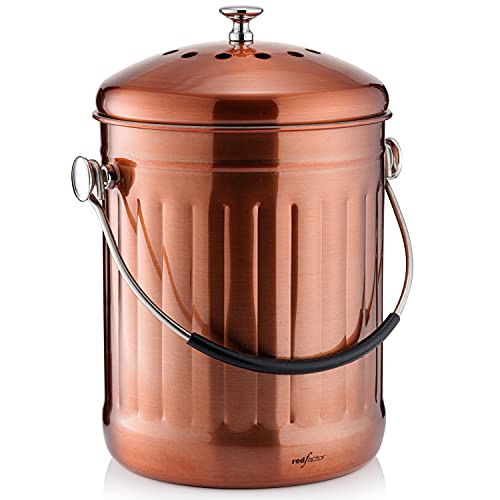
Countertop compost bins are more specialized. The OXO Good Grips model uses smooth interior walls, a contoured bottom, removable lid, and rotating handle for transferring scraps. The Epica, Utopia Kitchen, and RED FACTOR models use stainless steel bodies and filter-oriented lids. The BLUE GINKGO, LALASTAR, and EKO products emphasize plastic construction and compact placement. Select the format that matches whether you need a liner-based trash can, a food-scrap pail, or both in separate locations.
Consider capacity realistically
Small capacity reduces the footprint but can increase emptying frequency. The EKO Puro Mini holds 3 liters, while the OXO holds 0.75 gallon. These sizes suit light food-scrap volume or a kitchen where waste is removed frequently. The LALASTAR and Glad Roomate provide 5 liters and 7 liters respectively, offering more room while remaining compact.
The Tiyafuro provides 2.4 gallons in a hanging-capable format, and the BLUE GINKGO provides 2.6 liters in a smaller countertop design. Capacity claims should not be interpreted as a guarantee of how long a bin will last between emptying trips. Food packaging, moisture, liner size, and household habits all affect usable space.
Decide how much odor containment you need
Lids help contain waste, but listing descriptions use different approaches. The Glad Roomate has flip-back and slide-front openings. The Glad step can has a soft-close lid. The EKO uses a swing lid, while the OXO lid flips up for filling and down for containment. These opening styles balance access and coverage differently.
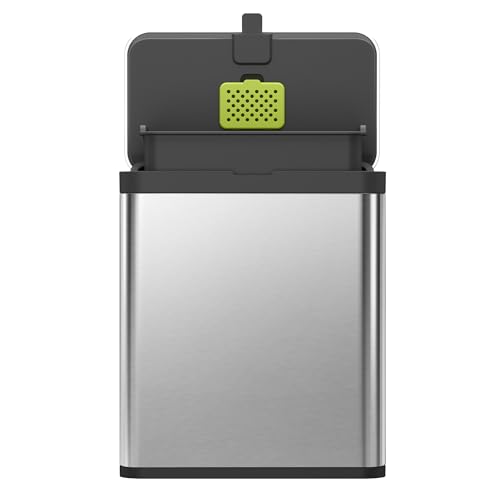
Several compost pails document charcoal filtration. Epica specifies a replaceable activated-charcoal filter, Utopia Kitchen lists charcoal filters, and RED FACTOR describes dual-filter technology with spare filters. Filter systems add a maintenance consideration because replacement filters may eventually be needed. Other products, including Tiyafuro and BLUE GINKGO, describe lid-based containment without relying on charcoal filters. The supplied information supports comparing these designs, but not claiming a particular odor result in every kitchen.
Check cleaning and liner features
Smooth, removable, or dishwasher-safe components can make routine maintenance more manageable. OXO describes smooth interior walls and a removable lid. BLUE GINKGO lists a removable inner basket, smooth interior, and dishwasher-safe plastic. LALASTAR also identifies dishwasher-safe BPA-free plastic. The Glad step can uses a removable inner bucket, and Barnyard-style features are not relevant here because that product was not selected.
A liner ring can keep bags from slipping. The EKO, LALASTAR, and Glad Roomate listings document retention or hanging features that help with placement or liner management. Still, liner compatibility depends on the actual bag dimensions and the bin’s opening. Check the stated capacity and shape rather than assuming a standard grocery or compost bag will fit.
Choose hands-free access or simple lifting
A foot pedal is useful when hands are occupied, and the Glad 1.2-gallon step can is the selected product with a documented pedal. A removable bucket can also make lifting and emptying easier. Countertop compost pails generally use a handle instead: OXO specifies a rotating handle, RED FACTOR a soft-grip handle, and Epica a compact body intended for counter use.
For cabinet-mounted designs, access depends on where the bin hangs and how the lid opens. The Glad Roomate offers two lid modes, while the EKO swing lid and Tiyafuro covered format provide different approaches to loading. Think about whether you will add scraps one-handed, transfer the container often, or remove a liner from a standing position.
Compare materials and maintenance needs
Plastic bins are often lightweight and easy to wipe, with LALASTAR and Tiyafuro documenting plastic construction and BLUE GINKGO specifying dishwasher-safe plastic. Stainless steel options such as Epica, Utopia Kitchen, and RED FACTOR offer a different appearance and construction profile. RED FACTOR describes a seamless stainless body, while Utopia Kitchen describes a body intended to resist scratching, cracking, and chipping.
No material is maintenance-free. Food waste should be removed and the container cleaned according to the product instructions. Filter-equipped models introduce filter care, while removable baskets and buckets introduce separate parts to rinse or wash. Review the supplied dimensions and features together, then prioritize the trade-off that matters most in your kitchen.
Final Recommendation
LALASTAR 5L Hanging Compost Bin ranks first overall in this specification-based comparison under the published weighted criteria.
The final choice among the best small kitchen waste bins depends on the documented features that match your intended use.
The Glad Roomate Under Counter Waste Bin is the highest-scoring returned product and the first overall specification-based choice for kitchens that need flexible placement, compact dimensions, and two lid-opening modes. It is especially suitable when cabinet or wall mounting can free valuable floor space.
Among the top small kitchen waste bins, the Glad 1.2-Gallon Stainless Steel Step Can is the better choice for hands-free mixed waste, while LALASTAR and Tiyafuro offer more flexible hanging formats. Choose OXO or BLUE GINKGO for compact countertop food scraps and Epica, Utopia Kitchen, or RED FACTOR when stainless steel and filter-based containment are priorities. Confirm measurements, capacity, and mounting compatibility before buying.
Frequently Asked Questions
What are the best small kitchen waste bins for a cabinet door?
The Glad Roomate, LALASTAR, EKO Puro Mini, and Tiyafuro listings document hanging or mounting options. Check cabinet-door thickness, clearance, and the supplied hook or adhesive requirements before installation.
Are countertop compost bins suitable for general kitchen trash?
They can hold food scraps, but the selected countertop models are primarily described for compostable organic waste. For mixed small household waste, the Glad step can is a more conventional choice because it has a foot pedal, lid, and removable inner bucket.
Which compact bin is easiest to clean?
BLUE GINKGO and LALASTAR document dishwasher-safe plastic components, while OXO lists smooth interior walls and a removable lid. These features support easier cleaning, but routine care still depends on the type of waste and how often the bin is emptied.
Do all small kitchen bins control odors with filters?
No. Epica, Utopia Kitchen, and RED FACTOR document charcoal or dual-filter systems. Tiyafuro and BLUE GINKGO describe lid-based containment without charcoal filters, while other selected bins use covered or soft-close designs.
How should I choose the right capacity?
Choose the smallest capacity that matches your emptying routine and waste volume. Three-liter and 0.75-gallon models suit light food scraps, while 5-liter, 7-liter, and 2.4-gallon options provide more room. Capacity does not predict the exact number of days between emptying trips.