Buying Guide
The best rectangular pool safety covers are not interchangeable by shape alone. A cover must match the pool’s measured length and width, account for steps or rounded corners, and use an attachment system appropriate to the pool structure. The listings in this comparison range from anchored inground mesh covers to lightweight above-ground and inflatable-pool covers. That distinction matters: a general winter or debris cover may help keep water clean, but it should not automatically be treated as a certified barrier against entry.
Start with the pool’s actual dimensions
Measure the pool itself rather than relying only on a nominal size printed on the frame or liner. Compare those measurements with the cover dimensions and the stated overlap. VEVOR documents a 20 x 38-foot cover for an 18 x 36-foot pool with a right-end step, while DEIFRE lists an 18 x 34-foot cover for a 16 x 32-foot pool. Those details show why a two-foot overlap cannot be assumed for every model. In The Swim lists a five-foot overlap for its 20 x 40-foot design, which is a different fit strategy.
For frame pools, check whether the listed dimensions describe the pool or the cover. Several compact models specify both measurements, but the SIHAIAN listing contains inconsistent dimensional information. When the listing is unclear, confirm the cover size, pool wall type, and intended shape before purchase. A cover that is too small may leave exposed edges; one that is too large may collect water or become difficult to tension.
Choose the right cover type
Anchored mesh safety covers are represented by VEVOR and DEIFRE. Their listings include brass anchors, springs, reinforced straps, and installation tools; DEIFRE also states ASTM F1346 compliance. These are the most directly documented options for shoppers seeking an inground safety-cover format.
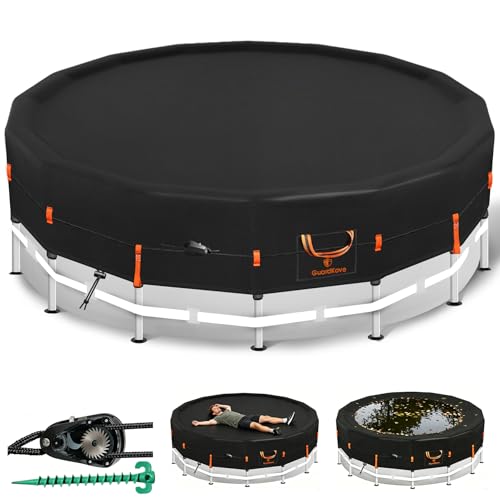
Solid or woven winter covers are represented by In The Swim, UIRWAY, and several smaller above-ground models. They emphasize seasonal protection, debris control, UV resistance, water management, or wind retention. Some include a cable, winch, ropes, drawstrings, or ground nails. Those features can improve fit and weather management, but the supplied evidence does not make them equivalent to a certified safety barrier.
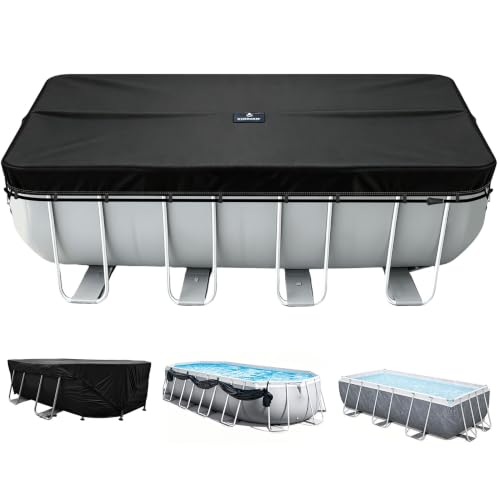
Lightweight covers for inflatable and small frame pools use elastic corners, ropes, pull tabs, or simple straps. WJGHRH, OIOYLEY, YEXEXINM, and HevenTyarnde fall into this group. They may be practical for keeping leaves and dust out of a small pool, but their documented designs are not intended to support people or pets unless the manufacturer explicitly says so.
Compare materials and construction
Material descriptions help explain expected handling and exposure resistance, but they are not substitutes for independent testing. VEVOR and DEIFRE specify polypropylene with double straps and triple stitching. UIRWAY lists 500D fabric, reinforced seams, and a stated tear-strength test. QH.HOME uses 550D polyester and states a 440-pound tear-strength test. SIHAIAN lists woven polyester with a three-layer PU coating.
Smaller covers use PE, Oxford fabric, or painted-silver material. Look for double-needle or double-stitched seams, reinforced corners, waterproof coatings, and UV-related claims. These features may help with outdoor use, but the exact durability will depend on installation, weather, pool geometry, and storage. Avoid treating a material label alone as proof that a cover is safe to walk on.
Inspect fastening and drainage
Retention is especially important in windy areas. VEVOR and DEIFRE use anchors and adjustable springs. In The Swim lists a cable and winch. QH.HOME combines a tightening winch, segmented drawstrings, and Velcro straps, while UIRWAY lists wraparound straps, drawstrings, ropes, and ground nails. SIHAIAN uses dual tensioning and locking slots and adds a center drainage outlet.
Drainage deserves separate attention. Mesh can allow rain permeability, and SIHAIAN’s outlet is designed to connect to a hose or separate drainage kit. Other covers emphasize waterproofing or water resistance instead. Review how rainwater is expected to leave the cover, because standing water can add weight and complicate removal. Never assume that a drain hole, waterproof coating, or solar layer provides the same function as a safety-rated cover.
Verify the installation surface
An anchored cover requires a suitable deck or attachment surface, accurate anchor placement, and enough clearance around the pool. Follow the manufacturer’s instructions for drilling, spring tension, and seasonal removal. Above-ground covers generally attach to the frame or pool perimeter instead. Elastic corners are convenient, while ropes, straps, and drawstrings allow more adjustment but may take longer to tension evenly.
Before ordering, confirm whether hardware is included. VEVOR and DEIFRE list substantial installation kits. Other products include ropes, pull tabs, ground nails, or straps, while SIHAIAN may require a separate drainage accessory. The product should be selected for the actual pool construction, not simply for a similar rectangular measurement.
Treat safety claims carefully
The phrase best rectangular pool safety covers should be interpreted conservatively when a listing does not state a safety standard. An anchored mesh cover with documented ASTM F1346 compliance provides stronger evidence for a safety-focused purchase than a lightweight PE tarp. Even then, correct installation and regular inspection remain essential. Do not place people, pets, furniture, or equipment on a cover unless the manufacturer specifically documents that use.
Final Recommendation
VEVOR 18 x 36 ft Inground Safety Cover ranks first overall in this specification-based comparison under the published weighted criteria.
The final choice among the best rectangular pool safety covers depends on the documented features that match your intended use.
VEVOR 18 x 36 ft Inground Safety Cover is the highest-scoring returned product and the first overall specification-based choice. Its documented step fit, overlap, polypropylene construction, reinforced stitching, anchors, springs, and installation tools make the evidence particularly complete. DEIFRE is the alternative to consider when the stated ASTM F1346 compliance and 16 x 32-foot fit align with the pool.
Among the top rectangular pool safety covers for large seasonal coverage, In The Swim offers a clearly stated 20 x 40-foot application and five-foot overlap, while UIRWAY and QH.HOME provide detailed wind-retention features for above-ground use. SIHAIAN is notable for drainage. For smaller pools, YEXEXINM, OIOYLEY, WJGHRH, and HevenTyarnde offer more basic rectangular coverage, but their listings do not establish a certified walk-on safety design.
Frequently Asked Questions
What should I measure before buying the best rectangular pool safety covers?
Measure the pool length and width at the waterline or frame, then note steps, curves, supports, and the available deck area. Compare those measurements with the listed cover size and overlap. Do not assume that two products labeled for the same nominal pool size have identical cover dimensions.
Are all rectangular pool covers safety covers?
No. A cover can be rectangular and still be intended only for debris, rain, evaporation, or winter protection. DEIFRE states ASTM F1346 compliance, and VEVOR describes an anchored inground safety-cover design. Several other products in this comparison document ropes, straps, elastic corners, or drawstrings without stating a safety standard. Treat those products as general covers unless the manufacturer provides stronger documentation.
Is mesh better than a solid cover?
The answer depends on the documented design and the pool environment. VEVOR describes mesh with rain permeability, while solid or coated models emphasize water exclusion and debris protection. Mesh may reduce water accumulation, whereas solid construction may block more direct debris and light. Compare drainage, maintenance, anchoring, and the manufacturer’s intended use rather than choosing by material name alone.
Which features help a cover stay in place?
Anchors and adjustable springs are suited to the inground designs listed by VEVOR and DEIFRE. Cable-and-winch systems, wraparound straps, drawstrings, ground nails, locking slots, and elastic corners are used by other selected products. The best system depends on whether the pool is inground, above ground, inflatable, or frame-supported.
Can I walk on one of these covers?
Do not assume so. The supplied listings include safety-related language for some products, but most do not provide enough evidence to support a walk-on claim. Use the cover only as directed by its manufacturer, install it correctly, and keep children and pets away unless the product’s documented safety standard specifically addresses that use.