Buying Guide
The best sinking topwater fishing lures occupy a useful middle ground. They can be retrieved across the surface when fish are active, then allowed to settle below the surface during a pause or slower presentation. That makes them different from strictly floating topwater plugs and different from lures designed only for deep water. The right choice depends on how precisely you need to control depth, how far you must cast, and whether your water is freshwater, brackish, or saltwater.
Understand the sinking behavior
“Sinking” does not describe one uniform action. The Bomber Mullet Slow-Sinking Twitch is described as super-slow sinking and can be walked quickly across the surface or slowly below it. The Creek Chub Striper Strike is also slow sinking, but its listing emphasizes a quick top retrieve and long-distance casting. These are useful examples of why retrieve speed and lure weight matter alongside the sinking label.
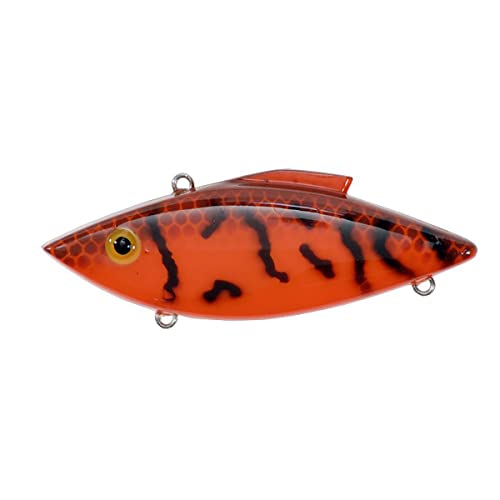
Some lures are positioned for broader water-column use. The BASSDASH SwimShad Glide Baits are described as slow sinking through the entire water column, while the HAFOWAH 5.1-Inch Multi-Jointed Swimbait is listed for surface movement, mid-depth fishing, and deeper glidebait presentations. The Bill Lewis Rat-L-Trap is described for shallow-to-deep use and can be allowed to sink before being retrieved across deeper structure.
Exact sink rates are not supplied for most products in this comparison. Do not assume that two lures labeled slow sinking will descend at the same speed. Water temperature, line, current, rod angle, and retrieve pace can all affect practical depth. Treat the published behavior as a starting point and adjust pauses and retrieve speed on the water.
Match the design to your retrieve
Jointed lures create a different presentation from solid or lipless bodies. HAFOWAH uses eight segments and is described with an S-shaped swimming action. ReeMoo also uses an eight-section body, while the Keenjorika five-pack uses multiple pivoting joints. These designs are suited to anglers who want visible body movement during a steady retrieve or a controlled pause.
The BASSDASH bait uses a single joint and a soft rubber fishtail. Its listing specifically mentions pauses and reel turns, so it may suit anglers who prefer to control movement with cadence changes rather than constant speed. The Lew’s MachShad Lipless Jointed Swimbait similarly documents fast, slow, and pause retrieves, with applications near the surface and around deeper suspended fish.
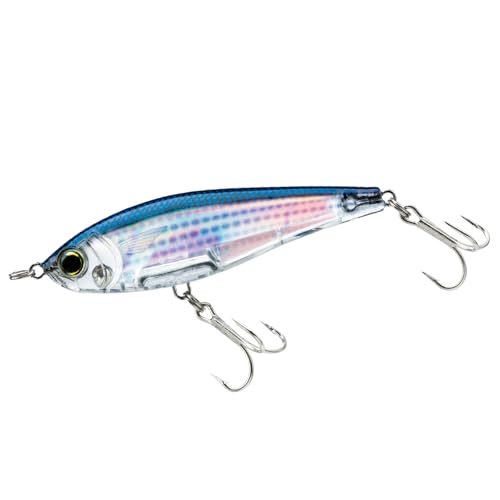
A twitchbait or lipless bait may be preferable when you want a more direct response. The Yo-Zuri 3D Inshore Twitchbait uses a flat-sided lipless body and fixed weighted center for quick response. The Bomber is also a twitch-oriented design, but its listing gives it a broader surface-to-subsurface role. The Rat-L-Trap adds interior rattles and tight wobble for anglers who want sound and vibration from a compact body.
Consider casting distance and control
Casting features are especially important in surf, wind, or open water. The LITTMA ShoreCast 115 uses advanced weight transfer and is designed for long casts, while the Creek Chub Striper Strike repeatedly emphasizes its long-casting purpose and carries a 2 1/8-ounce weight. Those are the clearest choices when reaching distant water is the primary requirement.
Several jointed models also document internal weights or gravity systems. HAFOWAH has a gravity-transfer steel-ball system intended to assist casting and restore the center of gravity after splashdown. Keenjorika uses a gravity ball that shifts toward the tail during casting, and ReeMoo includes a built-in steel ball for counterweighting and casting support. These features may help a lure cast more predictably, but the supplied evidence does not establish comparative casting distances.
Smaller lures can be easier to fit to lighter presentations, but size should still match the forage and target species. The Yo-Zuri is 90 millimeters, the Rat-L-Trap is about 3 inches and 1/2 ounce, and Keenjorika is listed at 4 inches. In contrast, the Creek Chub is 5 inches and 2 1/8 ounces, while the LITTMA is 115 millimeters and 21 grams. These specifications provide a useful starting point for choosing tackle, but they do not replace checking your rod and line ratings.
Check water and species application
Saltwater use is best supported by products with explicit corrosion-oriented construction. The Bomber lists saltwater-grade hooks and split rings, the Yo-Zuri lists saltwater-grade hooks and split rings, and the LITTMA includes corrosion-resistant metal components and saltwater-grade BKK hooks. Creek Chub also specifies a treble saltwater hook and durable hardware. These details make those lures more suitable for marine use on paper than products whose listings do not mention corrosion resistance.
Freshwater versatility is prominent in the jointed swimbaits. HAFOWAH, ReeMoo, Keenjorika, and BASSDASH list predator species such as bass, trout, pike, salmon, or muskie. The Rat-L-Trap lists bass, trout, walleye, pike, and salmon and describes shallow, deep, and midrange use. For streams or small waters, the compact Yo-Zuri and Rat-L-Trap formats may be easier to work than the larger surf-oriented models, although the supplied listings do not promise a particular catch result.
Evaluate hooks, body materials, and maintenance
Look for the hardware detail that fits your water. LITTMA uses impact-resistant ABS, a multi-layer coating, corrosion-resistant metal components, and BKK 4X Power treble hooks. Bomber specifies a durable corrosion-resistant body and hardware. HAFOWAH identifies hard plastic construction and corrosion-resistant hooks. Keenjorika lists ABS construction and corrosion-resistant treble hooks.
Other products emphasize different body features. Yo-Zuri uses proprietary polycarbonate in its related design language and documents a fixed weighted center and internal prism finish. BASSDASH includes stainless steel balls and a soft rubber fishtail. Rat-L-Trap uses a lipless body with internal rattles. These are design trade-offs rather than proof that one lure is universally tougher.
Rinse marine lures after use and inspect hooks, split rings, joints, and soft tails before storage. The product data supports identifying corrosion-resistant components on several models, but it does not establish that any lure is maintenance-free or immune to damage.
Final recommendation
LITTMA ShoreCast 115 Saltwater Sinking Minnow ranks first overall in this specification-based comparison under the published weighted criteria.
The Bomber Mullet Slow-Sinking Twitch is the highest-scoring returned product and the first overall specification-based choice. It offers the clearest balance of slow sinking, surface walking, subsurface control, inshore application, casting weight, and saltwater-oriented hardware. For anglers shopping among the top sinking topwater fishing lures, it is the most broadly adaptable starting point in this comparison.
Choose the LITTMA ShoreCast 115 when surf distance and a defined 2.6-to-5-foot range are more important than compact size. Choose the Creek Chub Striper Strike for a heavier long-cast baitfish presentation. HAFOWAH and BASSDASH are better fits for anglers who want jointed glide movement and water-column control. The Yo-Zuri suits compact inshore twitching, while the Rat-L-Trap is the practical choice when sound, vibration, and shallow-to-deep use matter.
No single lure replaces matching weight, profile, hooks, and retrieve to local conditions. The best sinking topwater fishing lures are the ones whose documented action and construction align with the water you plan to fish.
Frequently Asked Questions
What makes the best sinking topwater fishing lures different from floating plugs?
A sinking topwater lure can be worked near the surface but also drops during a pause or slower retrieve. The Bomber, MachShad, HAFOWAH, and BASSDASH listings all document versions of this surface-to-subsurface flexibility. Floating plugs generally do not provide the same pause-driven descent. Because exact sink rates vary and are not supplied for most models here, anglers should use short pauses first and observe how each lure responds.
Which selected lure is best for surf and long casts?
The LITTMA ShoreCast 115 and Creek Chub Striper Strike have the most specification-aligned documented long-casting positioning. LITTMA uses weight transfer and is designed for surf, beaches, flats, bays, and rocky shorelines. Creek Chub is a heavier 5-inch lure repeatedly described for long casts in surf or below dams. The better fit depends on whether you want LITTMA’s stated 2.6-to-5-foot range or Creek Chub’s heavier baitfish profile.
Are top sinking topwater fishing lures suitable for saltwater?
Several selected models are explicitly positioned for saltwater. Bomber lists saltwater-grade hooks and corrosion-resistant hardware; LITTMA lists corrosion-resistant components and saltwater-grade BKK hooks; Yo-Zuri lists saltwater-grade hooks and split rings; and Creek Chub specifies a saltwater treble hook. Models without those details should not automatically be treated as saltwater-ready. Rinse and inspect any lure after marine use.
Which lure offers the widest retrieve range?
The Bomber is the most specification-aligned documented all-around option because it can be walked across the surface, worked below it, and retrieved at different speeds. The Rat-L-Trap also supports fast-to-slow retrieves and shallow-to-deep presentations. MachShad is another useful choice because its listing specifically recommends burning, crawling, and pausing the lure. These descriptions indicate design flexibility, not a guarantee of results.
How should I choose between a jointed swimbait and a lipless lure?
Choose a jointed swimbait when you want segmented or S-wave movement, such as with HAFOWAH, ReeMoo, Keenjorika, or BASSDASH. Choose a lipless option such as the Yo-Zuri 3D Inshore Twitchbait or Bill Lewis Rat-L-Trap when a flatter body, direct retrieve response, rattle, or vibration is more useful. Size, target species, water clarity, and available tackle should guide the final selection.