Buying Guide
The best stainless steel wine decanters are not all the same type. Some are complete vessels made from stainless steel, some combine a glass body with a stainless steel pourer, and others are electric aerators that dispense directly from the bottle. Start by deciding whether you need a container for storage, a table carafe for presentation, or a powered serving tool.
A steel-bodied carafe is the clearest fit when durability, insulation, or portability is the priority. Snowfox documents a vacuum-insulated double-wall body, while SASEUM lists 18/8 food-grade 304 stainless steel, a 32-ounce capacity, and a leakproof lid. These formats are useful when wine needs to remain contained between pours or when the serving location is not limited to a dining table.
ETO takes a different approach. Its stainless satin vessel is designed to hold a full 75cl bottle, seal tightly, fit inside a refrigerator door, and pour through a curved lip. That makes it the most storage-oriented selection in this comparison. The supplied listing also says it can preserve still wines for up to two weeks, but that statement comes from the public product description rather than independent testing.
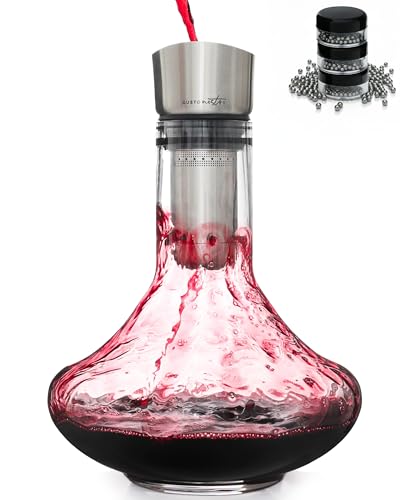
Glass-bodied decanters with stainless steel components remain relevant when visual presentation and a broad wine surface are important. VnoPerito, Gusto Nostro, Wlasss, and YouYah all document crystal or lead-free glass bodies paired with stainless steel pouring or aeration hardware. Their designs expose wine to air in a way that insulated bottles generally do not, while filters can help manage sediment during pouring.
Match capacity to the occasion
A standard 750ml bottle is the most useful reference point. ETO, VnoPerito, and Gusto Nostro specifically document full-bottle capacity or suitability. Wlasss lists a 1300ml vessel that can hold a 750ml bottle with additional room. That extra space may be helpful for a broad serving shape, though it also means a larger footprint.
Snowfox lists a 26-ounce or 750ml-scale carafe, while SASEUM provides 32 ounces. Their capacities make them appropriate for sharing, but their bottle-like designs are more focused on containment than display. Electric models such as Zividodo and AREYCVK do not state a standalone vessel capacity in the supplied specifications, so they should be considered bottle-top serving devices rather than replacement carafes.
Consider aeration and filtering
Aeration can be passive, integrated into a pourer, or powered. Gusto Nostro describes a stainless steel pourer that introduces air as wine is served. Wlasss and YouYah add double-layer or fine filtration systems, which is useful when sediment management is part of the serving routine. VnoPerito combines filtering, aeration, and pouring in one lid assembly.
Electric options add a different workflow. Saraudy combines one-touch dispensing and aeration, and its listing gives a 75-second figure for a 750ml bottle. Zividodo uses a button-operated dispenser with a stainless steel connecting tube, while AREYCVK uses a one-click control and rechargeable USB Type-C power. These products can reduce the need to transfer wine into a separate vessel, but they require charging and involve more components than passive designs.
Inspect the pouring and sealing details
A good specification comparison should look beyond the word stainless. ETO’s airtight seal and curved lip address storage and drip control. SASEUM uses a screw-in pour spout and cork-style lid. Snowfox lists a narrow grip and non-slip silicone base. These details are more relevant to everyday handling than a finish description alone.
On glass models, inspect the relationship between the body and the metal hardware. VnoPerito documents a stainless steel pourer lid and double-layer filter. YouYah specifies a food-grade stainless steel and silicone stopper, plus a grooved base. Wlasss lists a tilted spout and narrow neck. Such features suggest different handling priorities, but the supplied listings do not establish independent pouring performance.
Plan for cleaning and storage
Removable parts can simplify maintenance, although the listings here do not provide hands-on cleaning results. ETO says it disassembles for cleaning. Zividodo lists removable parts and easy cleaning, while AREYCVK describes detachable pipes. Gusto Nostro includes reusable stainless steel cleaning beads, giving its glass vessel a purpose-made cleaning aid. YouYah says its stainless steel and silicone stopper is easy to clean.
Storage needs also vary. Snowfox is described as fitting indoor and outdoor serving situations, and ETO is specifically shaped for a refrigerator door. Large glass designs such as Wlasss may need more cabinet or counter space. Before choosing among the best stainless steel wine decanters, check the stated dimensions, weight, and whether the product is a vessel or a bottle-top dispenser.
Weigh passive simplicity against powered features
Passive decanters have fewer operating parts and do not require charging. They are generally the better match for a traditional table service setup, especially when a broad glass body, filter, or visible wine presentation is desired. Insulated steel carafes favor temperature retention and portability instead.
Powered aerators are more specialized. Saraudy includes stoppers and a charging base, while Zividodo and AREYCVK emphasize compact direct dispensing. They may suit users who want a controlled serving process, but their electrical components and narrower form factors distinguish them from classic decanters. Read the product type carefully rather than assuming every listing labeled “decanter” is a freestanding vessel.
Final Recommendation
SASEUM 32-Ounce Insulated Wine Decanter ranks first overall in this specification-based comparison under the published weighted criteria.
ETO Stainless Satin Wine Decanter is the first overall specification-based choice among the best stainless steel wine decanters. Its full-bottle capacity, airtight seal, refrigerator-door fit, disassembly, and curved drip-free lip give it the most complete documented balance of storage and serving features.
Snowfox is the better match for insulated service, particularly when chilled wine and a dry exterior matter. SASEUM offers more stated capacity and a leakproof bottle-style design. For a classic glass presentation, VnoPerito and Gusto Nostro pair lead-free crystal with stainless steel serving hardware, while Wlasss and YouYah add larger or more elaborate filtered aeration designs.
Saraudy is the most complete powered set because it includes reusable stoppers and a charging base. Zividodo and AREYCVK are compact direct-dispensing alternatives. Together, these are the top stainless steel wine decanters for distinct use cases documented in the supplied listings, not the result of hands-on testing.
Frequently Asked Questions
What should I look for in the best stainless steel wine decanters?
Check whether stainless steel forms the main vessel or only the pourer, then review capacity, aeration method, sealing, cleaning design, and dimensions. ETO and Snowfox are steel-bodied options, while VnoPerito and Gusto Nostro use stainless steel hardware with glass bodies. Electric products such as Saraudy and Zividodo add powered dispensing instead of a traditional freestanding carafe.
Which selected product is designed for storage after opening?
ETO is the clearest storage-focused choice. Its listing describes an airtight seal, preservation of still wines for up to two weeks, full 75cl capacity, and refrigerator-door fit. That combination separates it from open glass decanters intended mainly for serving and aeration.
Are stainless steel wine decanters suitable for chilled wine?
Snowfox and SASEUM are the most specification-aligned documented matches for chilled service because both list vacuum insulation and double-wall construction. Snowfox specifically describes use with cool white, rosé, or red wines and says the exterior remains dry. The supplied evidence does not independently verify temperature performance.
Do any selected models filter sediment?
Yes. VnoPerito lists a double-layer filter, Wlasss describes a double-layer filtration system, and YouYah specifies a fine filter in its aerator spout. These are glass-bodied designs with stainless steel components, so they combine filtering with a more traditional serving presentation.
What is the difference between a decanter and an electric aerator here?
A freestanding decanter holds wine in a separate vessel, while an electric aerator typically attaches to or draws from the bottle and dispenses directly into a glass. Saraudy, Zividodo, and AREYCVK are electric dispensing formats. Their listings document aeration and power features, but they do not all state a separate vessel capacity.