Buying Guide
Picking the best steel garden rakes starts with matching the tool’s steel grade, head size, and handle layout to the work you do most. Below are the practical specifications and design details that separate a versatile yard workhorse from a tool that struggles in compacted soil.
Steel Grade and Tine Construction
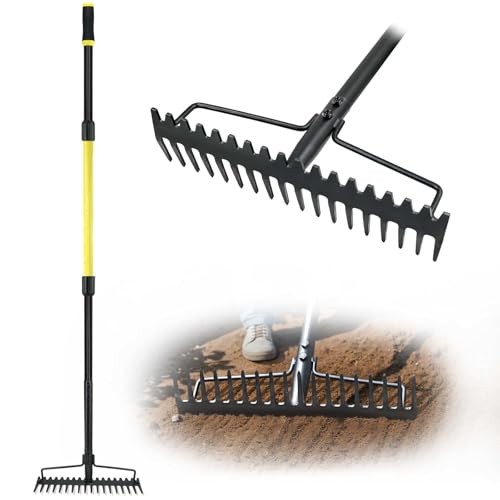
The steel used in the head and tines is a major factor in how a rake performs under load. Heat-treated manganese steel, tempered high-carbon steel, and 10-gauge American steel all appear in this category and each offers a different balance of hardness and flexibility. Heat-treated manganese steel heads such as those on the Walensee and BlumeTrec bows are documented for high hardness and wear resistance, while tempered spring steel tines like those on the CKLT rake flex without permanent bending. For breaking compacted soil or moving gravel, a thicker gauge and ribbed tines such as the Bully Tools 16-inch bow add digging power without sacrificing the head.
Head Width, Tine Count, and Tine Depth
Head width determines how much ground you cover per pass, while tine count affects how finely the rake gathers debris. Wider 17- to 18-inch heads with 17 or 18 tines, like the Jardineer and BlumeTrec designs, work well for leveling mulch and spreading topsoil across open lawn areas. Tine depth matters for soil penetration, and a documented 4-inch reach on the BlumeTrec head gives it an edge in compacted ground. Narrow 9-inch heads with 11 steel tines such as the Feblomst rake trade coverage for access under shrubs and along borders where full-size bows cannot reach.
Handle Material and Length
Handle material affects both comfort and durability. Fiberglass shafts on the Bully Tools, WIKER, Nohovu, and VNIMTI rakes absorb vibration and resist splintering, while stainless steel shafts on the Walensee and CKLT rakes add corrosion resistance. Steel handles such as the one on the BlumeTrec bow feel solid but may transmit more vibration. Handle length influences posture: 63- to 68-inch shafts support an upright stance for taller users, while 57- to 59-inch lengths suit shorter users or compact storage. Adjustable multi-section poles let you tailor reach, though they add assembly steps compared to one-piece designs.
Joint Construction and Connection Hardware
The point where the head meets the handle is a common failure point, so look for triple-welded joints, double-rivet connections, or stainless steel screws. The Bully Tools rake documents robotic overwelding, while the Walensee, Jardineer, and Lilyvane bows all specify triple-welded construction. The CKLT rake goes further with 304 stainless steel screws for the head connection, which adds corrosion resistance at a critical joint. For gardeners who store tools outdoors or in damp sheds, these connection details matter as much as the steel grade itself.
Corrosion Protection and Finish
Anti-rust and anti-corrosion coatings extend the working life of any steel rake. Most of the top steel garden rakes pair their steel head with a powder coat, sand-texture finish, or specialized anti-rust layer. The Bully Tools bow uses a powder coat to prevent rust, while the CKLT rake documents a sand-texture finish on its tempered spring steel tines. For gardeners working in wet climates or storing tools in unheated sheds, these finishes help the head and tines stay sharp across multiple seasons.
Task Versatility and Head Design
Dual-sided heads combine long tines for loosening and short tines for leveling in one tool. The Walensee, BlumeTrec, Jardineer, CKLT, and Lilyvane bows all document dual-sided layouts, which reduce the need to swap tools between soil prep and final leveling. Single-sided heads such as the Bully Tools and WIKER bows focus their steel on digging and spreading, making them strong specialists rather than all-rounders. Narrow heads like the Feblomst rake are purpose-built for detail work around shrubs, flower beds, and even campsite cleanup.
Assembly and Storage
One-piece designs such as the WIKER rake arrive fully assembled and ready to use. Multi-section adjustable handles on the BlumeTrec, CKLT, Jardineer, and Feblomst rakes break down for compact storage and travel, but require a few minutes to screw together before each session. Consider how often you will set the tool up and break it down when comparing these trade-offs.
Final recommendation
Walensee 63-Inch Dual-Sided Bow Rake ranks first overall in this specification-based comparison under the published weighted criteria.
Walensee 63-Inch Dual-Sided Bow Rake is the first overall specification-based choice under the published weighted criteria, with heat-treated manganese steel construction, a dual-sided head, and triple-welded joints documented for sustained use. The Bully Tools 16-Inch Bow Rake stands out for buyers who prioritize the most explicit steel-grade specification, with a 10-gauge American steel head, ribbed teeth, and robotically overwelded connections. For gardeners who want a single dual-sided tool that can loosen, dethatch, and level without swapping heads, the BlumeTrec 68-Inch Bow Rake is another of the top steel garden rakes worth considering. If you need a narrow head for tight spaces, the Feblomst 65-Inch Compact Steel Rake offers steel construction in a 9-inch layout. Across all of these picks, focusing on documented steel grade, tine design, and joint construction will help you choose the best steel garden rakes for your specific yard work.
Frequently Asked Questions
What makes a steel garden rake different from a plastic or wooden one?
Steel rakes handle compacted soil, gravel, and heavy mulch without flexing out of shape. The steel heads and tines in this comparison are documented for tasks like breaking up clay, dethatching lawns, and spreading topsoil, which a plastic or wooden rake may struggle with over time.
How many tines should the best steel garden rakes have?
Tine count depends on the work. Bow rakes with 14 to 18 steel tines are common in this category, with 14-tine heads favoring lighter yard work and 17- or 18-tine heads covering more ground per pass. Narrow shrub-style rakes typically use 10 to 11 closely spaced tines for detailed cleanup.
Are fiberglass handles better than steel or wood handles on a steel garden rake?
Fiberglass handles resist splintering and absorb vibration, which helps during longer raking sessions. Stainless steel handles add corrosion resistance, while traditional wood handles can be comfortable but may weather faster. The choice depends on your climate, storage, and how much vibration you want to absorb.
Can one steel rake handle both soil preparation and leaf cleanup?
Dual-sided bow rakes such as the Walensee, BlumeTrec, Jardineer, CKLT, and Lilyvane designs combine long tines for breaking soil with short tines for leveling, which supports both tasks. For pure leaf and debris cleanup, a narrower steel-tined rake like the Feblomst 9-inch model is often easier to maneuver in tight beds.
How do I maintain a steel garden rake so it lasts longer?
Wipe the head and tines dry after use, store the rake indoors or in a dry shed, and check head-to-handle connections periodically for looseness. Anti-rust coatings on models like the CKLT and Bully Tools rakes help, but keeping moisture off the steel extends the working life of any steel garden rakes in your shed.