Buying Guide
The best stainless steel boat propellers are selected by fit before finish or marketing language. A propeller is an engine-specific component: diameter, pitch, blade count, rotation, spline or tooth count, and gearcase or drive type all affect whether a listing is even a plausible match. The products above are not ranked from customer sentiment or hands-on testing. They are compared from the public specifications and feature statements supplied for each listing.
Start with the engine and drive
First identify the outboard or sterndrive brand, exact engine family, horsepower, gearcase, and drive configuration. Yamaha models appear throughout this comparison, but their dimensions are not interchangeable simply because the horsepower ranges overlap. The PWCMAN and WONENGDA listings both describe Yamaha applications, yet they use different diameter-and-pitch combinations. The VIF model is aimed at a substantially larger Yamaha horsepower range. That difference is why an engine model and OEM reference are more useful than a broad brand match alone.
Mercury and MerCruiser buyers should separate outboard applications from sterndrive applications. The TUNORD listing calls out Mercury engines with a 4.25-inch gearcase, while the YOUNG PROPS 14.5 x 19 model is described for Mercury and MerCruiser sterndrives. The Volvo Penta SX model is similarly drive-specific. Do not assume that a propeller listed for one drive family will fit another because the diameter looks similar.
Understand diameter and pitch
Diameter is the approximate width of the rotating circle. Pitch is commonly described as the theoretical distance a propeller advances in one revolution under stated conditions. In this selection, pitch ranges from 15 to 21 inches, while diameters vary from 13 to 15.25 inches. Those numbers are not interchangeable settings. The correct combination depends on the engine, gear ratio, hull, load, and the propeller specification recommended for the boat.
A higher pitch is not automatically an upgrade. The TUNORD, PropelTech, and Volvo Penta SX options all list a 21-inch pitch, but they target different engines or drives. The Solas Titan and WONENGDA models both list a 17-inch pitch while serving different application contexts. Use the existing propeller’s markings and the engine manufacturer’s fit guidance as the starting point. If the old propeller is damaged and its markings are unreadable, verify the engine and gearcase with a dealer or manufacturer chart before ordering.
Compare three-blade and four-blade layouts
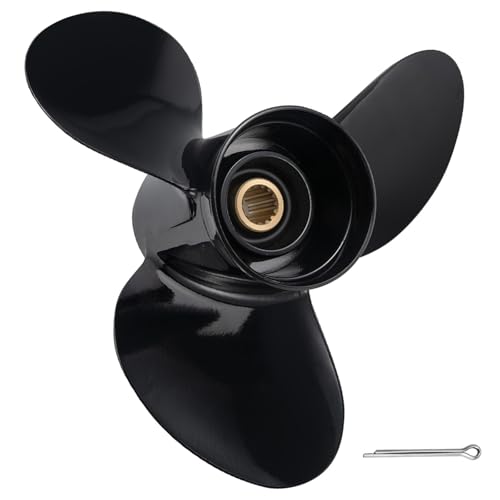
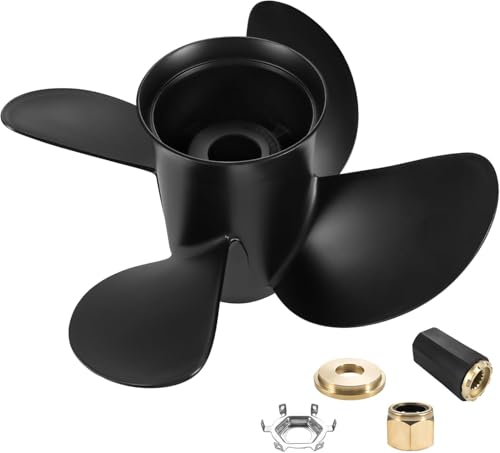
Most selected products use three blades. That includes the Solas Titan, VIF, PWCMAN, TUNORD, PropelTech, both YOUNG PROPS models, and JSPROP. Three-blade designs are therefore the dominant documented format in this pool. The Meruzue is the selected four-blade alternative, with a 13-inch diameter and 21-inch pitch for listed Yamaha applications.
Blade count alone does not establish which propeller will work better on a particular boat. The Solas listing adds high rake and cupping details. For this comparison, the Solas is the only selected product with a specifically described high-rake, cupped design. Its listing connects those features with bow lift and bite, but those statements are listing claims rather than independent test results.
A four-blade choice can be worth considering when the existing propeller specification or boat setup calls for it, but the Meruzue listing itself does not provide a direct performance comparison against a three-blade model. Treat blade count as one compatibility and design variable, not a standalone guarantee.
Check rotation, spline count, and hub details
Every selected product in this list is described as right-hand rotation. That does not mean any of them will fit the same shaft. Spline or tooth counts differ: the Solas listing does not supply a spline count in the cited evidence, while the WONENGDA, PWCMAN, TUNORD, and VIF listings identify 15-tooth or 15-spline connections. JSPROP specifies 13 spline teeth, and the Volvo Penta SX model specifies 19 teeth. These distinctions are critical.
The YOUNG PROPS Mercury sterndrive model is notable for its stated hub-kit contents, including a forward thrust washer, drive sleeve, aft adaptor, tab washer, and propeller nut. That can help a buyer plan a replacement, but the included parts should still be compared with the existing hardware. A pressed-in hub is mentioned for JSPROP. Other listings describe easy installation without providing enough hub detail to confirm that installation will be identical on every boat.
All selected products identify stainless steel in their titles or feature descriptions. Some listings provide more detail. The VIF and WONENGDA descriptions call out duplex stainless steel, the PropelTech listing describes stainless construction and process steps, and the Meruzue, TUNORD, and Solas listings provide general stainless material information. The evidence does not establish a universal stainless grade or independently verify corrosion life for every model.
A polished or silver finish is mainly a product-identification detail in the supplied data. It should not be treated as proof of a particular alloy or a performance outcome. For saltwater use, confirm the manufacturer’s maintenance guidance and inspect the propeller, hub, and fasteners regularly. The YOUNG PROPS Volvo Penta listing specifically describes marine-grade stainless steel and saltwater resistance, but that remains a public listing claim rather than a comparative test result.
Use warranty and support as secondary checks
Warranty terms vary in the supplied evidence, from limited or short coverage to one year. VIF, TUNORD, Meruzue, and JSPROP list one-year coverage, while the Solas listing states 90 days. PropelTech lists a 30-day warranty, and the Volvo Penta and Mercury sterndrive YOUNG PROPS listings describe replacement coverage with their own exclusions or terms.
Warranty length should not replace fit verification. Read exclusions for normal wear, accidental damage, improper installation, and hub issues where those details are supplied. Support language can be useful when a listing offers compatibility help, but buyers should still provide the exact engine model, gearcase or drive, spline count, diameter, pitch, and rotation when asking a fit question.
Final Recommendation
PropelTech Suzuki 14 x 21 Stainless Propeller ranks first overall in this specification-based comparison under the published weighted criteria.
The Solas Science & Engineering 3441-133-17 Titan is the first overall specification-based choice among these best stainless steel boat propellers because it provides the clearest design detail for a high-speed planing-hull application. Its 13.25-inch diameter, 17-inch pitch, three blades, right-hand rotation, high rake, and cupping give the comparison a well-defined starting point, although its universal-fit wording means the buyer must verify compatibility.
For a larger Yamaha application, the VIF offers a detailed 150–300 HP fit description and a one-year warranty listing. The PWCMAN is a strong Yamaha 50–130 HP candidate when its 4.25-inch gearcase requirement matches. Mercury buyers can compare the TUNORD for outboards or the YOUNG PROPS model for sterndrives. The PropelTech and JSPROP options add clearly identified Suzuki and Johnson Evinrude coverage, while the Volvo Penta SX model serves a distinct sterndrive category.
The top stainless steel boat propellers are not interchangeable simply because they share stainless construction. Confirm the exact engine, drive, pitch, diameter, spline or tooth count, rotation, and blade count before purchase. If those details match, the ranked specifications provide a practical shortlist without pretending to replace manufacturer fit guidance.
Frequently Asked Questions
How do I choose the best stainless steel boat propellers for my engine?
Begin with the exact engine or drive model, horsepower, gearcase or sterndrive type, shaft spline or tooth count, rotation, diameter, and pitch. Compare those details with the listing and the original propeller. A broad brand or horsepower match is not enough by itself.
Is a higher pitch always better for a boat?
No. Pitch is one part of the propeller setup, and the correct choice depends on the engine, gear ratio, hull, and load. The selected products include 15-, 17-, 19-, and 21-inch pitch options for different applications. Choose the manufacturer-recommended specification rather than assuming the largest number is best.
Should I choose a three-blade or four-blade propeller?
The answer depends on the documented replacement specification and the boat’s setup. Most products here are three-blade designs, while the Meruzue is a four-blade Yamaha option. Blade count should be considered alongside diameter, pitch, rotation, spline count, gearcase, and engine compatibility.
Are stainless steel propellers suitable for saltwater?
The listings identify stainless steel construction, and the Volvo Penta SX listing specifically describes marine-grade stainless steel and saltwater resistance. However, the supplied evidence does not independently establish corrosion life for every product. Follow the manufacturer’s care instructions and inspect the propeller and hardware regularly.
What should I verify before installing a replacement?
Check diameter, pitch, blade count, rotation, spline or tooth count, hub type, gearcase or drive, and the exact engine application. Also confirm what hardware is included. The YOUNG PROPS Mercury sterndrive model lists a hub kit, while other products may require comparison with the hardware already on the boat.