Buying Guide
Choosing among the best stiff golf sand wedges starts with confirming what the listing actually documents. A stiff label alone does not tell you the loft, bounce, grind, face pattern, or intended role. This comparison therefore emphasizes five category-specific factors: shaft-flex confirmation, sand-wedge loft fit, face and groove design, sole interaction, and forgiveness or control features. The products are ranked from public listing evidence, not from hands-on testing or customer sentiment.
Confirm the shaft and hand orientation
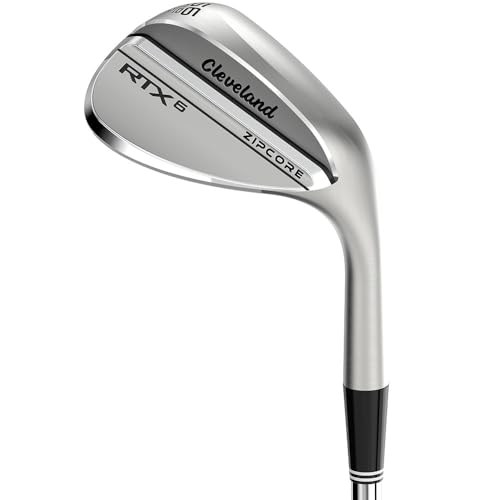
A stiff shaft is the defining filter for this guide. The TaylorMade Hi-Toe 4 Copper listings, Callaway Elyte X, Callaway Elyte with Elevate 95g, TaylorMade Hi-Toe RAW, Pinemeadow Pre Nickel, Callaway Jaws RAW, and Ase Golf CM-5 explicitly identify stiff flex. The Srixon ZXiR title also states steel and stiff. The Cleveland RTX 6 ZipCore listing supplies substantial wedge detail but does not explicitly show stiff flex in the supplied evidence, so that specification should be verified before ordering.
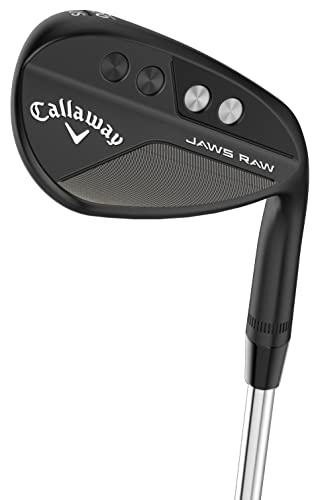
Hand orientation matters just as much. The Callaway Jaws RAW is specifically left-handed, while the TaylorMade Hi-Toe listings, Pinemeadow Pre Nickel, and Ase Golf listing provide right-hand or right-hand-oriented information. The Jaws RAW is not a universal alternative for a right-handed player, and the right-handed models should not be assumed to work for a left-handed golfer. When a listing omits hand information, verify it before purchase rather than relying on photographs.
Choose a practical loft
A conventional sand-wedge range is represented here by the 54-degree Callaway Elyte X, the 56-degree TaylorMade Hi-Toe 4 options, Cleveland RTX 6 ZipCore, Pinemeadow Pre Nickel, and the 56-degree club inside the Ase Golf set. These lofts are the most direct matches for shoppers replacing a standard sand wedge. The Srixon ZXiR and Callaway Elyte listings are titled as sand wedges, but the supplied specifications do not clearly state their lofts.
The TaylorMade Hi-Toe RAW and Callaway Jaws RAW are 60-degree options. They can serve a sand-related role for some golfers, but their higher loft makes them more specialized. The Jaws RAW adds 12 degrees of bounce and a W Grind, while the Hi-Toe RAW is identified as low-bounce 09. Those are meaningful differences: one supplies more documented sole assistance, while the other presents a lower-bounce setup. The Ase Golf set is the broadest choice because it includes 52, 56, and 60 degrees, allowing a golfer to use the 56-degree club as the sand wedge and reserve the other lofts for gapping.
Match bounce and grind to your conditions
Bounce and grind affect how the sole is described to interact with turf or sand. The TaylorMade Hi-Toe 4 standard version is listed with 10 degrees of bounce, and the second version is a 56.12-degree mid-bounce configuration. The Cleveland RTX 6 is also a mid-bounce 56-degree wedge. The Ase Golf set documents an 8-12-degree bounce range and an F-grind sole. These products offer the clearest evidence for shoppers comparing sole configurations.
The Callaway Jaws RAW supplies a 12-degree bounce and W Grind, making it the most clearly specified higher-bounce option in the group. The TaylorMade Hi-Toe RAW has low-bounce 09, which is a distinct alternative rather than a universal upgrade. The Callaway Elyte, Elyte X, Srixon ZXiR, and Pinemeadow Pre Nickel listings do not give enough bounce or grind detail to support a precise turf-condition recommendation. Avoid assuming that a larger head or a stiff shaft automatically indicates a particular bunker fit.
Face and groove descriptions vary substantially across the products. Cleveland RTX 6 ZipCore documents HydraZip face texture and UltiZip grooves described as sharper, deeper, and tightly spaced. TaylorMade Hi-Toe 4 documents full-face grooves and Spin Tread laser etching intended to redirect moisture. Callaway Jaws RAW documents a raw face and aggressive grooves, while Ase Golf CM-5 specifies full-face CNC-milled grooves.
This distinction matters: a product can be a golf wedge and still fail the requested stiff-flex filter. For the selected products, face evidence is most specification-aligned where the listing names groove construction or texture rather than making only a general performance statement.
Consider forgiveness and construction style
Iron-family sand wedges can suit golfers who want their wedge to blend with an iron set. The Callaway Elyte X uses a larger profile described as easy to hit and confidence-inspiring. The Callaway Elyte documents Speed Frame, an Ai10x Face, and a tri-sole designed for speed, control, and turf interaction. Srixon ZXiR uses i-ALLOY, MainFrame, and Tour V.T. Sole descriptions that emphasize feel, weight distribution, forgiveness, and turf interaction.
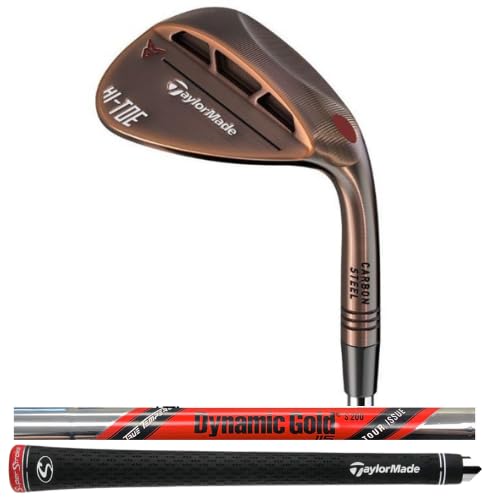
Standalone designs offer different evidence. TaylorMade Hi-Toe 4 uses an expanded toe area and full-face grooves, Cleveland RTX 6 uses ZipCore and a face texture system, and Callaway Jaws RAW uses a tungsten-related weight-balancing description. These features may appeal to golfers who prefer specialty wedge shaping instead of an iron-family profile. The listing evidence supports comparing construction approaches, but it does not justify claiming that any model will produce a particular score, distance, or spin result.
Account for the main trade-offs
The best stiff golf sand wedges are not identical substitutes. A 56-degree club is the most conventional choice in this group, while a 54-degree head may fit a golfer whose set gapping calls for less loft. A 60-degree club may be useful for specialized shots but can be less direct as a one-club sand-wedge replacement. A three-club set adds loft coverage but may exceed the needs of someone replacing one club.
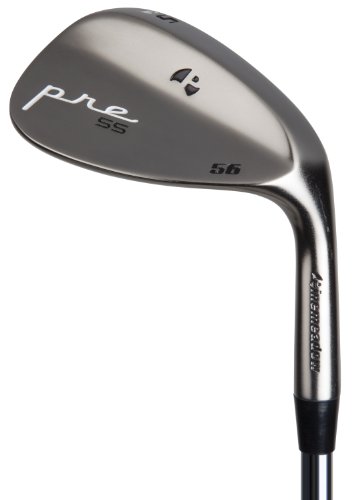
Documentation is another trade-off. The TaylorMade Hi-Toe 4, Callaway Jaws RAW, and Ase Golf CM-5 provide detailed evidence about bounce, grind, grooves, or shaft construction. The Pinemeadow Pre Nickel has a clear basic configuration but fewer technical details. The Cleveland RTX 6 supplies extensive face and groove information but does not explicitly identify stiff flex in the supplied listing. Treat missing data as something to confirm, not as proof that a feature is absent.
Final Recommendation
Ase Golf CM-5 Stiff-Flex Three-Wedge Set ranks first overall in this specification-based comparison under the published weighted criteria.
TaylorMade Hi-Toe 4 Copper 56.10 Stiff is the first overall specification-based choice among the best stiff golf sand wedges in this comparison. Its listing directly confirms stiff flex and combines a 56-degree loft, 10 degrees of bounce, expanded toe shaping, full-face grooves, Spin Tread, and a soft 8620 carbon-steel construction. That combination gives it the most specification-aligned balance of category fit and documented wedge design.
The TaylorMade Hi-Toe 4 Copper 56.12 Mid Bounce Stiff is a close alternative for golfers who specifically prefer the mid-bounce configuration. Cleveland RTX 6 ZipCore is the most technically detailed face-and-groove option, but its stiff-flex information should be checked. Callaway Elyte X is the clearest larger-profile iron-family choice, while Callaway Elyte adds a documented Elevate 95g stiff shaft and tri-sole. The Ase Golf CM-5 is the practical pick when a complete 52/56/60-degree set is wanted. Together, these are the top stiff golf sand wedges for comparing conventional lofts, specialty lofts, iron-family designs, and full-set coverage without relying on volatile marketplace claims.
Frequently Asked Questions
What loft is most conventional for a stiff sand wedge?
The 56-degree options in this comparison are the most conventional sand-wedge matches. TaylorMade Hi-Toe 4 Copper, Cleveland RTX 6 ZipCore, and Pinemeadow Pre Nickel all list 56-degree configurations, while the Ase Golf CM-5 set includes a 56-degree wedge alongside 52 and 60 degrees. A 54-degree model can also be appropriate when it fits the golfer’s existing loft gaps.
Are 60-degree wedges included among the best stiff golf sand wedges?
They are included as specialty choices rather than universal replacements. TaylorMade Hi-Toe RAW is a 60-degree low-bounce 09 option, and Callaway Jaws RAW is a 60-degree, 12-degree-bounce W Grind option. Their higher lofts may suit golfers seeking a lob-wedge-style setup or specific bunker and short-game use, but shoppers should compare them with a conventional 56-degree club.
The selected listings with the clearest bounce details are TaylorMade Hi-Toe 4 standard bounce at 10 degrees, TaylorMade Hi-Toe 4 mid bounce, TaylorMade Hi-Toe RAW low-bounce 09, Callaway Jaws RAW at 12 degrees, and Ase Golf CM-5 at 8-12 degrees. Cleveland RTX 6 is identified as mid bounce. The remaining selected listings do not provide enough supplied evidence for a precise bounce comparison.
Is a wedge set better than a single sand wedge?
A set can be useful when you need several lofts for gapping. Ase Golf CM-5 includes 52, 56, and 60 degrees with a 120g stiff steel shaft, full-face CNC-milled grooves, and an F-grind sole. A single club is more focused when you only need to replace a sand wedge. The right choice depends on whether the additional lofts fill actual gaps in your existing setup.
Should the Cleveland RTX 6 ZipCore be verified before ordering?
Yes. Cleveland RTX 6 ZipCore has strong supplied evidence for a 56-degree mid-bounce design, HydraZip face texture, UltiZip grooves, ZipCore construction, and increased MOI. However, the supplied title and specifications do not explicitly confirm stiff flex. Since this guide is limited to stiff golf sand wedges, verify the shaft configuration on the current product listing before choosing it.