Buying Guide
The best temperature-controlled soldering stations are easier to compare when you separate the control system from the headline wattage. A higher power figure can support faster heating or recovery, but it does not by itself establish temperature accuracy. Look for evidence about PID control, calibration, temperature stability, displays, and the usable adjustment range. Then consider whether the station includes the bench tools you actually need.
Match the station to the work
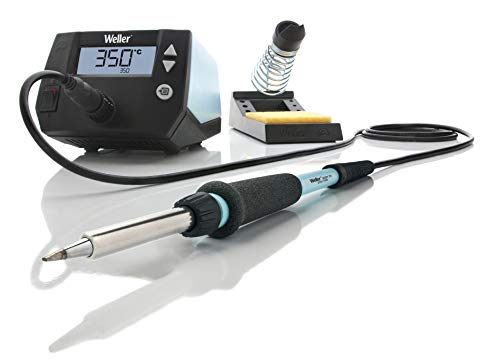
For routine electronics assembly, PCB repair, and through-hole work, a dedicated digital station is usually the most focused format. The Weller WE1010NA and Weller WLSKD7012A are straightforward examples, with 70W output and controls intended for conventional soldering. The Hakko FX888DX-010BY takes a similarly focused approach but uses a rotary encoder and digital display for setting adjustment.
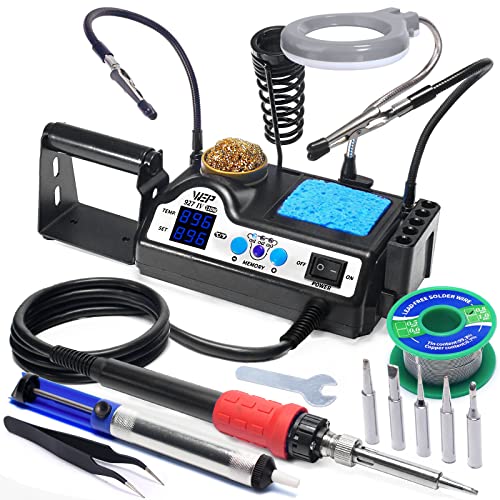
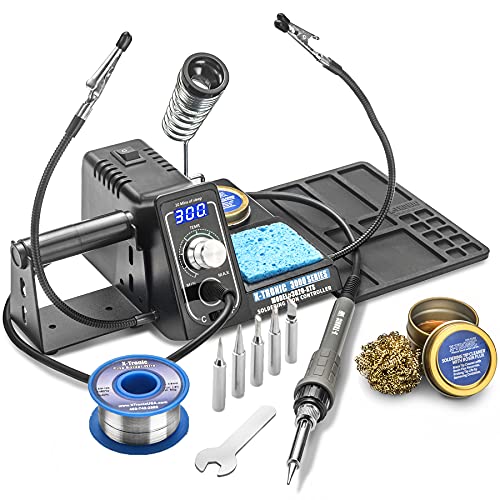
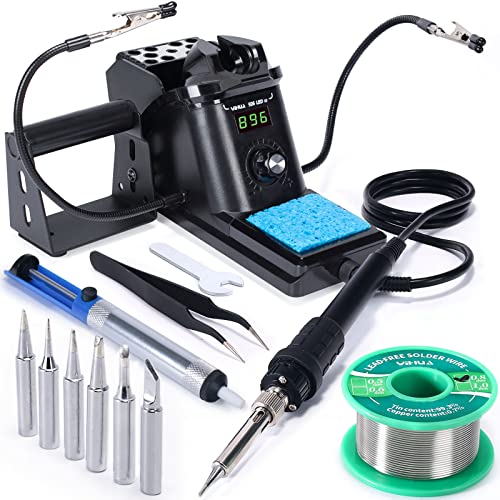
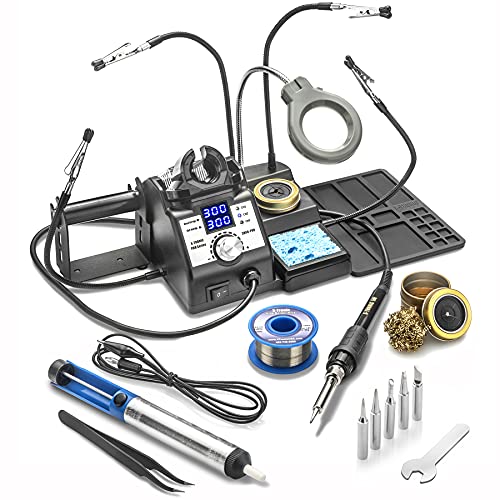
A kit with helping hands, tip cleaning tools, solder, or a magnifier can be more useful when you are building a bench from scratch. The X-Tronic 3020-XTS includes two helping hands, a silicone mat, extra tips, solder, brass sponge, and flux. The WEP 927-IV adds an LED magnifier, helping hands, tip storage, and a solder wire dispenser. The YIHUA 926 III and Preciva 926 III also combine the holder and related accessories into compact workstation designs.
Compare temperature control claims
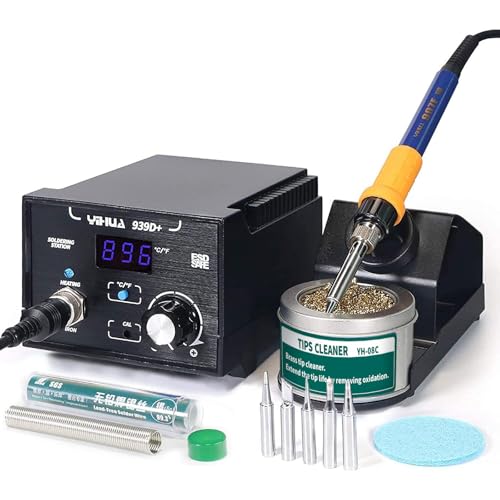
Temperature control is the central buying criterion. PID systems are documented on the X-Tronic 3020-XTS, Preciva 926 III, YIHUA 939D+, YIHUA 926 III, and TOAUTO DS90. The Preciva listing goes further by stating plus or minus 2°C tip accuracy and calibration support. The Weller WE1010NA lists plus or minus 4°F/2°C stability and temperature lock. These are listing claims, not independent test results, but they provide more useful comparison evidence than wattage alone.
A digital display helps you see the selected or actual temperature. The WEP 927-IV specifically lists simultaneous set and actual temperature displays. The Preciva 926 III states that its display shows real-time temperature, while the TOAUTO DS90 uses dual digital displays. A display is most useful when paired with calibration or correction controls, because those features give you a documented way to adjust the station if the displayed and working temperatures differ.
Choose an appropriate range and output
Many selected stations list a top setting near 896°F, including the WEP 927-IV, Preciva 926 III, YIHUA 939D+, YIHUA 928D-III, and YIHUA 926 III. That broad range can accommodate different soldering tasks, but the correct working temperature still depends on the solder, tip, component, and material. Do not treat the maximum setting as a recommendation for every project.
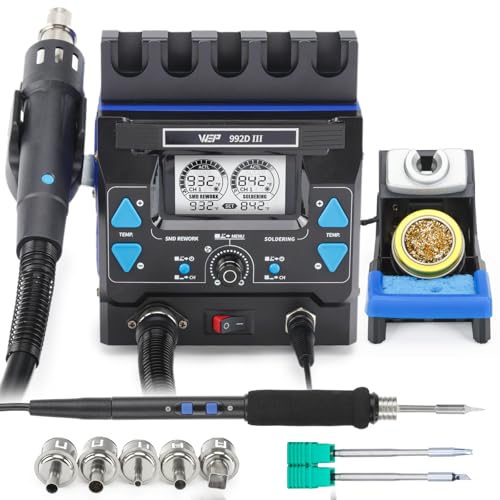
Power varies across the group. The YIHUA 926 III lists 60W, while the Weller stations list 70W, the X-Tronic model lists 75W, the TOAUTO lists 90W, and the WEP and YIHUA 928D-III list 110W. The Preciva 926 III lists 130W maximum power. These figures help indicate the available heating headroom, but the supplied data does not establish comparative recovery performance across products.
Check safety and component protection
A safety rest is important whenever the iron is not in your hand. The Weller WE1010NA, Weller WLSKD7012A, YIHUA 928D-III, and YIHUA 926 III listings document rests or holders. Sleep and standby functions can reduce idle heating and are available on many selections. The Weller WE1010NA lists standby and auto setback, while the WEP 927-IV and TOAUTO DS90 describe sleep or standby behavior.
For static-sensitive electronics, look for explicit evidence rather than assuming every digital station provides the same protection. The X-Tronic 3020-XTS is listed as ESD safe, the TOAUTO DS90 includes an anti-static design and grounding wire, and the YIHUA 939D+ is described for ESD-safe electronics work. The YIHUA 926 III also lists a protective metallic mesh around the rear area. These features may be especially relevant for PCB, SMD, and SMT work.
Consider controls and repeatability
Preset channels are convenient when you move between recurring jobs. The WEP 927-IV has three preset channels, while the Preciva 926 III offers a control knob, °F/°C switching, calibration, and selectable standby timers. The Weller WE1010NA adds temperature lock and password protection to help preserve settings. These features are more useful for repeatable workflows than a simple temperature dial alone.
Tip changes and cable design also affect daily use. The Weller WLSKD7012A lists quick tip change, and the Weller WE1010NA includes a heat-resistant silicone cable. The YIHUA 928D-III is the lightest focused iron in this comparison by its listed weight, which may appeal to users who move between work areas. The Preciva and YIHUA 926 III emphasize compact integrated layouts for smaller benches.
Review included tips and compatibility
Included tips are helpful for getting started, but compatibility matters for future replacement. The WEP 927-IV explicitly uses WEP #1400 tips. The YIHUA 926 III listing identifies YIHUA #1200/900M Series tips, while other products list assorted tips without establishing universal interchangeability. Before buying, confirm that replacement tips are available in the shape and series you need.
Also check the electrical specification. Several listings identify 110-127V US operation, including the WEP 927-IV, WEP-related YIHUA products, and the TOAUTO DS90. The station should match the power supply available at your bench. Warranty information varies: the Weller WLSKD7012A lists seven years, the Weller WE1010NA lists one year, and several other selections document one-year technical support or coverage.
Final Recommendation
Preciva 926 III 130W Digital Soldering Station ranks first overall in this specification-based comparison under the published weighted criteria.
The Weller WE1010NA is the highest-scoring returned product and the first overall specification-based choice among the best temperature-controlled soldering stations. Its documented stability, temperature lock, password protection, standby mode, and 70W output create a well-defined feature set for repeatable electronics work.
The top temperature-controlled soldering stations differ mainly in workflow. Choose the Hakko FX888DX-010BY for its rotary encoder, the X-Tronic 3020-XTS for a complete bench kit, or the Weller WLSKD7012A for its integrated rest and long listed warranty. The WEP 927-IV and Preciva 926 III are strong high-power kit options, while the YIHUA 939D+, YIHUA 928D-III, TOAUTO DS90, and YIHUA 926 III cover flexible layouts, portability, static-control features, and compact starter setups.
This ranking uses public product features and specifications only. It does not represent hands-on testing, measured performance, or customer sentiment. Verify tip compatibility, voltage, warranty terms, and the exact contents of the listing before purchase.
Frequently Asked Questions
What makes the best temperature-controlled soldering stations different from basic soldering irons?
A temperature-controlled station generally provides a separate control unit, a dedicated iron and holder, and an adjustable temperature system. The selected products add features such as digital displays, PID control, calibration, temperature locks, sleep modes, or preset channels. A basic iron may not provide the same level of adjustment or documented workflow control.
Is more wattage always better for electronics soldering?
No. Wattage indicates available electrical power, but the supplied listings do not establish a direct performance ranking from wattage alone. Temperature stability, tip compatibility, control behavior, and the workpiece also matter. A 60W YIHUA 926 III may suit compact general work, while a 110W WEP 927-IV or YIHUA 928D-III may offer more listed heating headroom for users who need it.
Do I need PID temperature control?
PID control can be useful because the listed products describe it as monitoring or correcting temperature. The Preciva 926 III additionally states a plus or minus 2°C accuracy claim and calibration support. However, these are manufacturer or public listing specifications rather than independent measurements. Consider PID a useful documented feature, not a guarantee of results in every application.
Which station is best for a small workbench?
The Preciva 926 III, YIHUA 926 III, and WEP 927-IV all document integrated elements such as holders, cleaning areas, storage, or helping hands. These designs can reduce the number of separate items on a bench. The best choice depends on whether you prioritize compactness, accessory coverage, high listed power, or the ability to place tools independently.
Are the included soldering tips interchangeable?
Not necessarily. The WEP 927-IV specifies WEP #1400 tips, and the YIHUA 926 III identifies YIHUA #1200/900M Series tips. Other listings provide tip assortments without confirming cross-compatibility. Check the station’s specified tip series and replacement availability before relying on included accessories.