Buying Guide
Choosing among the best x 8 cutting boards comes down to how the documented specs match your kitchen workflow. Each product in this list was assessed against six practical criteria: dimension match, material quality, surface features, knife-friendliness, versatility, and build thickness. The result is a specification-based ranking designed to highlight functional differences, not subjective impressions.
A board labeled 12 x 8 inches should actually measure close to that footprint. Among the candidates, the KimiDitt clear and frosted glass boards, the Callsky tempered glass board, the Timberro acacia board, the J.K. Adams maple board, and the Casual Home walnut board list dimensions at or very near 12 x 8 inches. Slightly larger options like the OXO Good Grips plastic board (12.8 x 8.8 inches) and the Lipper International teak board (12 x 9 inches) still fit the small-prep category but may occupy more counter space. Smaller-cut users, including those with apartment counters or RV kitchens, benefit from boards that land closest to the exact 12 x 8 specification.
Material Quality and Construction
The list spans tempered glass, bamboo, acacia, maple, walnut, teak, titanium, and polypropylene plastic. Solid hardwoods such as acacia, maple, walnut, and teak tend to deliver a denser, more knife-friendly surface that resists warping at thicker profiles. Bamboo options, like the Freshware set, are lighter and documented as gentle on blades, though they typically need periodic oiling. Tempered glass boards from KimiDitt and Callsky emphasize non-porous surfaces that resist stains and odors. The XTBSE titanium board brings a metal option with a non-porous, dishwasher-safe surface, while the OXO Good Grips plastic board offers a lightweight everyday option.
Surface Features and Stability
Look for documented stability features if you slice with any force. Non-slip feet appear on the KimiDitt clear and frosted boards, the Callsky glass board, and the OXO Good Grips plastic board, anchoring them to the counter. Juice grooves are present on the Timberro acacia board, the Casual Home walnut board, the Freshware bamboo set, and the Lipper International teak board, making those better suited for slicing tomatoes, citrus, or cooked meats that release liquid. Reversible designs, like the OXO and Freshware boards, double the usable surface and can separate produce from proteins.
Knife-Friendliness and Hygiene
A surface that is too hard can shorten the life of an edge. The Timberro acacia board, the J.K. Adams maple board, the Casual Home walnut board, and the Freshware bamboo set all use documented hardwood or bamboo surfaces that are described as gentle on knife blades. The XTBSE titanium board is also marketed as knife-friendly despite its metal build. For hygiene, glass and titanium boards are non-porous and resist absorbing liquids, while hardwoods resist odors when properly oiled and dried.
Build Thickness and Stability
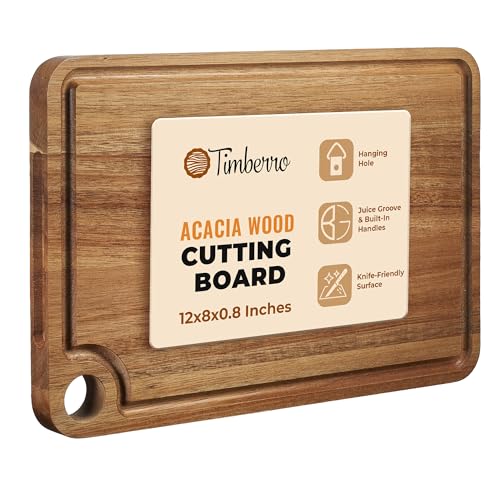
Thickness directly affects how stable a small board feels during use. The Timberro acacia board leads the pool at 0.8 inches thick, followed by the J.K. Adams maple board and the Casual Home walnut board at 0.75 inches. The Callsky glass board uses a 5mm profile with reinforced corners to add rigidity, while the thinner KimiDitt glass boards at 0.16 inches may feel lighter during heavy chopping. Plastic and bamboo boards generally fall in the middle for thickness and weight.
Versatility: Prep, Serve, and Store
Some boards do triple duty. The Callsky and KimiDitt glass boards can move from prep surface to serving tray to heat pad. The Timberro board adds a hanger for vertical storage. The Freshware set, the Lipper teak board, and the Casual Home walnut board all work as serving platters for cheese or charcuterie. The OXO plastic board’s easy-pour corners make it practical for transferring chopped ingredients to a pan. Boards with handles, grooves, and reversible surfaces offer more ways to use them in a small footprint.
Final Recommendation
Timberro Acacia Wood Cutting Board, 12 x 8 x 0.8 Inches ranks first overall in this specification-based comparison under the published weighted criteria.
The final choice among the best x 8 cutting boards depends on the documented features that match your intended use.
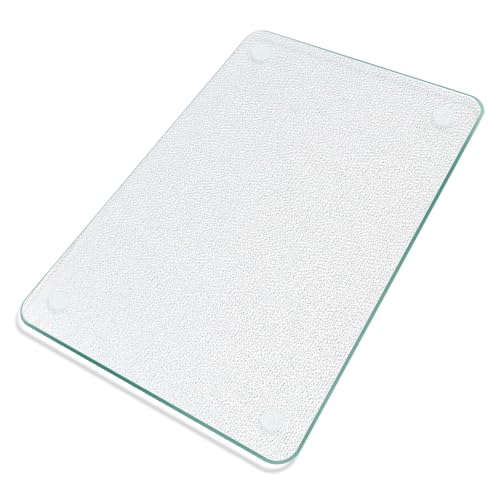
If you want a compact prep surface that combines rigidity, a non-slip base, and easy cleaning, the Callsky Clear Tempered Glass Cutting Board earns its place at the top of the list. Its documented 12 x 8 dimensions, 5mm thickness, reinforced corners, and integrated non-slip feet directly address stability and durability, while the polished edges and dishwasher-safe body make it a versatile tool for prep and serving.
For buyers who prefer a knife-friendly hardwood, the Timberro Acacia Wood Cutting Board is a strong alternative. Its 12 x 8 footprint, 0.8-inch thickness, built-in juice groove, and side handles cover both prep and serving duties, and the included hanger keeps it within reach on a wall hook. Those who want a lighter, three-piece setup can step down to the Freshware Bamboo Cutting Board Set, which includes a 12 x 8 inch board alongside smaller and larger sizes for varied tasks.
If your priority is a dishwasher-safe non-porous surface for fast cleanup, the KimiDitt Clear Tempered Glass Cutting Board and KimiDitt Frosted Tempered Glass Cutting Board both deliver documented stability and a small footprint. For kitchen tasks that call for a juice groove, the Casual Home Walnut Cutting Board and Lipper International Teak Cutting Board both offer documented drip channels in hardwood builds. The J.K. Adams Williston Maple Cutting Board adds a domestically made option with a lifetime guarantee. For a metal option, the XTBSE Titanium Cutting Board provides a non-porous, double-sided surface, while the OXO Good Grips Plastic Cutting Board brings non-slip feet and easy-pour corners to everyday chopping.
Together, these boards cover the main reasons people search for the top x 8 cutting boards: compact dimensions, documented stability features, knife-friendly surfaces, and the flexibility to prep and serve on the same board.
Frequently Asked Questions
What size counts as a 12 x 8 cutting board?
Boards that list dimensions at or very close to 12 x 8 inches qualify as small-prep boards. Several products in this guide, including the KimiDitt, Callsky, Timberro, J.K. Adams, and Casual Home options, report 12 x 8 inch footprints. Slightly larger options like the OXO Good Grips plastic board at 12.8 x 8.8 inches still fit the small-prep category.
Which material is best for a small cutting board?
The best material depends on how you use the board. Solid hardwoods like acacia, maple, walnut, and teak are dense and gentle on knife edges. Bamboo is lighter and documented as knife-friendly but needs oiling. Tempered glass and titanium are non-porous, stain-resistant, and dishwasher-safe. Plastic is lightweight, dishwasher-safe, and easy to store.
Are glass cutting boards sanitary?
Tempered glass boards are non-porous, so they do not absorb liquids, odors, or stains. Both KimiDitt glass boards and the Callsky tempered glass board are documented as hygienic surfaces that resist mold and odor, and all three are dishwasher-safe for routine cleaning.
Do I need a juice groove on a 12 x 8 board?
A juice groove helps when you slice items that release liquid, such as tomatoes, citrus, or cooked meats. The Timberro acacia board, Casual Home walnut board, Lipper International teak board, and Freshware bamboo set all include documented grooves. Boards without grooves work well for dry prep tasks and for sliding chopped ingredients directly into a pan.
How should I store a small cutting board?
Boards with hangers or holes, like the Timberro acacia board and the J.K. Adams maple board, can be hung on a wall hook to save counter space. Glass boards like the KimiDitt and Callsky models store upright in a narrow cabinet slot. Plastic boards like the OXO Good Grips model fit easily in a standard cabinet or drawer.
How thick should a 12 x 8 cutting board be?
Thickness affects stability during chopping. The Timberro acacia board at 0.8 inches and the J.K. Adams maple and Casual Home walnut boards at 0.75 inches offer the most rigidity. Glass boards typically use thinner profiles around 0.16 to 0.2 inches and rely on reinforced corners or rubber feet for stability, while plastic and bamboo options usually land between those ranges.
Are the best x 8 cutting boards also good for serving?
Several boards in this guide are documented as serving platters. The Callsky and KimiDitt glass boards work as cheese, pizza, or charcuterie trays. The Timberro acacia board, Casual Home walnut board, Lipper teak board, and Freshware bamboo set all support serving tasks alongside prep. Boards with grooves help contain drips during use as serving trays.