Buying Guide
The best organic ground pepper is usually the one whose texture and format match the way you cook. A fine grind spreads quickly through sauces and batters, while medium grind works as a general seasoning. Coarse pepper is more visible and can add texture to finished dishes, rubs, and roasted foods. The listings in this comparison document all three practical texture categories, although not every product supplies a precise mesh measurement.
Start with grind size
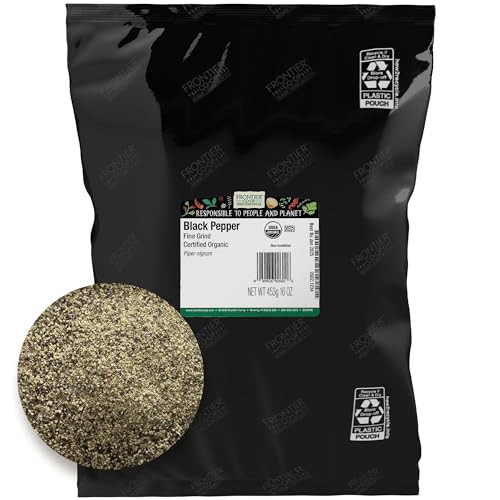
Fine ground pepper is the most uniform option in this group. Frontier Co-op Organic Fine Grind Black Pepper is specifically described as finer and more intense than medium grind, with uses that include sauces, pasta, eggs, and table seasoning. True Organic Ceylon Fine Ground Pepper also clearly identifies a fine texture and extends its stated uses to baking and hot beverages. These options are suited to recipes where pepper should distribute evenly rather than remain visually prominent.
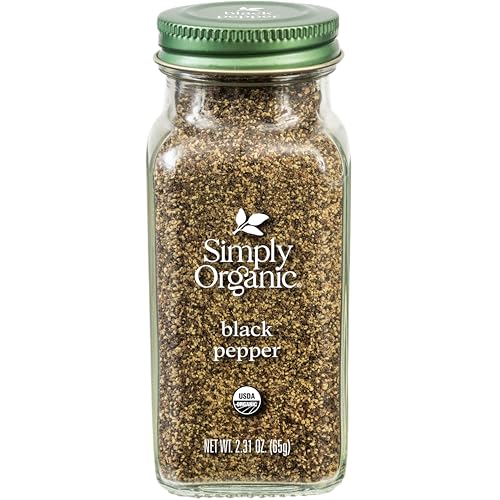
Medium grind is the most flexible format for routine seasoning. Simply Organic Medium Grind Black Pepper names a balanced medium grind and lists soups, sauces, meats, eggs, and vegetables. Frontier Co-op Organic Medium Grind Black Pepper likewise specifies medium grind and supports both cooking and table-side sprinkling. Choose this category when you want a recognizable pepper presence without the larger flakes of a coarse product.
Coarse ground pepper is designed for visibility and texture. Spice Profile Organic Coarse Ground Black Pepper provides the most technical description with a 10-mesh butcher’s grind. HQOExpress Organic 14 Mesh Coarse Pepper supplies another precise mesh specification, while The Holly Tree Organic Coarse Black Pepper specifically distinguishes coarse pepper from fine powder. These products are documented for steaks, roasted vegetables, marinades, rubs, and finishing.
Check organic and ingredient credentials
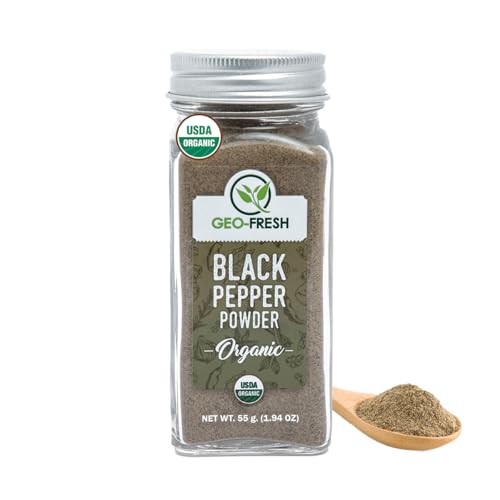
Listing language varies, so compare the exact credentials supplied for each product. USDA Certified Organic is stated for Simply Organic Medium Grind Black Pepper, McCormick Organic Pure Ground Black Pepper, Spice Profile Organic Coarse Ground Black Pepper, Geo-Fresh Organic Ground Black Pepper, True Organic Ceylon Fine Ground Pepper, HQOExpress Organic 14 Mesh Coarse Pepper, and The Holly Tree Organic Coarse Black Pepper. Frontier Co-op products identify organic status and Kosher certification, while Soeos lists USDA Organic, non-GMO verification, and Kosher status.
Some listings provide additional ingredient or processing information. The Holly Tree says it contains only organic black pepper with no preservatives, anti-caking agents, or artificial additives. Spice Profile lists non-GMO status and says the product is free from ETO, artificial flavors, and unnecessary preservatives. Geo-Fresh lists non-GMO, Kosher, and gluten-free claims. These details can help narrow a selection when a particular ingredient standard matters to your kitchen.
Flavor descriptions are useful as descriptors, not guarantees of a personal taste preference. Simply Organic presents a bold, warm, slightly spicy profile. Frontier Co-op describes sharp, peppery heat with woody, floral, and pungent notes. McCormick uses sharp and earthy language, while Soeos describes a robust flavor with an almost fruity character.
For coarse choices, Spice Profile describes citrus and pine notes with slow-releasing heat, and The Holly Tree describes bold heat, deep earthy notes, and a satisfying crunch. HQOExpress uses sharp, woody, piney, and pungent language. If you want a product for visible finishing, these descriptions provide more relevant evidence than a listing that only calls the pepper versatile.
Package size affects how the product fits your storage and cooking routine. Small jars such as Geo-Fresh at 1.94 ounces and Simply Organic at 2.31 ounces are straightforward options for moderate seasoning needs. Spice Profile uses a 4-ounce resealable pouch, which is a distinct format for keeping a coarse product between uses.
Larger formats include McCormick at 12 ounces, Soeos at 18 ounces, True Organic at 16 ounces, Frontier Co-op at 16 ounces for its medium grind, and HQOExpress at one pound. The Holly Tree lists a 16.23-ounce PET jar. Bulk formats reduce the need for frequent replacement but require sufficient pantry space and a storage routine that protects the pepper from moisture.
Look for useful sourcing and quality detail
Sourcing evidence differs considerably across the listings. Frontier Co-op describes relationships with growers and sustainable sourcing. HQOExpress states that its pepper is grown in several regions and has traceability from earth to table. True Organic identifies Sri Lanka or Ceylon as the source, while Frontier Co-op’s fine grind names India and Vietnam. Spice Profile identifies India as the source and states that the pepper is third-party tested across more than 250 parameters.
These statements do not replace your own preferences, but they make the products easier to compare. A precise origin may matter to shoppers interested in regional identity, while testing, traceability, or grower information may matter to shoppers evaluating the amount of public specification detail.
Final Recommendation
Spice Profile Organic Coarse Ground Black Pepper ranks first overall in this specification-based comparison under the published weighted criteria.
Simply Organic Medium Grind Black Pepper is the highest-scoring returned product and the first overall specification-based choice. Its medium grind, organic black peppercorn description, broad cooking guidance, and manageable jar format make it a strong general-purpose selection. For the top organic ground pepper with a technical coarse specification, choose Spice Profile Organic Coarse Ground Black Pepper or HQOExpress Organic 14 Mesh Coarse Pepper. For fine distribution, Frontier Co-op Organic Fine Grind Black Pepper and True Organic Ceylon Fine Ground Pepper provide the clearest fine-grind evidence.
The best organic ground pepper for a specific kitchen still depends on texture. Select a medium grind for broad daily use, fine grind for even blending, or coarse grind for visible flakes and finishing. Then compare the package format, stated certifications, flavor description, and sourcing information that best fit your cooking habits.
Frequently Asked Questions
What is the best organic ground pepper for everyday cooking?
Simply Organic Medium Grind Black Pepper is a strong everyday specification match because its medium texture and listed uses cover soups, sauces, meats, eggs, and vegetables. Frontier Co-op Organic Medium Grind Black Pepper is another suitable medium-grind option, especially when a larger format is useful.
Which selected product has the clearest coarse grind specification?
Spice Profile Organic Coarse Ground Black Pepper lists a 10-mesh butcher’s grind. HQOExpress Organic 14 Mesh Coarse Pepper also supplies an explicit mesh measurement. Both are documented for applications where visible texture and stronger surface presence are desired.
Is fine ground pepper better for sauces?
Fine ground pepper may distribute more evenly in sauces because the particles are smaller, but the supplied listings do not report performance testing. Frontier Co-op Organic Fine Grind Black Pepper specifically lists sauces among its uses, and True Organic Ceylon Fine Ground Pepper is identified as fine ground for cooking and baking.
True Organic Ceylon Fine Ground Pepper identifies Sri Lanka or Ceylon. Frontier Co-op Organic Fine Grind Black Pepper names India and Vietnam, Frontier Co-op Organic Medium Grind Black Pepper discusses sourcing without naming one origin in the supplied text, and Spice Profile Organic Coarse Ground Black Pepper identifies India. HQOExpress lists Sri Lanka, India, Madagascar, and China as growing regions.
What should I check before choosing a coarse product?
Check whether the listing clearly identifies the grind, then consider the intended use and package. Spice Profile lists a 10-mesh grind and resealable pouch; HQOExpress lists a 14-mesh grind and chef jar; The Holly Tree describes coarse flakes, finishing uses, and a PET jar. These details help distinguish visible-texture products from fine powders.