Buying Guide
Choosing the best vegetarian hot sauce starts with confirming what the listing actually documents. Some products explicitly use vegetarian or vegan language, while others provide an ingredient description with no stated animal-derived component. This guide treats those two evidence levels differently: an explicit dietary label is stronger documentation, while an ingredient-based match should be read more cautiously.
Match the pepper and flavor direction
Pepper choice is the quickest way to separate these sauces. Muso From Japan Hot Yuzu Sauce is built around yuzu and a spicy citrus profile, making it a natural fit for sushi, noodles, and grilled vegetables. Trejo’s Tacos uses fire-roasted habanero with smoky undertones, while Torchbearer centers Carolina Reaper and garlic.
Traditional profiles are also represented. HOT ONES The Classic lists chile de arbol, apple cider vinegar, garlic, and turmeric. Cholula Extra Hot names arbol and piquin peppers and points toward Mexican dishes. These descriptions make it easier to select a sauce by culinary direction rather than by heat wording alone.
Heat labels are not standardized across the category, so prefer products with more specific evidence when intensity matters. HOT ONES The Classic states a 2/10 heat level, placing it toward the mild end of this group. TABASCO Brand Scorpion supplies a 23,000–33,000 SHU range, and Torchbearer identifies Garlic Reaper as heat level 9, or super hot.
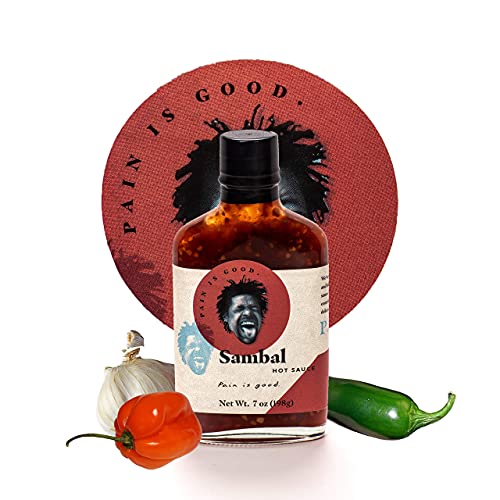
The most intense options are not automatically the most useful for every meal. A compact bottle such as TABASCO Brand Scorpion may suit controlled additions, while a 7-ounce format such as Pain is Good Habanero Sambal may be more practical for repeated cooking. Treat these observations as format and specification guidance, not as a hands-on test of perceived heat.
Check vegetarian documentation
For the clearest dietary signal, prioritize products with direct wording. Muso From Japan, Trejo’s Tacos, both selected Pain is Good sauces, and Sabatino Tartufi use vegetarian language in their supplied evidence. TABASCO Brand Scorpion goes further by identifying itself as vegan and allergen free.
Other selections are included because their supplied ingredient descriptions list peppers, vinegar, garlic, herbs, fruit, oil, or seasonings without naming an animal-derived ingredient. HOT ONES The Classic is a good example: its listed ingredients are organic chile de arbol peppers, vinegars, water, garlic, kosher salt, and turmeric. Cholula Extra Hot likewise describes arbol and piquin peppers with spices. If strict dietary verification is important, confirm the current package information before serving.
Consider the intended use
A sauce with a defined cuisine pairing can be easier to use. Cholula Extra Hot is aimed at tacos, nachos, enchiladas, fajitas, and huevos rancheros. Muso is directed toward Japanese-inspired dishes. Trejo’s Tacos lists marinades, roasted vegetables, barbecue, and dips. HOT ONES The Classic is described for breakfast, pizza, tacos, stir-fry, and soup.
Specialty sauces can also work beyond their headline pairing. The practical distinction is whether you want a sauce to blend into cooking, finish a dish, or provide a concentrated accent.
Bottle information helps set expectations. The list ranges from TABASCO Brand Scorpion at 2 fl oz and Muso at 3.2 fl oz to 5- and 7-ounce bottles from several selected products. Sabatino provides a 10-ounce bottle, and De La Viuda is listed as a six-pack of 5-ounce bottles. Larger formats may be convenient for frequent use, while smaller bottles can suit specialty sauces or controlled additions.
Do not confuse bottle size with flavor quality. The format is simply one part of the buying decision, especially when the evidence gives limited information about ingredients or serving style.
Read labels for allergens and exclusions
Sabatino Tartufi supplies soy-free allergen information alongside vegan and vegetarian claims. TABASCO Brand Scorpion is listed as allergen free, vegan, kosher, halal, and preservative free. Those details can be useful when a household has more than one dietary consideration. By contrast, a product with a short ingredient description may require additional label checking. Keep the distinction clear between what the listing states and what still needs confirmation.
Final recommendation
TABASCO Brand Scorpion Hot Sauce ranks first overall in this specification-based comparison under the published weighted criteria.
TABASCO Brand Scorpion Hot Sauce is the first overall specification-based choice in this comparison.
It is also the best vegetarian hot sauce here for shoppers who prioritize explicit plant-based documentation and detailed heat information. Its scorpion pepper, guava, and pineapple profile is clearly described, while the 23,000–33,000 SHU range gives the listing a defined intensity reference.
Muso From Japan Hot Yuzu Sauce is the most directly matched option for Japanese-inspired dishes, and Trejo’s Tacos suits smoky habanero cooking. For documented high heat, compare TABASCO Brand Scorpion with Torchbearer Garlic Reaper; the former supplies a Scoville range, while the latter states a heat level of 9. Among the remaining choices, Pain is Good offers useful vegetarian documentation and bottle size, Cholula brings Mexican-style pairings, and De La Viuda provides a clearly identified multipack.
For shoppers seeking a top vegetarian hot sauce, the final choice should follow the dish, pepper intensity, dietary documentation, and preferred bottle format rather than a single heat label.
Frequently Asked Questions
What makes the best vegetarian hot sauce different from a standard hot sauce?
The defining requirement is a documented vegetarian or plant-based fit. In this comparison, several products state vegetarian or vegan status directly, while others are included from ingredient descriptions that do not identify animal-derived components. Always use the current package label for strict dietary needs.
Which selected sauce has the mildest stated heat?
HOT ONES The Classic lists a 2/10 heat level. That is the clearest mildness specification among the selected products. Its chile de arbol, vinegar, garlic, and turmeric ingredient list also gives it a straightforward flavor profile for breakfast, pizza, tacos, stir-fry, and soup.
TABASCO Brand Scorpion lists a 23,000–33,000 SHU range. These figures and labels come from supplied listing data and should not be treated as equivalent measurement systems.
Which top vegetarian hot sauce is best for Japanese-inspired food?
Muso From Japan Hot Yuzu Sauce is the most directly matched option because the listing identifies genuine Japanese flavor, yuzu citrus, and uses including sushi, noodles, and grilled vegetables.