Buying Guide
Choosing among the best welding helmets with viewing areas starts with more than the largest number in a product title. A useful comparison should separate the size of the main lens from the total field of view, then consider whether side windows are auto-darkening, how clearly the lens specification is documented, and whether the controls match the work you do. The products here are compared from supplied public listing data, not hands-on testing.
Match the viewing design to your work
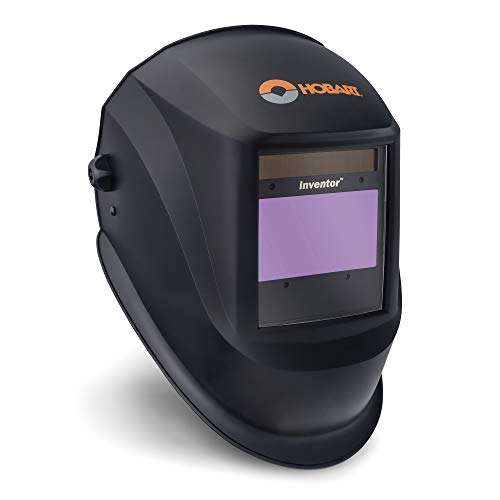
A conventional large window gives a broad forward view without adding side-lens design considerations. The ESAB Sentinel A60 documents a 4.65-by-2.80-inch area, while the Miller Classic Series lists six square inches. Hobart describes its 770890 Inventor as having a 9.3-inch widescreen area, although the listing does not provide height and width. These figures are not always measured in the same way, so avoid treating every number as directly interchangeable.
Panoramic designs can add awareness around the workpiece. The YESWELDER Auto-Shade 180° View lists an 8.89-by-3.23-inch total area with a central lens and side views. The ARCCAPTAIN Intelligent 180° True Color model lists a 7.2-by-3.2-inch total area, while the ARCCAPTAIN LY800Js-BK separates its center auto-darkening screen from two non-auto-darkening side windows. That distinction matters: peripheral visibility can be useful, but it does not mean every part of the stated field changes shade in the same way.
True Color or similar color-focused wording can indicate that the listing is designed to provide a more natural view than a traditional green-tinted lens, but it is not the same as a formal optical classification. Jackson Safety supplies a 1/1/1/current listing information for its Premium Graphic ADF, and both YESWELDER Auto-Shade 180° View and ARCCAPTAIN Intelligent 180° True Color list 1/1/1/1 clarity. Those documented ratings make them easier to compare than helmets that only state True Color or high-definition optics.
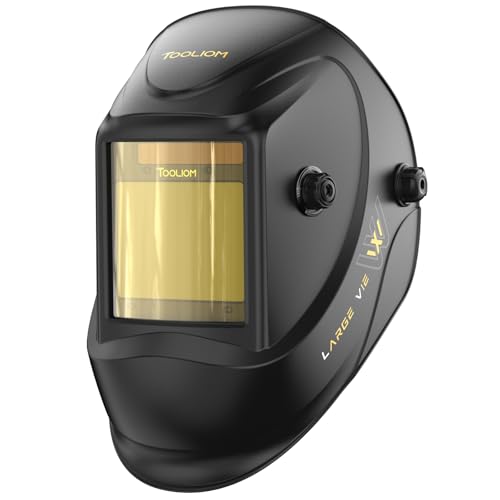
The Miller Classic Series ClearLight uses high-definition optics, while ESAB lists OpTCS True Color Lens Technology. American Alloy, StartPro, and TOOLIOM also document True Color features. For a buying decision, record whether the listing provides a formal rating, a named lens technology, or only general clarity language. Do not assume that an unspecified optical characteristic matches a rated one.
Consider shade range and process modes
Shade flexibility is important when one helmet will cover several tasks. The ESAB Sentinel A60 lists DIN current listing information–13 with half-step adjustment. American Alloy lists shade 4–13, and StartPro lists DIN current listing information–9/9–13. The YESWELDER Auto-Shade 180° View documents 3/4–8/9–14, giving it one of the broadest stated ranges in this comparison.
Also check whether the listing separates welding, cutting, and grinding modes. Miller’s Classic Series lists welding shades 8–13, cutting shades 5–8, and grind shade 3. Hobart documents weld and grind modes, while the ARCCAPTAIN panoramic models document welding and grinding support. A grind mode can reduce the need to change helmets for routine abrasive work, but it does not turn the helmet into a substitute for other required protective equipment.
Compare sensors and switching claims
Arc sensors are intended to detect the arc so the auto-darkening filter can change state. The American Alloy model lists five sensors, the YESWELDER Auto-Shade 180° View lists five, and the ARCCAPTAIN Intelligent model lists seven. ESAB, Hobart, Jackson Safety, the ARCCAPTAIN LY800Js-BK, StartPro, and TOOLIOM each list four. The Miller Classic Series lists two.
A higher sensor count is a specification advantage, not proof of superior real-world performance. Switching claims also need context. ESAB lists 0.08 millisecond, YESWELDER lists 1/30000 second, and several models list 1/25000 second or 1/23000 second. Treat these as manufacturer-stated figures and compare them alongside the shade range, controls, and lens documentation rather than as standalone guarantees.
Review controls, power, and fit
Sensitivity and delay controls help users adapt the helmet to different work conditions. ESAB adds memory for nine settings, ARCCAPTAIN Intelligent adds nine memory modes and an internal screen, and Miller provides digital controls for shade, delay, and sensitivity. The Hobart Inventor uses analog controls, which may appeal to shoppers who prefer direct knob adjustments. The ARCCAPTAIN LY800Js-BK specifically describes an adjustment knob that can be used while wearing gloves.
Power systems vary. Replaceable batteries appear on ESAB, YESWELDER, Jackson Safety, StartPro, and TOOLIOM. The ARCCAPTAIN Intelligent model documents a rechargeable battery with solar assist, while the ARCCAPTAIN LY800Js-BK lists solar panels and two CR2450 batteries. Check the supplied battery details before buying because a replaceable cell, rechargeable pack, or solar-assisted design affects maintenance differently.
Fit should be judged from documented headgear information rather than assumptions about comfort. Jackson Safety lists ratcheting headgear, Miller lists ratchet headgear, and several models describe adjustable or ergonomic headgear. Weight is supplied for some products, including Jackson Safety at the current price and American Alloy at the current price, but not every listing provides a comparable helmet weight.
Final recommendation
YESWELDER Auto-Shade 180° View ranks first overall in this specification-based comparison under the published weighted criteria.
The final choice among the best welding helmets with viewing areas depends on the documented features that match your intended use.
ESAB Sentinel A60 is the highest-scoring returned product and the first overall specification-based choice. Its combination of a large viewing area, four sensors, True Color lens technology, DIN current listing information–13 adjustment, memory, and detailed controls gives it the most specification-aligned all-around documented profile.
For the widest panoramic layout, YESWELDER Auto-Shade 180° View is compelling because its total viewing dimensions, side views, 1/1/1/1 clarity, and five sensors are clearly stated. ARCCAPTAIN Intelligent 180° True Color is another strong panoramic option, especially for saved settings, rechargeable power, and its built-in work light. Jackson Safety Premium Graphic ADF is the clearest choice when a formal 1/1/1/1 optical rating and lightweight design matter most.
The top welding helmets with viewing areas are not interchangeable: compare the actual center lens, side-window behavior, shade limits, process modes, sensor count, power system, and headgear details. Finally, confirm that the helmet’s documented standards, shade range, and intended use fit your welding process and workplace requirements.
Frequently Asked Questions
What makes the best welding helmets with viewing areas different from ordinary helmets?
They provide a documented broad central lens or panoramic layout, then add features such as True Color optics, formal optical ratings, adjustable shades, arc sensors, and process modes. A large viewing claim alone does not establish optical quality or auto-darkening behavior across the entire field.
Are panoramic welding helmets better than single-window designs?
Not automatically. Panoramic models such as the YESWELDER Auto-Shade 180° View and ARCCAPTAIN Intelligent 180° True Color add side views, which may help with peripheral awareness. However, the ARCCAPTAIN LY800Js-BK listing identifies its side views as non-auto-darkening, so buyers should understand how each section functions before choosing a panoramic design.
Which shade range is useful for multiple welding processes?
A wider documented range can provide more flexibility, but the right setting depends on the process and conditions. The YESWELDER Auto-Shade 180° View lists 3/4–8/9–14, while ESAB lists DIN current listing information–13. Miller separately documents welding, cutting, and grinding shades. Always follow the applicable safety guidance for the specific task.
Do more arc sensors guarantee a better helmet?
No. Sensor count is one specification among several. Five or seven sensors may be attractive on paper, but viewing design, optical documentation, shade controls, power, fit, and intended use also matter. The American Alloy and ARCCAPTAIN Intelligent models list high sensor counts, while the Miller Classic Series lists two sensors alongside other documented features.
What should I verify before buying?
Verify the main viewing dimensions, whether side windows auto-darken, optical-clarity information, welding and cutting shade limits, grind mode, battery type, headgear adjustment, stated standards, warranty details, and whether the product is intended for your work setting. This prevents a broad viewing-area claim from obscuring a limitation that matters to your process.