Buying Guide
Choosing among the best waterproof bike locks starts with the way you park, not with a single headline feature. A lock for a short stop at a visible rack can have different priorities from one used for a daily commute, an e-bike, or an overnight storage area. The products above are compared from supplied listing specifications and feature claims. They were not hands-on tested, and this guide does not summarize customer opinions.
Match the lock type to the parking situation
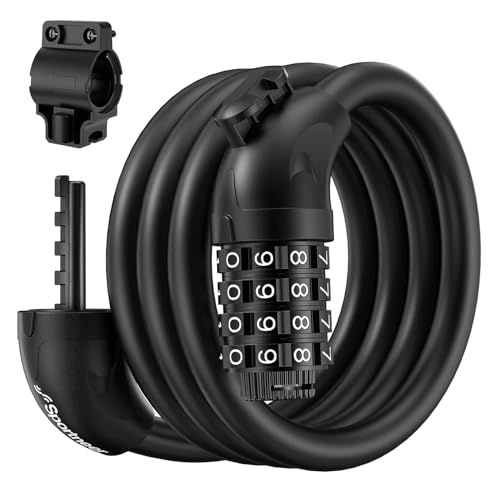
A U-lock places a rigid shackle around a frame section and an anchor. The KENRONE KR-UL253 documents a heavy-duty zinc alloy and steel structure and a compact U-shaped design. The Sportneer model adds a 5-foot steel cable, allowing the rigid lock to secure a wheel or reach an additional point. That combination can be more adaptable than a U-lock alone, but it also means carrying two components.
Check the internal opening before buying. A U-lock must fit around the frame, wheel, and parking fixture without leaving excessive unused space. The KENRONE listing says it fits most standard bikes, e-bikes, and scooters, while the Sportneer listing supplies lock dimensions and advises checking size. These details matter more than a generic claim that a lock is suitable for every bicycle.
Cable locks for flexible coverage
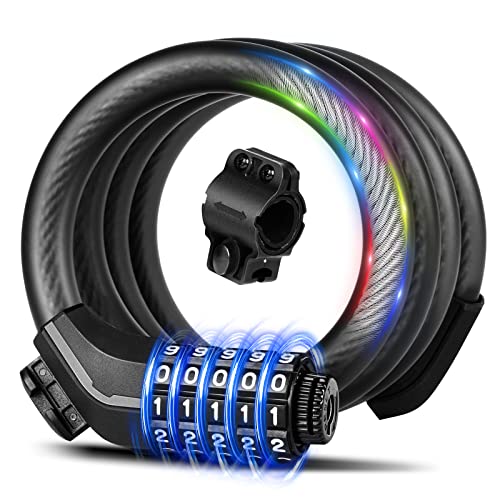
Cable locks are generally easier to loop through a frame and wheel, around a post, or through multiple items. The Mbeysaq has a documented 6-foot reach, while the Master Lock 8370D provides 5 feet. The Titanker and Diyife models each provide 4 feet. Longer cable length can help with large anchors, but it can also be harder to coil and carry.
Cable diameter and construction should be read together. The selected models document diameters from 10mm to 15mm, with braided or braided-steel constructions and protective PVC or vinyl coverings. The listing for the Master Lock 8370D explicitly characterizes its security as basic, so a flexible cable should not automatically be treated as equivalent to a rigid U-lock. Cable locks are useful when reach and convenience are central requirements.
Chain locks for wraparound versatility
Chain designs can wrap around posts and irregular fixtures that may be awkward for a rigid lock. The NDakter uses an alloy-steel chain with a fabric cover, while the Sportneer chain model documents 6mm manganese steel and a protective polypropylene cover. Both use five-digit resettable combinations.
Measure the chain length and inspect the lock-head dimensions. The NDakter listing gives a 3.2-foot option and notes that its head may not pass through every wheel gap. The Sportneer listing also states a head diameter, so wrapping the chain around the frame may be necessary when a wheel opening is too narrow. A fabric sleeve can help reduce contact with the bicycle finish, but it does not replace checking the anchor route.
Prioritize the type of weather protection you need
Waterproof claims are not identical across these products. The KENRONE lists IP66 waterproof and dustproof protection. The Mengshen lists IP55. Those are technical ingress-protection ratings and are more specific than a general weather-resistant phrase. Other products describe vinyl, PVC, silicone, or fabric covers that help resist rain, dust, rust, corrosion, or scratches.
A coating mainly protects the cable or chain surface and the bicycle finish. A cover around a keyhole or electronic housing addresses a different exposure point. The Titanker includes a waterproof dust-proof cover for its keyhole, while the Mengshen is battery-powered and includes low-battery indication. For rainy commuting, inspect both the locking body and the exposed access mechanism.
Choose keyed, combination, biometric, or remote access
Keyed locks are simple when you keep a spare available. The Titanker and Diyife include two keys, and the Sportneer U-lock also includes two. The selected products focus on independent bicycle-lock designs with documented cable, chain, or U-lock structures.
Combination locks remove the need to carry a key. The Mbeysaq and Master Lock use four-digit resettable systems, while the NDakter, Sportneer chain, and KEYSTP use five-digit systems. Follow the reset instructions carefully and test a new code before leaving home.
Electronic access adds another layer of convenience. The KENRONE supports fingerprint or combination unlocking, and the Mengshen supports remote control or password access. These features also introduce power and setup considerations. The KENRONE lists standby information, while the Mengshen uses AAA batteries and provides a low-battery indication. Consider whether you prefer mechanical simplicity or electronic access before choosing.
Check storage, weight, and reach
A lock is only useful if it is practical to bring along. Brackets are included with the Sportneer U-lock, KEYSTP, Titanker, Diyife, and several other selected designs. Self-coiling cables such as the Mbeysaq and Diyife can be easier to place in a bag or attach to a frame, although a longer cable may occupy more room. The KENRONE is documented at nearly the current price, so its biometric and U-lock features come with a noticeable carry trade-off compared with lighter cable designs.
Use the stated dimensions and weight as planning information, not as a promise about ride comfort. Confirm that a bracket fits your frame tube, especially when the listing supplies a diameter range. Also decide whether you need enough length to secure the frame and wheel to a rack. A shorter lock may be lighter but less adaptable around thick posts.
A practical selection checklist
First, identify the anchor: standard rack, pole, fence, or another fixture. Second, measure the route through the frame and wheel. Third, select the access method you will reliably use in rain and low light. Fourth, compare the documented protection details, including IP ratings, coatings, covers, and dust protection. Finally, review storage requirements and keep keys, codes, or batteries managed before the ride.
No supplied listing supports treating any lock as theft-proof. The product descriptions themselves advise sensible use and caution against leaving a bicycle unattended for long periods, especially in high-theft areas. A lock’s specifications should therefore guide a fit-for-purpose choice rather than an absolute security promise.
Final Recommendation
Sportneer 17mm U-Lock with 5ft Cable ranks first overall in this specification-based comparison under the published weighted criteria.
The KENRONE KR-UL253 is the first overall specification-based choice among these best waterproof bike locks because it combines IP66 protection, a rigid steel-and-zinc-alloy body, fingerprint access, and a backup combination mode. Its weight and U-lock dimensions should be acceptable to riders who value those features over minimum carry bulk.
For a more conventional mechanical setup, the Sportneer 17mm U-lock with 5-foot cable is the most specification-aligned alternative because it pairs a rigid lock with flexible coverage and includes a bracket and spare key. The KEYSTP is a practical pick for a thick keyless cable, while the Mbeysaq makes more sense when extra reach is important. Chain shoppers can compare the NDakter and Sportneer chain models by head clearance, chain thickness, and preferred code system.
The Titanker and Diyife suit riders who want keyed cable locks with brackets. The Master Lock 8370D is a straightforward weather-resistant combination cable for basic security needs. The Mengshen is the specialist choice for users who specifically want remote access and a motion alarm. These top waterproof bike locks differ substantially in format, so the best match depends on anchor size, parking duration, carrying tolerance, and whether electronic features are desirable.
Frequently Asked Questions
Are these the best waterproof bike locks for every parking situation?
No. The comparison is specification-based, not a hands-on security test. A cable may be convenient for a short visible stop, while a U-lock may better suit a rider seeking a rigid primary format. Match the lock to the anchor, frame clearance, parking duration, and local conditions.
What IP rating should I look for in a bike lock?
Among the selected products, the KENRONE lists IP66 and the Mengshen lists IP55. These technical ratings describe ingress protection and should not be treated as a complete measure of theft resistance. Cable, chain, and keyed models instead document coatings, sleeves, covers, or weather-resistant materials.
Is a combination lock better than a keyed lock?
Neither is universally better. Combination locks such as the KEYSTP, NDakter, and Master Lock 8370D avoid carrying keys, while keyed models such as the Titanker and Diyife include spare keys. Electronic options add remote or biometric access but require attention to batteries or setup. Choose the method you can use consistently.
How long should a bicycle lock be?
It depends on the anchor and what you intend to secure. The selected options range from a 31-inch cable on the Mengshen to a 6-foot cable on the Mbeysaq. Measure the path around the frame, wheel, and fixture before buying. Extra length improves flexibility but may add bulk.
Can a waterproof bike lock stay outside permanently?
The supplied evidence documents weather protection, but it does not establish permanent outdoor performance. Rain, dust, temperature, and mechanical wear can affect different parts of a lock. Keep keyholes covered when possible, monitor electronic batteries, and follow the manufacturer’s care guidance.