Buying Guide
Choosing among the best heavy-duty bike cable locks starts with matching the lock’s documented specifications to the way you park. Cable locks are flexible and can pass through frames, wheels, racks, posts, fences, and some outdoor equipment. They are not identical, however: diameter, cable length, locking method, coating, and carrying hardware all change the practical fit.
Compare cable thickness
Cable diameter is one of the clearest specification differences in this group. FOBOZONE lists a 23mm overall cable size with a 12mm steel core, while Kryptonite’s keyed KryptoFlex lists a 15mm braided-steel cable. KEYSTP also lists a 15mm steel cable. These larger stated diameters are useful when a buyer’s priority is choosing a more substantial cable format, but diameter alone does not establish a tested security grade or guarantee resistance to every attack.
Several selected products use a 12mm class cable. Titanker specifies a 12mm steel cable, Schwinn lists a 12mm steel cable, Mbeysaq lists a 12mm braided-steel cable, and RYANGO lists a 12mm PVC-covered steel cable. The Kryptonite combination model lists 12mm braided steel, while Master Lock lists a 13mm braided-steel cable. Hapleby supplies additional construction detail by describing a 0.5-inch cable made from seven bundles of heavy-duty steel rods.
For a short stop in a visible location, a flexible cable may be convenient. For longer unattended parking, the supplied listings themselves advise caution rather than promising complete theft prevention. Consider the anchor, location, and parking duration alongside the cable specification.
Choose the right length
Length determines how easily the cable reaches the frame, wheel, and fixed object. Six-foot options from Kryptonite, Master Lock, Schwinn, and Mbeysaq offer more routing flexibility than four-foot models. They may be better suited to larger racks, posts, or securing more than one item when the locking arrangement permits it.
FOBOZONE, Titanker, Hapleby, and RYANGO use shorter formats. Their four-foot or approximately 1,150mm lengths can be easier to manage around a nearby rack and may take up less space during transport. The trade-off is less room to route around wide posts, multiple bicycles, or awkward anchor points. Measure the path around the objects you actually use before ordering.
Stay with the listed products above when comparing the documented lengths and designs.
Decide between keys and combinations
Keyed locks are direct: insert the key to open, and several products can be snapped shut without using the key. The Kryptonite 15mm model, Titanker, Schwinn, Hapleby, and RYANGO are keyed examples in this selection. Multiple keys are supplied with several of them, which can help keep a spare separately from the daily key.
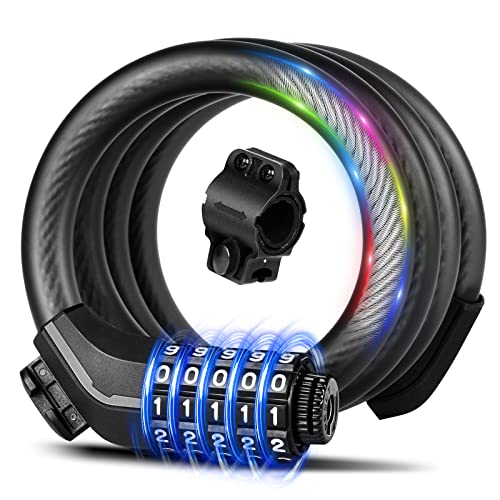
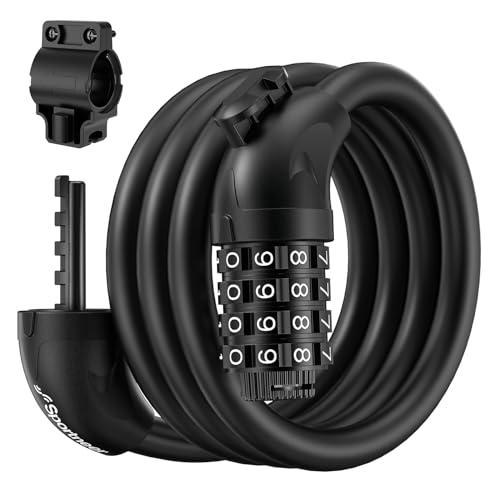
Combination locks remove the need to carry a key. KEYSTP uses a resettable five-digit code, while Kryptonite, Master Lock, and Mbeysaq use resettable four-digit combinations. A combination can be convenient for commuting, family use, or situations where a key may be easy to misplace. The trade-off is that the user must remember the selected code and follow the reset procedure correctly. Mbeysaq’s listing states that its lock is preset to 0000; change any preset code before regular use.
Check coatings and lock protection
Protective coatings serve two different purposes. Vinyl, PVC, rubber, or similar outer layers can help reduce contact between the steel cable and the bicycle frame. Weather-related claims vary by listing. KEYSTP describes its PVC coating as helping resist water and corrosion. Titanker describes PVC protection against scratching and rust. Schwinn lists a vinyl covering for scratches and weather damage, while Mbeysaq describes resistance to rust and corrosion.
Lock-cylinder covers are another useful detail. Kryptonite lists an automatic cylinder cover, Titanker lists a waterproof dust-proof cover on its bracket, Hapleby lists a sliding cover for rain and dust, and RYANGO lists a dustproof keyhole cover. These details may help protect the locking area during ordinary outdoor carrying, but they should not be confused with a complete waterproof performance test.
Plan carrying and mounting
A mounting bracket can keep a cable attached to the bicycle during a ride. KEYSTP, Kryptonite’s combination model, Titanker, Schwinn, Hapleby, and RYANGO list brackets or bike mounts. Titanker provides two inner rubber options and states that its bracket fits circular seat tubes; RYANGO specifies a 26–36mm seat-tube range. Check those dimensions against your bicycle before relying on the bracket.
Self-coiling designs can also make storage easier. KEYSTP, the Kryptonite models, and Mbeysaq describe coiled or self-coiling construction.
Method and limitations
This is a specification-based comparison using public listing data from the supplied product records. The editorial criteria cover cable construction, reach, locking convenience, protective details, and portability or mounting. Products were ranked using those published attributes only. No hands-on tests, customer opinions, marketplace popularity signals, or volatile shopping metrics were used in the public scoring fields. Cable locks should be used with an appropriate fixed anchor, and buyers should confirm dimensions, compatibility, and the intended parking environment.
Final Recommendation
KEYSTP 15mm 5-Digit Cable Lock ranks first overall in this specification-based comparison under the published weighted criteria.
The final choice among the best heavy-duty bike cable locks depends on the documented features that match your intended use.
FOBOZONE 23mm 4-Foot Bike Cable Lock is the first overall specification-based choice because its listed 23mm cable size, steel core, three keys, and protective coating give it the most specification-aligned documented thickness profile in this comparison. Its four-foot reach is the main limitation, so it is best where the anchor is close.
For a longer keyed format, the Kryptonite KryptoFlex 1518 is a strong alternative with a 15mm braided-steel cable and six feet of reach. KEYSTP is the better fit for shoppers who want a keyless five-digit design and a mounting bracket. Those comparing the top heavy-duty bike cable locks should weigh diameter against routing needs rather than assuming the longest cable is automatically the best fit.
Master Lock, Schwinn, Mbeysaq, and Kryptonite’s combination model provide six-foot choices with either keyed or combination access. Titanker, Hapleby, and RYANGO are more compact options with mounting hardware or clearly listed carrying features. In every case, use the cable with a suitable fixed object and avoid treating any listing claim as a guarantee against theft.
Frequently Asked Questions
Are the best heavy-duty bike cable locks theft-proof?
No. The supplied listings themselves caution that no bicycle lock is completely theft-proof. A cable lock is a deterrent and securing tool, not a guarantee. Use an appropriate fixed anchor, route the cable through the frame and wheel when practical, and consider the location and duration of parking. A thicker cable may be a priority, but the published diameter does not provide a universal security guarantee.
Is a 12mm cable enough for everyday bike use?
A 12mm cable can be a reasonable specification for everyday use when its length and locking style fit the situation. Titanker, Schwinn, Mbeysaq, and RYANGO list 12mm cables, and Kryptonite’s combination model lists 12mm braided steel. Choose a larger listed diameter when that is your priority, but also inspect the anchor, the cable path, and whether the lock will be left unattended for an extended time.
Should I choose a keyed or combination cable lock?
Choose keyed access if you prefer a direct mechanism and do not mind carrying a key. Choose a combination if keyless access is more convenient and you can reliably remember the code. KEYSTP provides a resettable five-digit design, while Kryptonite, Master Lock, and Mbeysaq provide resettable four-digit formats. Follow the maker’s reset instructions and change any supplied default code before use.
Do mounting brackets fit every bicycle?
No. Bracket compatibility depends on the bicycle’s tube size and the bracket design. RYANGO states compatibility with 26–36mm seat tubes, and Titanker lists inner rubber options for circular seat tubes. Other products include brackets without publishing the same size range. Measure the intended tube and compare it with the product’s supplied specifications before purchase.
How much cable length do I need?
Start by measuring the route from the frame and wheel to the fixed anchor. Six-foot options offer more reach around racks and posts, while four-foot locks can be easier to carry and manage near a close anchor. The correct length depends on the bicycle, anchor shape, and whether you are securing one item or more than one. Avoid choosing solely by the advertised length without considering bends and the lock body.