Buying Guide
The best strength training bars are not interchangeable: length, sleeve diameter, bar shape, grip markings, and intended movements all affect whether a model fits your setup. The selections above are based on supplied listing specifications, not hands-on testing. Treat capacity, tensile-strength figures, and rotation descriptions as published claims, and confirm the latest product details before ordering.
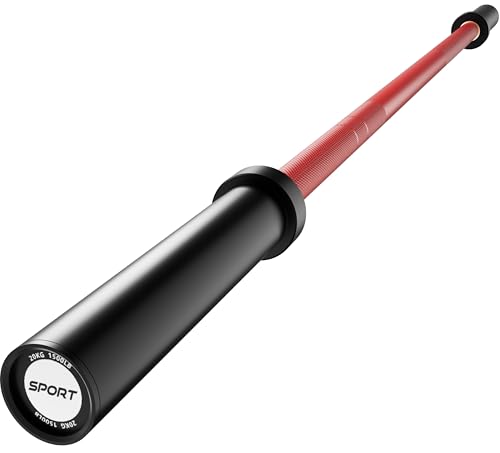
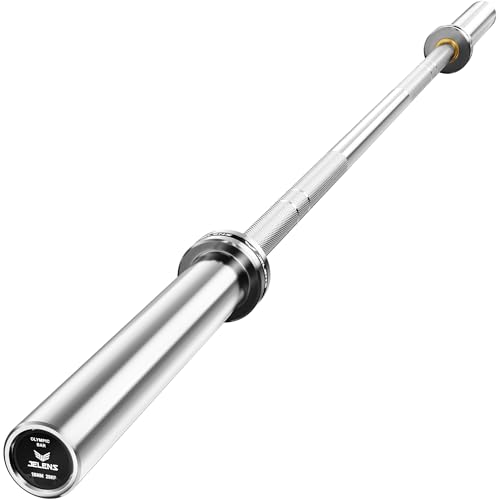
A straight 7-foot Olympic bar is the conventional option for a power rack, bench, squat stand, and standard 2-inch Olympic plates. JELENS, GarveeLife, PAPABABE, CAP The Beast, CAP’s 35lb model, and the Amazon Basics bar use this general format. Their longer shafts provide a familiar arrangement for squats, deadlifts, bench presses, rows, and overhead presses, but they also need more room for storage and movement.
A shorter bar can be more practical in a constrained room. The CAP 25lb 5ft Olympic Barbell is about 5 feet long and is listed with a 25-pound weight, while the VEVOR model is about 4 feet long. Short bars may be easier to maneuver and store, but shoppers should verify rack spacing and sleeve clearance. A compact bar is not automatically a substitute for a full-length rack bar.
Match capacity to your training plan
Capacity is a specification ceiling, not a prediction of how much any user should lift. The selected listings range from the 200-pound capacity on the CAP Olympic EZ Curl Bar to the 1,500-pound capacity on GarveeLife’s 7-foot bar. JELENS and PAPABABE list 1,000-pound capacities, while several other models list 500-pound capacities.
For ordinary home-gym progression, a 500-pound specification may cover a broad range of strength work. Higher stated capacities can provide more documented headroom for advanced loading, but capacity alone does not determine bar feel, fit, or suitability. Also check the bar’s listed weight: full-size models commonly identify 35-, 44-, 45-, or 46-pound figures, while shorter designs are lighter.
Check plate and equipment compatibility
Most selected Olympic bars use 2-inch sleeves and are described as compatible with standard Olympic plates. That includes the straight bars, the CAP EZ curl bar, the CAP hex bar, and the VEVOR compact bar. This common sleeve size can simplify a home gym if your existing plates already use the same opening.
Compatibility with plates does not guarantee compatibility with every rack. Full-size bars are generally more appropriate for standard rack work, while short bars may have less sleeve or shaft clearance. The CAP hex bar needs floor space around its open frame and should be considered a separate movement tool, not a straight-bar replacement. Confirm the product dimensions against your rack, bench, storage hooks, and available lifting area.
Compare knurling and grip layout
Grip design varies meaningfully across this category. JELENS, GarveeLife, and PAPABABE document dual or multiple marking systems associated with Olympic and powerlifting hand positions. CAP’s 35lb bar lists a center knurl, which may provide a tactile reference during squats. CAP The Beast uses volcano-style knurling, while the CAP 25lb bar uses hill-style knurling.
The EZ curl bar changes hand position through its angled shaft rather than relying on a straight grip. CAP’s model lists medium-depth diamond knurling on both sides. The CAP hex bar uses neutral handles in raised and flush positions, giving it a different grip orientation for deadlifts, shrugs, and carries. Choose the grip layout that matches the exercises you plan to perform instead of treating knurl depth as a universal quality ranking.
Consider sleeve rotation
Rotating sleeves may be useful when the bar moves quickly or the hands and forearms change position during a lift. JELENS, GarveeLife, and PAPABABE list combinations of needle bearings and brass bushings. CAP’s straight bars and EZ curl bar describe bushing or revolving-sleeve systems, while VEVOR lists a 360-degree rotating sleeve system.
The Amazon Basics listing confirms Olympic sleeves but does not provide the same detailed rotation specification. That does not make it unsuitable; it simply gives less evidence about the sleeve mechanism. If cleans, snatches, or other dynamic movements are central to your plan, prioritize listings that document their sleeve construction. For slower presses and basic pulls, plate fit, length, grip, and capacity may matter more.
Review finish and maintenance needs
Finish descriptions include chrome, hard chrome, phosphate, hard E-Coat, anti-oxidation coating, and other corrosion-resistance claims. CAP The Beast lists a phosphate finish, CAP’s 35lb bar lists hard chrome, and the CAP 25lb model lists hard E-Coat. JELENS and PAPABABE also describe hard chrome finishes. These details help compare the documented surface treatment, especially in a garage gym, but they do not replace normal care.
Keep plates and sleeves clean, inspect knurling and collars, and follow the manufacturer’s maintenance guidance. The VEVOR listing specifically mentions a collar-lock system, while several other bars are supplied as bar-only products. Check whether collars are included before assuming your setup is complete.
Final recommendation
GarveeLife 7FT Olympic Barbell ranks first overall in this specification-based comparison under the published weighted criteria.
GarveeLife 7FT Olympic Barbell is the first overall specification-based choice among the selected products.
The final choice among the best strength training bars depends on the documented features that match your intended use. GarveeLife combines a 1,500-pound stated capacity with a 190,000 PSI tensile-strength specification, dual-marking knurling, a 28mm grip, and a hybrid bearing-and-bushing sleeve design. JELENS and PAPABABE are close alternatives for shoppers prioritizing high capacity and bearing-assisted sleeve designs.
Among the top strength training bars, the CAP 35lb 7ft Olympic Barbell is a balanced home-gym pick, while the CAP 25lb 5ft model is better for limited space or a lighter starting bar. Choose CAP The Beast when its stated capacity and phosphate finish fit your plan. For specialization, the CAP EZ curl bar targets arm work, the CAP hex bar targets neutral-grip pulls and carries, and VEVOR provides a compact Olympic format.
Frequently Asked Questions
Among the best strength training bars, what makes a bar suitable for strength training?
A suitable bar should have documented construction, a load specification that fits your planned progression, a grip design appropriate to your movements, and sleeves that match your plates. Straight Olympic bars are useful for broad compound exercise coverage, while EZ curl and hex designs target particular movement patterns.
Not universally. A 7-foot bar is generally the more conventional choice for standard rack and bench setups, while the CAP 25lb 5ft bar and VEVOR 4FT Barbell can make more sense where floor or storage space is limited. Confirm rack compatibility before choosing a shorter design.
Do I need rotating sleeves?
Rotating sleeves may be useful for dynamic movements such as cleans and snatches. Several selected products document needle bearings, bushings, or rotating sleeve systems. For slower strength exercises, plate compatibility, length, grip, and capacity may be equally or more important.
What is an EZ curl bar used for?
The CAP Olympic EZ Curl Bar uses an angled shaft intended for curls, extensions, and other arm-focused exercises. Its hand position differs from a straight bar and may suit users seeking a dedicated arm-training format. It is less versatile for standard full-body barbell movements than a straight Olympic bar.
What should I check before buying a bar?
Verify the sleeve diameter against your plates, total length against your rack and storage, loadable sleeve length against your plates, and whether collars are included. Also review the stated bar weight, grip markings, finish, and the exercises the listing identifies. These checks help avoid choosing a bar that does not fit your equipment or available space.