Buying Guide
Selecting the best awg electrical wire is less about the gauge alone and more about matching the complete cable specification to the job. These products all identify as 10 AWG, but they differ substantially in conductor metal, insulation, conductor count, flexibility, voltage rating, and environmental use.
Start with the circuit and installation type
For fixed residential or commercial wiring, look first at THHN construction. The YDDECW solid THHN wire is described for permanent installations, conduit, grounding, lighting, machinery, and industrial work. The stranded YDDECW THHN wire is a better fit when routing flexibility matters. Both listings state 600V capability and nylon-over-PVC insulation, but buyers should still confirm local code requirements and whether the exact wire is approved for the intended location.
For portable equipment, generators, welders, pumps, and outdoor machinery, choose a cord design rather than ordinary primary wire. The Kimbluth 10/4 SOOW and CLLOMAGY 10/3 SJOOW products are built around multi-conductor portable cables. Their listings describe resistance to water, oil, or other harsh conditions and identify industrial equipment uses. Pay close attention to conductor count: neither listing provides a separate grounding wire, so the cable must match the equipment and connection design.
Compare conductor materials
Copper, tinned copper, and CCA are not interchangeable specifications. Tinned copper adds a protective tin layer to the copper strands and is featured in the CONEPY marine cable, both BNTECHGO and Kenhihi silicone wires, and the Haerkn FEP wire. Bare or high-purity copper is documented in the THHN, Kimbluth duplex, and portable-cord options.
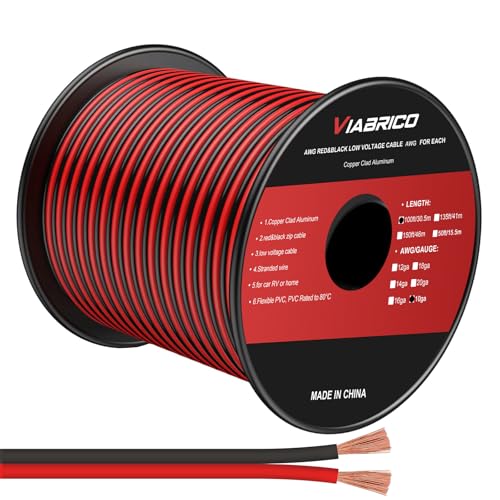
CCA appears in the VIABRICO duplex cable and automotive-oriented products. Its listed advantages are lower weight and flexibility. That can be useful for low-voltage automotive, speaker, or LED work, but buyers seeking copper construction should select a product that explicitly identifies copper or tinned copper instead.
Match insulation to the environment
PVC is common for general low-voltage and automotive runs. The VIABRICO 100-foot duplex cable, Kimbluth duplex cable, and other paired wires use flexible PVC jackets. These are appropriate when the listing’s low-voltage and indoor, automotive, RV, or lighting applications match the project.
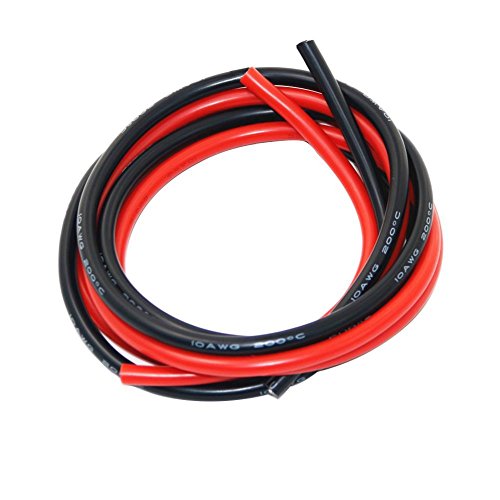
Silicone is a different design priority. Kenhihi and BNTECHGO use soft silicone insulation and state very wide temperature ranges. Their high strand counts also support flexibility in battery compartments, instruments, RC equipment, and other tight spaces. Silicone wire is not automatically a substitute for building wire or a heavy portable cord; use the documented application and rating as the boundary.
Marine and outdoor work calls for more environmental detail. CONEPY states resistance to saltwater corrosion, UV exposure, abrasion, and oxidation, along with IP68 and a -40°F to 221°F operating range. The Haerkn wire provides FEP insulation and a wide temperature range, but it is a single-conductor lead rather than a duplex marine cable.
Check voltage, temperature, and conductors
A 10 AWG label does not by itself establish a safe operating limit. The selected products range from 300V SJOOW to 600V THHN, duplex, silicone, and SJTW products, while Haerkn states 1000V nominal voltage. Temperature statements also vary. THHN listings distinguish dry and wet temperatures, silicone listings state -60°C to 200°C, and portable cables provide their own environmental ranges.
Conductor count is equally important. A single-conductor wire is useful for an individual lead, but a two-conductor cable can carry a paired low-voltage circuit. Three- and four-conductor portable cables support more complex equipment connections, but the exact grounding arrangement must be checked. The 10/4 SOOW and 10/3 SJOOW listings specifically warn that their conductors do not include a separate ground wire.
Choose length and color deliberately
Short red-and-black sets are convenient for battery, inverter, audio, and bench projects. The Kenhihi and BNTECHGO sets provide 10 feet of each color, while Kimbluth offers a 10-foot duplex cable. For longer low-voltage work, VIABRICO provides a 100-foot spool and several other paired products provide 30 or 50 feet. Longer lengths reduce the need for splices, but the conductor material and intended voltage remain more important than length alone.
Color coding can simplify polarity identification. Red and black pairs are useful in DC circuits, while green THHN is commonly presented for grounding applications in the supplied listing. Do not infer a conductor’s electrical purpose solely from color; verify the product specification and installation requirements.
Final recommendation
Kenhihi 10 AWG Silicone Wire ranks first overall in this specification-based comparison under the published weighted criteria.
The final choice among the best awg electrical wire depends on the documented features that match your intended use.
CONEPY 10 AWG Marine Duplex Wire is the highest-scoring returned product and the first overall specification-based choice. Its tinned copper duplex construction, IP68 waterproof rating, 600V rating, and marine standards make it the most complete option for demanding exposed or moisture-prone wiring. For fixed building work, choose the YDDECW solid or stranded THHN wire according to routing needs. For portable industrial power, the Kimbluth 10/4 SOOW is the top awg electrical wire choice among the selected heavy-duty cords. For compact battery and electronics work, Kenhihi or BNTECHGO silicone wire offers the most specification-aligned flexibility-focused specification set.
Frequently Asked Questions
What is the best awg electrical wire for automotive battery work?
The answer depends on the installation. Kenhihi and BNTECHGO are flexible tinned-copper silicone options for compact battery, automotive, solar, and inverter connections. Kimbluth’s 10 AWG duplex cable is another copper-based option with a stated 600V rating. If the run is exposed to marine conditions, CONEPY adds documented waterproof and corrosion-resistance features. Confirm the required length, polarity arrangement, current demand, terminals, and insulation requirements before selecting a cable.
Is CCA 10 AWG wire the same as copper 10 AWG wire?
No. CCA means copper-clad aluminum, and the supplied CCA listings emphasize lighter weight, flexibility, and cost-oriented use. Copper and tinned-copper products identify different conductor materials and may be preferable where those materials are specifically required. The wire’s intended application, voltage, temperature, installation method, and equipment instructions should all be considered rather than relying only on the gauge label.
Which 10 AWG wire is suitable for conduit or building wiring?
The YDDECW THHN products are the clearest matches in this comparison because their listings describe residential, commercial, industrial, conduit, grounding, and control applications. One uses a solid copper conductor and the other a stranded copper conductor. Both state 600V capability and nylon-over-PVC insulation. Always verify the exact product listing, local electrical code, wet- or dry-location requirements, and required conductor color before installation.
What is the difference between SJOOW, SOOW, and ordinary low-voltage wire?
SJOOW and SOOW are portable cord constructions intended for equipment and service environments. The selected SJOOW and SOOW listings describe resistance to water, oil, chemicals, abrasion, or outdoor conditions and identify uses such as generators, welders, motors, and machinery. Ordinary paired PVC wire is more commonly documented for 12V/24V DC, speakers, LED strips, automotive systems, and similar low-voltage hookups. Choose based on the equipment connection and environmental exposure, not gauge alone.
Does 10 AWG automatically mean a wire can carry a particular current?
No. Ampacity depends on the conductor, insulation, installation method, temperature, number of loaded conductors, and applicable electrical rules. One selected silicone product states a current figure, while other products emphasize voltage and temperature ratings instead. Do not transfer one product’s current statement to another cable. Check the complete manufacturer specification and applicable code for the actual installation.