Buying Guide
Choosing the best stranded electrical wire is primarily a specification-matching task. Start with the circuit’s voltage, expected current, installation environment, and required run length. Then compare gauge, conductor material, insulation, and whether separate color-coded spools or a joined two-conductor cable will make the work easier.
Choose the gauge for the circuit
The selected products span 10 AWG through 24 AWG. The 10 AWG NOVINO option is the heaviest in this comparison and is positioned for marine, RV, trailer, and other outdoor wiring. The 16 AWG JoohcUngir and NAOEVO options provide a middle-ground format for automotive, battery, and general project wiring. The 18 AWG TUOFENG and Oududianzi products suit many low-voltage lighting and electronics applications, while 20, 22, and 24 AWG products are more appropriate when the documented circuit requirements are compatible with smaller conductors.
Do not select gauge from appearance alone. Check the equipment instructions and complete circuit design. A listing’s stated current or voltage information can assist comparison, but it does not replace application-specific requirements, connector limits, fuse selection, or applicable electrical codes.
Compare copper and CCA conductors
Most selected wires specify tinned copper conductors. The listings describe tinning as useful for soldering and helping reduce surface oxidation. This can be useful for wire that will be soldered, routed through project enclosures, or used in automotive and marine settings.
The NOVINO marine wire is a notable heavy-gauge tinned-copper choice, while the silicone products from JoohcUngir, NAOEVO, TUOFENG, BNTECHGO, Fermerry, and Haerkn document tinned copper at different strand counts and gauges. Strand count helps describe conductor construction, but it should not substitute for the correct gauge and rated use.
Silicone versus PVC insulation
Silicone jackets are prominent in the flexible hook-up wire options. JoohcUngir, NAOEVO, TUOFENG, BNTECHGO, Fermerry, and Haerkn list silicone insulation, with several documenting operation from -60°C to 200°C. These products are described as flexible and suitable for routing around compact electronics and project enclosures.
PVC paired cables offer different documented properties. Oududianzi lists IP68 waterproofing, UV and chemical resistance, and a -40°C to 105°C range. ENERJOUR lists a UL designation, VW-1 and FT1 flame ratings, and a -40°F to 176°F working range. These details matter when jacket protection, paired conductors, or compliance information is more important than the widest temperature range.
Decide between separate spools and paired cable
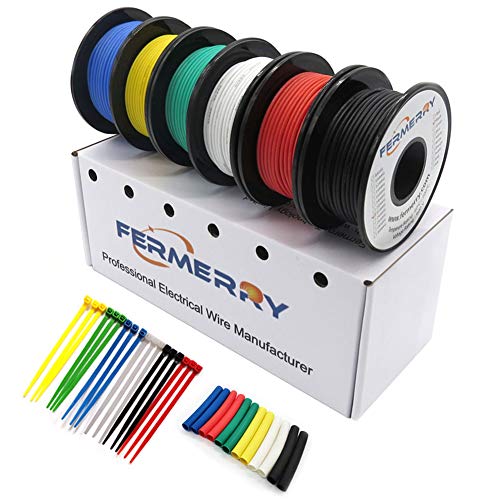
Separate spools provide flexibility in color selection. Haerkn offers seven colors, while JoohcUngir, NAOEVO, and TUOFENG provide six-color sets. This arrangement can make polarity, signal paths, and control wiring easier to identify. It also lets you cut only the length needed from each conductor.
A joined red-and-black cable can be convenient for a two-wire run. Oududianzi, ENERJOUR, and NOVINO provide paired formats, making positive and negative conductors easier to route together. Confirm that the jacket and electrical limits match the environment before installation.
Check the documented electrical limits
The listings do not all provide the same level of electrical detail. Haerkn states 600 V and 5 A; Fermerry states 600 V and 6 A; Oududianzi states 300 V and 8 A; ENERJOUR states 300 V maximum input and 4 A maximum current. NOVINO lists 600 V insulation with separate wet and dry temperature ratings. Other products provide voltage or temperature information without a current figure.
Treat missing information as a reason to verify before installation. Product descriptions use terms such as low-voltage, automotive, marine, and hook-up wire in different ways. Confirm the intended circuit, installation method, insulation requirements, and local rules before using any wire.
Consider length and included accessories
Length changes the usefulness of a kit. TUOFENG’s 24 AWG set provides 180 feet total, Haerkn provides 161 feet, and JoohcUngir provides 150 feet. These formats suit multiple small projects. Other sets are shorter but may better match a focused repair or compact installation.
Some listings include heat-shrink tubing, zip ties, or both. Those extras can help organize a project, but they should not outweigh conductor and insulation specifications. Choose the wire first, then treat accessories as a convenience.
Final Recommendation
Haerkn 20 AWG Silicone Wire Kit, 161 ft ranks first overall in this specification-based comparison under the published weighted criteria.
JoohcUngir 16 AWG Silicone Wire Kit, 150 ft is the first overall specification-based choice in this comparison.
The final choice among the best stranded electrical wire options depends on the documented features that match your intended use. JoohcUngir combines 252-strand tinned copper, six colors, silicone insulation, a broad temperature range, and included organizing supplies.
For a seven-color kit with stated 5 A and 600 V ratings, Haerkn is a strong alternative. NAOEVO provides similar fine-strand 16 AWG construction in a more compact six-color package. For a paired outdoor cable, Oududianzi adds IP68 and flame-retardancy details. For marine and heavier-gauge work, NOVINO is the top stranded electrical wire choice among these selections because its listing specifically addresses marine standards and wet and dry ratings.
Use TUOFENG 24 AWG or BNTECHGO 22 AWG when the project calls for smaller flexible conductors, and consider ENERJOUR when a compact paired cable with UL and flame-related information is preferred. Always confirm gauge, current, voltage, jacket, and environmental requirements for the actual installation.
Frequently Asked Questions
What should I look for in the best stranded electrical wire?
Compare gauge, conductor material, strand construction, insulation type, voltage and current information, temperature range, and cable format. The best match depends on the circuit and installation rather than one universal specification.
Is silicone wire more flexible than PVC wire?
The supplied silicone listings describe soft, flexible jackets and fine-stranded conductors suited to bending and routing. PVC products in this selection are also described as flexible, but their documented temperature and environmental properties differ. Compare the specific product rather than assuming all jackets perform identically.
Should I choose tinned copper or CCA wire?
The selected tinned-copper listings describe corrosion or oxidation resistance and soldering benefits. CCA products are described as lighter and more flexible, but they use a different conductor material. Check the project’s electrical requirements and the manufacturer’s documented limits before choosing.
Is a two-conductor cable better than separate wire spools?
A paired cable can simplify red-and-black runs and keep conductors together. Separate spools offer more color choices and independent routing. Choose paired cable for an appropriate two-wire installation, or separate spools when color coding and custom routing are more important.
Can these products be used for household mains wiring?
The supplied listings primarily describe low-voltage, automotive, electronics, lighting, and marine uses. A stated voltage rating alone does not establish suitability for every building-wiring application. Verify the product’s intended use, installation method, applicable code, and professional requirements before connecting it to mains circuits.