Buying Guide
Choosing among the best 120v water heaters starts with the fixture, not the brand name. A sink in a workshop may need only a small point-of-use heater, while a small apartment or remote bathroom may benefit from a larger storage tank. The products in this comparison fall into two practical groups: storage mini-tanks and electric tankless units. Each group solves a different delivery problem.
Match the heater to the application
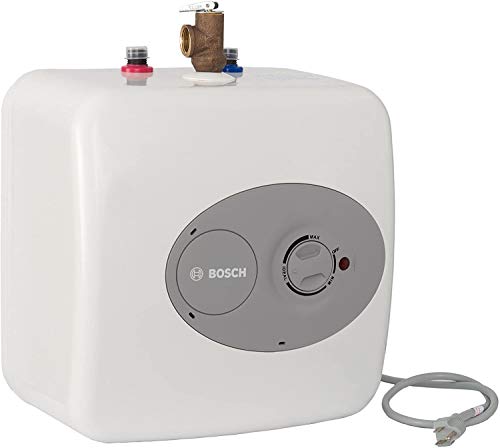
Mini-tank heaters store a set amount of heated water close to the tap. The Bosch offers 2.5 gallons, the Ariston offers 4 gallons, and the CAMPLUX and ThermoMate models provide 6 gallons. GE goes farther with an 18-gallon tank positioned for a small home, condo, apartment, or single hookup.
A storage tank can be useful when the incoming water is cold or when the fixture needs a reserve immediately after opening the tap. Capacity does not mean unlimited simultaneous supply, however. Consider how many people may use the fixture, whether the heater is a standalone source or booster, and how much cabinet or floor space is available.
Tankless units heat water as it flows instead of storing it. These compact units can free up floor space and avoid the need to maintain a stored tank, but their output depends on wattage, inlet temperature, and flow. Treat those figures as sizing information rather than a promise of a particular result in every installation.
Check voltage, breaker, and wiring requirements
A 120-volt label alone does not tell you whether a unit is a plug-in or hard-wired installation. Bosch, CAMPLUX’s ME60, and Ariston describe plug-in formats. The GE listing says it connects to any 120-volt supply. By contrast, Rheem specifies a 30-amp single-pole breaker and #10 copper conductors, while the ThermoMate tankless model calls for a 40-amp double-pole breaker and #8 minimum wire.
Those differences matter when replacing an existing heater. Verify the available circuit, breaker capacity, conductor size, outlet location, and local installation requirements before ordering. A compact heater that does not match the existing electrical setup may require professional electrical work. The ThermoMate ES600 also states that hard-wired installation is required, even though a power cord is included for optional installation language, so its instructions should be reviewed carefully.
Measure the mounting location
The smallest tankless bodies can fit below or beside a sink, but connection clearance still matters. Rheem lists a particularly small body, and CAMPLUX and ThermoMate tankless models also emphasize compact dimensions. Tank units need more room but may offer more predictable stored supply. Bosch can be shelf-, wall-, or floor-mounted; CAMPLUX’s 6-gallon model supports wall or floor mounting; Feelrogast lists wall, rack, or floor placement.
Measure height, width, depth, service access, pipe routing, and the location of the relief discharge before selecting a unit. Also check orientation requirements. Feelrogast says the heater must remain upright, while other products describe multiple mounting positions. A product that fits on paper may still be impractical if the water connections or controls cannot be reached.
Compare connections and installation role
Water connections vary across the listings. GE uses standard 3/4-inch NPT-compatible connections. Several compact models specify 1/2-inch NPT fittings. Bosch describes tapping into the cold-water line, and multiple mini-tanks can be used independently or inline with a larger source. Confirm the connection size and whether adapters, valves, brackets, or relief components are included.
Decide whether the heater will serve one fixture, act as a booster, or supply a small dwelling. The GE is explicitly positioned for a small house, condo, or apartment. The larger VEVOR and Feelrogast storage options sit between those roles, depending on the planned demand and plumbing layout.
Review temperature and safety controls
Adjustable controls are helpful, but the adjustment style differs. Rheem offers digital one-degree control. Bosch describes a mini-tank installation but provides less control detail in the supplied evidence. GE uses an adjustable thermostat, while VEVOR uses a rotary control with LED status display. ThermoMate’s tank model lists a 90°F-to-150°F range, and CAMPLUX’s 6-gallon model lists three temperature settings from 50°F to 149°F.
Safety features also vary. The ThermoMate ES600 lists a high-temperature limit, drain port, and relief valve. GE includes an anode rod and stainless steel element. VEVOR lists dry-heating, overheating, overpressure, and IPX4 protection. CAMPLUX identifies high-limit protection and a temperature-and-pressure relief valve. These are published features, not a substitute for correct installation, grounding, plumbing, and maintenance.
Final recommendation
GE Appliances 18-Gallon Plug-and-Play Water Heater ranks first overall in this specification-based comparison under the published weighted criteria.
The GE Appliances 18-Gallon Plug-and-Play Water Heater is the first overall specification-based choice among these best 120v water heaters because it combines meaningful storage capacity, 120-volt compatibility, flexible standalone or booster use, and adjustable control. It is best suited to buyers who have room for a larger tank.
For a smaller installation, the Bosch Tronic 3000 T is easier to position and offers plug-in, shelf, wall, or floor mounting. For a tankless design, Rheem is appealing when precise temperature control and a very compact body matter more than flow. The VEVOR 12-gallon model is a stronger storage alternative for a small apartment or studio, while CAMPLUX’s ME60 balances 6-gallon capacity with mobile and under-sink applications.
The top 120v water heaters are not interchangeable: electrical requirements, capacity, flow, connection size, and physical orientation can change the installation completely. Use the published specifications as a shortlist, then confirm the manual and site requirements before purchase. In particular, have a qualified professional verify circuit sizing and plumbing when the listing calls for hard-wiring or a dedicated breaker.
Frequently Asked Questions
Are the best 120v water heaters suitable for a whole house?
Some listings position the GE 18-gallon model for a small house, condo, or apartment, but most products here are point-of-use heaters. A 2.5- or 4-gallon mini-tank is generally better matched to a sink or remote fixture than broad household demand. Tankless output is also tied to flow, wattage, and incoming-water temperature.
Should I choose a storage tank or tankless model?
Choose a storage tank when you want a reserve close to the fixture and have room for a cabinet or floor-mounted unit. Choose tankless when compact size and on-demand heating are priorities.
Can a 120-volt heater plug into a normal outlet?
Some can, but do not assume every 120-volt product is plug-in. Bosch, Ariston, and CAMPLUX ME60 describe plug-in installation. Rheem and the ThermoMate tankless model list dedicated breaker and wire requirements. Check the exact installation instructions and have the circuit assessed before connecting the heater.
What capacity is useful for an under-sink installation?
The answer depends on demand and available space. Bosch’s 2.5-gallon tank is aimed at a small point of use, while Ariston’s 4-gallon and CAMPLUX’s 6-gallon models provide larger reserves. An 8- to 12-gallon unit may suit heavier use, but its dimensions and support requirements need to be verified first.
Do all of these heaters use the same plumbing connections?
No. GE lists 3/4-inch NPT-compatible connections, while several compact products list 1/2-inch NPT. Confirm inlet and outlet sizes, relief-valve requirements, included fittings, and clearance for service before installation.