Buying Guide
Choosing the best 2-line voip phones for a 2026 setup means focusing on the specifications that shape day-to-day calling, not on the loudest marketing claim. This guide walks through the technical categories that actually affect call quality, cabling, and conferencing so you can build a useful shortlist.
Line and SIP Capacity
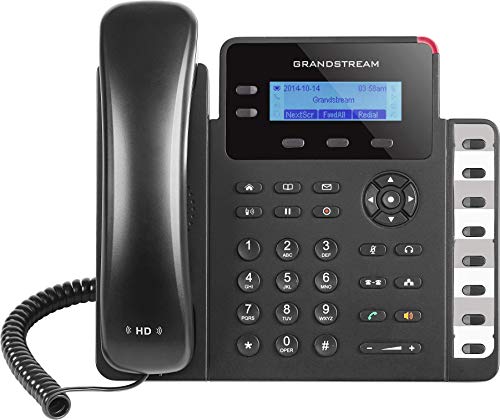
Two-line phones in this guide range from simple 2 SIP account designs to models that support 2 lines and 4 SIP accounts or 8 concurrent calls. If you only need to separate personal and business calls, a 2 SIP account phone such as the Grandstream GXP1620 is plenty. If you juggle multiple providers or want to keep call appearance flexibility, look for models like the Grandstream GRP2602P that offer 4 SIP accounts on 2 lines.
Audio and Conferencing
Audio quality comes from wideband codecs, full-duplex speakerphones, and noise suppression. Poly HD Voice with Acoustic Clarity on the Poly CCX 505 and the noise shield technology on the Grandstream GRP2602P both improve clarity on busy calls. Conferencing also varies: many 2-line phones support 3-way audio, while the Grandstream GRP2602P extends that to 5-way audio conferencing for quick team syncs.
Network and Power Options
Power over Ethernet and Gigabit switching reduce cable clutter and prepare the desk for future bandwidth needs. The Grandstream GXP1628, Sangoma P315, and Grandstream GRP2602P all combine PoE with strong port options, while the Poly CCX 505 adds built-in Wi-Fi for offices that cannot run extra cabling. Phones that rely on 10/100 Ethernet may be acceptable for lighter traffic but can feel constrained on busy networks.
Display and Usability
Displays range from compact 132 x 48-pixel backlit graphical panels to full 5-inch color touchscreens on the Poly CCX 505 and AudioCodes C450HD. A color LCD on the Sangoma P315 helps with contact browsing, while touchscreens add meeting controls and one-touch switching. Match the display to the user: reception staff often benefit most from color and larger text, while back-office users may only need a clear backlit panel.
Headset and Accessibility Support
Headset support and accessibility features matter for long call days. Electronic Hook Switch support on the Grandstream GXP1628 and the Grandstream GRP2602P lets users answer and end calls remotely with compatible headsets. Hearing Aid Compatibility on the Grandstream GHP610 widens guest accessibility, while Bluetooth on the Poly CCX 505 and AudioCodes C450HD supports modern wireless headsets.
Security and Provisioning
Managed deployments benefit from phones with centralized provisioning, secure boot, and encrypted storage. The Grandstream GRP2602P and Grandstream GHP610 both leverage GDMS for centralized management and include secure boot. The Grandstream GXP1620 adds TR-069 and encrypted XML provisioning, which fits service-provider rollouts.
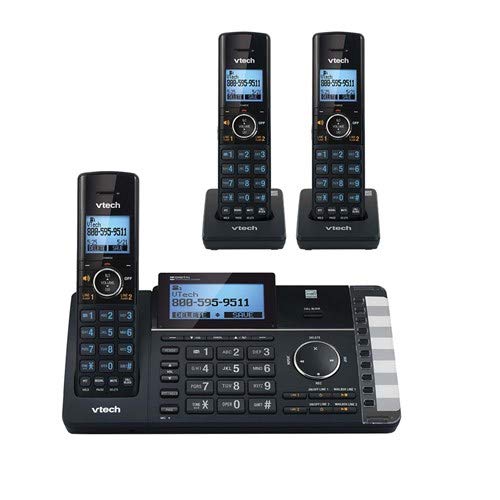
Consider where the phone will physically live. Wall-mountable or compact hospitality designs such as the Grandstream GHP610 suit guest rooms, while larger touchscreen models suit executive desks. Corded and cordless combinations like the AT&T TL86103 add mobility for small offices, and color touchscreens like the AudioCodes C450HD fit shared collaboration spaces. The VTech DS6251-3 is another option when DECT mobility is a priority.
Final Recommendation
Poly CCX 505 IP Phone ranks first overall in this specification-based comparison under the published weighted criteria.
Across these criteria, the Poly CCX 505 IP Phone is the first overall specification-based choice among the top 2-line voip phones thanks to its 5-inch color touchscreen, Poly HD Voice, and built-in Bluetooth and Wi-Fi. Buyers who prioritize managed provisioning can pair it with the Grandstream GRP2602P for SIP-rich deployments, while teams standardized on Microsoft collaboration platforms may prefer the AudioCodes C450HD. Hospitality buyers should anchor their shortlist with the Grandstream GHP610, and small offices wanting a familiar corded plus cordless setup can look at the AT&T TL86103. For offices that need DECT mobility, the VTech DS6251-3 rounds out a strong best 2-line voip phones lineup.
Frequently Asked Questions
What are the best 2-line voip phones for a small office in 2026?
For a small office, the best 2-line voip phones typically combine 2 SIP accounts, Power over Ethernet, and HD audio. Models such as the Grandstream GXP1628, Sangoma P315, and Grandstream GRP2602P all meet those criteria while staying within a manageable desk footprint.
Do all 2-line VoIP phones support Power over Ethernet?
No, not all 2-line VoIP phones support PoE. Entry-level models such as the Grandstream GXP1620 and the non-PoE Yealink SIP-T21 require a separate power supply, while the Grandstream GXP1628, Sangoma P315, and Grandstream GRP2602P include integrated PoE for single-cable installations.
Which 2-line VoIP phones work with Microsoft Teams?
For Microsoft Teams and Skype for Business environments, the AudioCodes C450HD IP Phone offers a native experience with a 5-inch color touchscreen and one-click switchover. Pairing it with a Teams-certified SIP provider helps it fit into collaboration-first workflows.
How important is a color display on a 2-line VoIP phone?
A color display improves contact readability, menu navigation, and visual call status. It is especially useful on the Sangoma P315 for everyday contact browsing and on the Poly CCX 505 and AudioCodes C450HD for meetings and presence indicators. Smaller offices may still be fine with a backlit graphical LCD if call volumes are light.
Are 2-line VoIP phones suitable for home offices?
Yes, 2-line VoIP phones suit many home offices by separating personal and business calls on a single device. Compact options such as the Grandstream GHP610 work well for desks with limited space, while touchscreen models like the Poly CCX 505 add flexibility for users who split time between calls and meetings.