Buying Guide
Choosing among the best aluminum heatsinks starts with the heat source, available clearance, and attachment method. A heatsink is only useful when its base can contact the target area and its fins have enough open space to exchange heat with surrounding air. The products in this comparison are passive aluminum radiators or kits. None is presented as a tested thermal solution, so treat the listed dimensions, materials, fin information, and intended uses as the basis for fit planning.
Measure the flat area available around the chip, module, board, LED, or enclosure before selecting a radiator. The 69 x 69 x 36 mm Awxlumv model is compact in length and width but relatively tall. Its 27 fins and detailed spacing make it a logical option for a concentrated component when vertical clearance is available. The 100 x 100 x 18 mm Awxlumv heatsink is a more balanced square format for general IC, MOSFET, LED, router, and PCB work.
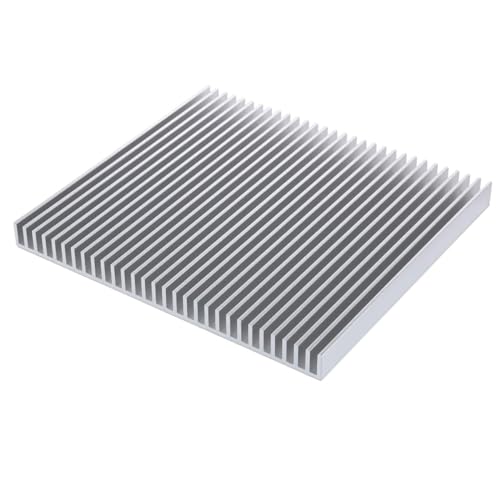
Larger sources may need a larger base rather than a taller profile. The Awxlumv 200 x 220 x 18 mm board and the Tyenaza 300 x 140 x 20 mm radiator cover substantially more area. Their listings identify high-power LED applications, and the Tyenaza also lists circuit boards, amplifiers, and power supplies. These are installation-oriented parts: check the mounting surface, supporting structure, and available air space before choosing them.
Compare fin area and height
Fin count is useful evidence, but it is not a complete thermal rating. Fin height, spacing, base thickness, and exposed area all affect how a passive radiator can be used. The 24-fin Awxlumv 150 x 60 x 25 mm model offers a long, narrow layout. The 27-fin 69 x 69 x 36 mm model goes deeper, while the 30-fin 200 x 220 x 18 mm board spreads its fins over a much larger area.
Low-profile products make a different trade-off. The Awxlumv 100 x 60 x 10 mm pair and SGTKJSJS 150 x 74 x 10 mm pair are broad but only 10 mm high. They may fit beneath covers or around nearby components more easily than taller radiators. However, their listings provide less detailed fin geometry than the deeper models. Avoid assuming that a higher fin count alone guarantees better results; use the dimensions to match the design to the enclosure.
Check the aluminum and surface finish
The selected products describe aluminum or aluminum alloy construction. Several specify anodized or oxidized finishes, including the 6063-T5 alloy used by the 120 x 120 x 20 mm Awxlumv model. The finish can matter for corrosion resistance, surface condition, and project appearance, but the supplied evidence does not establish comparative thermal performance among finishes.
For a board-level installation, also check whether the base is flat and whether the contact area matches the component. A radiator that is physically large but poorly aligned may not be suitable. The 100 x 40 x 20 mm two-piece set documents a 4.2 mm base-board thickness, while the 69 x 69 x 36 mm model documents a 4.6 mm base. Those details can help when planning contact and clearance, but they do not replace checking the actual target hardware.
Decide how the heatsink will attach
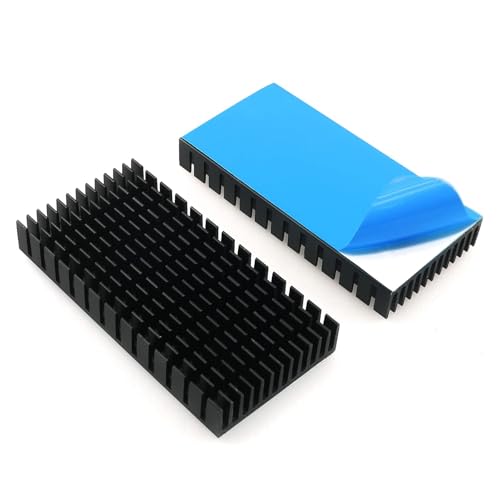
Attachment is one of the clearest differences between the best aluminum heatsinks in this list. The 120 x 120 x 20 mm Awxlumv model, the 100 x 60 x 10 mm Awxlumv pair, the SGTKJSJS pair, and the Gokano kit include thermal conductive adhesive tape. The tape can simplify installation on compatible clean, flat surfaces, but adhesive-backed products may be harder to reposition after placement.
Other models are supplied as bare heatsinks. The 100 x 100 x 18 mm Awxlumv listing explicitly says that screws and thermal paste are not included. The 69 x 69 x 36 mm model likewise does not list adhesive or hardware. For these products, confirm that you have a suitable mounting method and thermal interface material before starting. Do not assume that a heatsink’s intended application list means it includes a fitting system for that application.
Choose one piece or several
A single large radiator can suit one broad heat source, while multi-piece kits are more practical when several smaller components need cooling. The Gokano kit includes four 80 x 40 x 11 mm units. The two Awxlumv adhesive-backed options and the SGTKJSJS product each provide two radiators. Multiple pieces also allow spacing around connectors, memory, or other board components.
The 100 x 40 x 20 mm Awxlumv set is particularly suitable when two matching narrow radiators are useful. For tiny distributed components, a kit with smaller pieces may be easier to place, but only choose a smaller unit when its contact area and documented applications fit the component. Package quantity should support the project rather than substitute for correct sizing.
Match the design to the application
Use the application descriptions as a starting point, not as a promise of a particular temperature reduction. Router and modem projects are represented by the 120 x 120 x 20 mm models. LED fixtures are represented by the large Tyenaza and Awxlumv boards. Peltier modules, 3D-printer motors, and small electronic devices appear in the application lists for the narrower and adhesive-backed products.
Also consider whether the assembly is open to ambient air. Passive designs depend on surrounding airflow and exposed fin area. A heatsink enclosed tightly against a cover may not behave like the same heatsink in an open arrangement. Clearance above the fins, space around the base, and the direction of natural airflow are practical installation checks that the listings do not measure.
Final recommendation
Awxlumv 2-Piece 100 x 60 x 10 mm Heatsink Kit ranks first overall in this specification-based comparison under the published weighted criteria.
Awxlumv 69 x 69 x 36 mm 27-Fin Heatsink is the first overall specification-based choice among these best aluminum heatsinks because it documents fin height, spacing, base thickness, and a broad electronics application range. For the largest passive cooling surfaces, choose the Awxlumv 200 x 220 x 18 mm LED Heatsink or Tyenaza 300 x 140 x 20 mm 19-Fin Heatsink after confirming structural support and clearance. The Awxlumv 120 x 120 x 20 mm Heatsink with Tape is a more convenient router and modem option when adhesive attachment suits the surface.
The top aluminum heatsinks are not interchangeable: slim adhesive-backed pairs favor low-clearance installations, while tall or wide bare radiators provide different layout options. Before buying, verify the component footprint, heatsink height, contact surface, attachment method, and whether the package quantity matches the number of cooling points.
Frequently Asked Questions
What should I measure before buying one of the best aluminum heatsinks?
Measure the target component’s flat contact area, the available length and width, and the maximum height allowed by the enclosure. Also check nearby connectors, cables, memory, and other parts that could interfere with fins. For example, the 100 x 60 x 10 mm Awxlumv pair is much lower than the 69 x 69 x 36 mm Awxlumv model, so the physical envelope is a key distinction.
Are all of these aluminum heatsinks supplied with thermal tape?
No. Several selected products list pre-applied or pre-coated thermal conductive tape, including the 120 x 120 x 20 mm Awxlumv model, the 100 x 60 x 10 mm Awxlumv pair, the SGTKJSJS pair, and the Gokano kit. The bare 100 x 100 x 18 mm Awxlumv product explicitly excludes screws and thermal paste. Always confirm the package details for the exact model.
Which selected heatsink is suited to a router or modem?
The 120 x 120 x 20 mm Awxlumv Heatsink with Tape is specifically listed for WiFi routers, modems, PCs, game consoles, and audio-video devices. Its 120 mm square footprint and adhesive backing make it a logical specification match when the device has a suitable flat surface and enough clearance. The 100 x 100 x 18 mm Awxlumv model also lists routers and PCBs, but it does not include adhesive or thermal paste.
Does a higher fin count automatically mean better cooling?
No. Fin count is only one documented design detail. Fin height, spacing, total surface area, base contact, ambient airflow, and installation quality also matter. The 30-fin Awxlumv board covers a much larger area than the 27-fin compact model, while the compact model is taller. Compare the complete dimensions and intended application rather than counting fins alone.
When is a multi-piece kit more useful than one large heatsink?
A multi-piece kit is useful when several smaller chips, motors, regulators, or board sections need separate radiators. The Gokano four-piece kit and the selected two-piece products support distributed installation. A single large board is more appropriate when one broad heat source or LED panel matches its footprint. In either case, confirm that each heatsink has adequate contact and airflow around its fins.