Buying Guide
Choosing the best passive heat sinks starts with the device, available space, and mounting method—not simply the largest visible fin stack. A fanless cooler transfers heat from a component into a conductive body and then releases it to surrounding air. That makes contact quality, exposed surface area, orientation, and enclosure airflow important parts of the selection.
Match the heatsink to the device
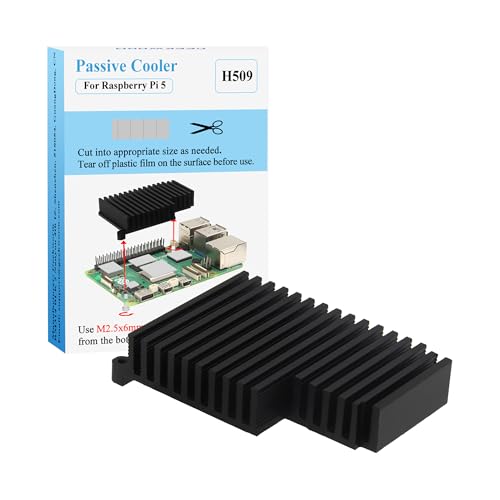
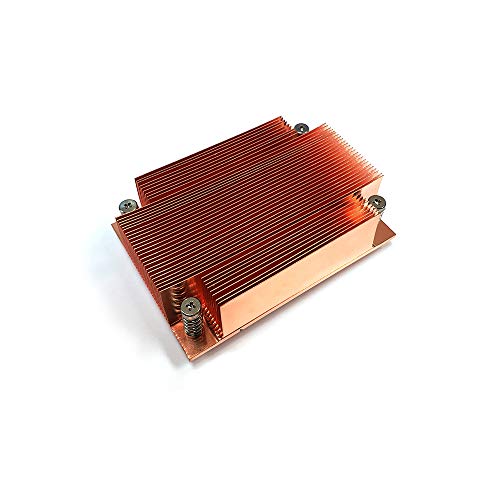
Start by identifying whether the target is a processor, SSD, single board computer, LED assembly, power semiconductor, or general circuit board. Specialized products can offer a better mechanical fit than generic aluminum radiators. The Thermalright HR-09 is built around M.2 2280 SSD dimensions and includes a double-sided arrangement. The Geekworm H509 is specifically shaped for Raspberry Pi 5 and lists access to the board’s ports. The Dynatron A37 is identified for AMD Ryzen AM4 processors in a 1U server setting.
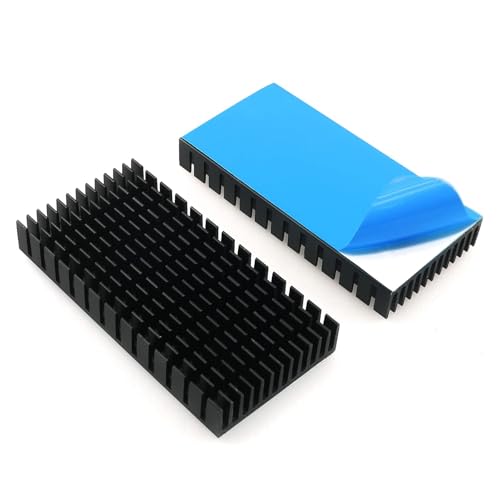
Generic radiators are more flexible but require more planning. The 69 x 69 x 36 mm Awxlumv model is aimed at ICs, MOSFETs, amplifiers, routers, and similar modules. The 150 x 60 x 25 mm version is longer and narrower, while the Tyenaza unit is a large 300 x 140 x 20 mm panel for high-power LED and broad circuit-board applications. These dimensions describe the available footprint, not a guarantee that a particular component will fit or remain within a target temperature.
Compare surface area and fin geometry
Fins increase the aluminum’s contact with surrounding air. Fin count alone does not determine cooling performance, because fin height, spacing, thickness, base contact, airflow, and heat load also matter. Still, supplied geometry is useful for screening products. The Awxlumv 69 mm model lists 27 fins, a 31.4 mm fin height, 1.99–2.12 mm spacing, and a 4.6 mm base. The 150 mm model lists 24 fins, and the Tyenaza panel lists 19 fins across its much larger footprint.
The Thermalright design documents 32 fins and a 4,500 mm² stated heat-dissipation area, plus a heat pipe. That makes it the most detailed option for an SSD-specific installation. For a shallow enclosure, the SGTKJSJS radiators are only 10 mm thick, while the Gokano kit lists an 11 mm height. Those lower profiles may simplify clearance, but their supplied descriptions do not provide the same fin detail as the deeper radiator designs.
Check dimensions in three directions
Measure length, width, and height around the component, nearby connectors, memory, cables, and enclosure panels. A large square heatsink can cover more area but may obstruct neighboring parts. A long radiator may align with a board or LED strip more naturally. A tall block can provide more fin depth yet conflict with a lid.
The HR-09 is listed at 79 x 24 x 48 mm, making height a particularly important check. The H509 is 63.5 x 42 x 15 mm and is designed to preserve Raspberry Pi 5 port access. The 120 mm Awxlumv radiator is 120 x 120 x 20 mm, while the 150 mm model is 150 x 60 x 25 mm. Do not rely on a product name alone; compare the stated measurements with the actual installation space.
Choose the thermal interface and mounting method
A heatsink only works as intended when heat can move from the component into its base. Several selected products include adhesive tape: the 120 mm Awxlumv, Easycargo, SGTKJSJS, and Gokano models all document pre-applied or pre-coated thermal tape. This simplifies attachment, but adhesive placement is consequential and may not be easy to reverse.
The H509 includes a thermal pad and nylon screws. The Thermalright cooler includes two thermal pads, clips, and adjustable screws. By contrast, the 69 mm Awxlumv radiator does not list screws, paste, or tape, so the installer must plan those materials separately. The Tyenaza panel likewise does not specify a mounting system. Check the surface, fastener pattern, component height, and any insulation requirements before ordering.
Consider material and finish
Aluminum is common in the general-purpose products because it combines low weight with documented heat-transfer use. Several listings specify 6063 or 6063-T5 aluminum, including the 120 mm and 150 mm Awxlumv radiators. Black anodized finishes appear on the 120 mm Awxlumv, Easycargo, SGTKJSJS, and Gokano products. The Dynatron A37 title identifies copper, while the Thermalright unit combines aluminum components with a copper heat pipe.
Finish should not be treated as a standalone performance guarantee. More useful evidence is the complete combination of base contact, fin geometry, dimensions, material, and installation method. Weight can also affect a mounting surface: the 120 mm Awxlumv listing gives 192 g, while the H509 lists 44 g.
Account for airflow and heat load
Passive cooling needs access to surrounding air. Avoid sealing a heatsink tightly against insulation, a wall, or another heat-producing component. A large radiator may work well only when the enclosure allows air to move around its fins. Conversely, a compact adhesive-backed piece may be easier to place but provide less documented fin depth.
The supplied listings do not provide a common test method or comparable temperature results. Therefore, these rankings reflect documented construction and fit evidence rather than measured thermal performance. For unusually high loads, confirm the component manufacturer’s thermal requirements and consider whether the enclosure needs additional airflow.
Final recommendation
Thermalright HR-09 2280 SSD Heatsink ranks first overall in this specification-based comparison under the published weighted criteria.
Thermalright HR-09 2280 SSD Heatsink is the first overall specification-based choice among these products. Its combination of a passive heat pipe design, double-sided coverage, 32 fins, stated heat-dissipation area, thermal pads, and adjustable clips gives it the most specification-aligned documented feature set for its defined M.2 application.
For a Raspberry Pi 5, Geekworm H509 is the more appropriate selection because its dimensions and port-access purpose are explicit. For general electronics, the Awxlumv 69 x 69 x 36 mm radiator offers detailed fin geometry in a compact footprint, while the 150 x 60 x 25 mm model fits longer layouts. Tyenaza’s broad panel is the better fit when a large LED or board surface is available.
The top passive heat sinks are not interchangeable: specialized fit, clearance, and installation supplies often matter more than a headline size. The best passive heat sinks for a shallow enclosure may be the SGTKJSJS or Gokano options, while the Easycargo pair offers a useful middle ground for repeated installations. Confirm measurements and interface requirements before committing.
Frequently Asked Questions
What should I check before choosing the best passive heat sinks?
Check the component type, contact footprint, heatsink length, width, and height, plus nearby clearance. Then confirm whether the product includes thermal tape, pads, screws, clips, or none of these. A general-purpose radiator may need separate mounting hardware, while a specialized cooler can have a narrower compatibility range.
Are larger passive radiators always better?
No. A larger radiator can provide more available surface area, but it must fit the enclosure and make reliable contact with the heat source. The Tyenaza 300 x 140 x 20 mm panel is designed for broad applications, whereas a compact heatsink may be more practical for a small IC or restricted board area. Air access around the fins also matters.
Do passive heatsinks need thermal paste or tape?
They need a suitable thermal interface between the component and heatsink base, but the supplied products use different approaches. The H509 and HR-09 include thermal interface materials. Several general-purpose models include adhesive tape. The Awxlumv 69 mm listing does not list paste or tape, so installation materials must be sourced separately.
Which selected cooler is made for Raspberry Pi?
The Geekworm H509 is designed for Raspberry Pi 5 and lists access to the board’s GPIO, USB, display, Ethernet, storage, and other ports. Geekworm P165-B is not included in this shortlist; this comparison uses the H509 as the selected Raspberry Pi example. Verify the board model before installation because platform-specific clearances vary.
Can a passive SSD cooler be used on any M.2 drive?
The Thermalright HR-09 is documented for single-sided M.2 2280 NVMe PCIe SSDs and includes a double-sided mounting arrangement. That does not establish universal compatibility. Confirm the drive length, component arrangement, case clearance, and motherboard space before using it. A 48 mm-tall cooler may not fit every desktop layout.