Buying Guide
The best award-winning board games are not one uniform type. The selection above ranges from short spatial puzzles to medium-weight strategy games and family titles built around words, wildlife, or maps. Start by deciding what kind of interaction your group wants, then check player count, session length, age guidance, and how much rules explanation is likely to be needed.
Match the game to the group
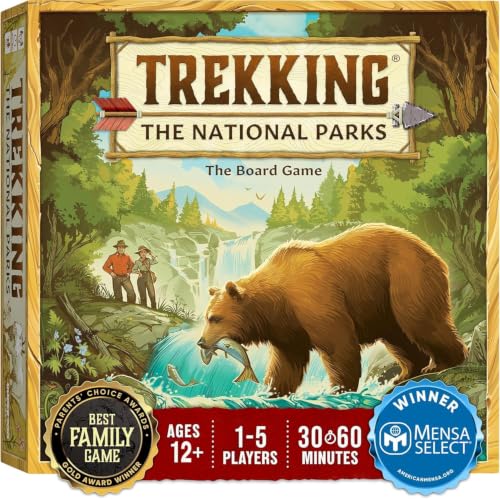
For a broad family range, Cascadia, Kingdomino, and Trekking the National Parks are the most flexible choices in this selection. Cascadia supports one to four players and includes a family mode, while Kingdomino is designed for two to four players and is recommended for ages 8 and up. Trekking the National Parks extends to five players and includes solo play, making it useful when the group size changes.
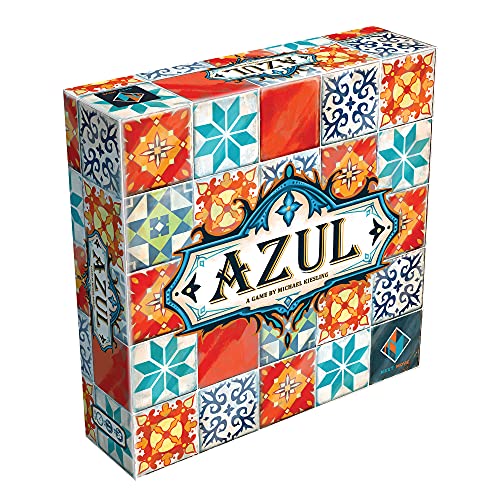
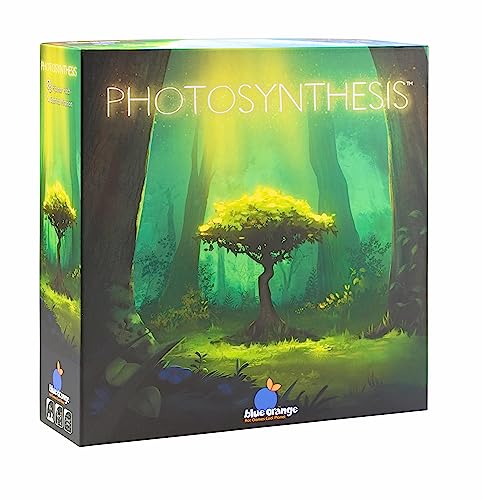
Azul is also a strong family-and-adult option, but its shared factory displays create direct competition over tiles. That makes it a better fit for players who enjoy watching opponents’ choices rather than building entirely separate boards. Photosynthesis offers another competitive family format, with tree growth and the revolving sun shaping the available planning decisions.
Choose by play length
Short sessions are easier to fit into weeknights or repeated rounds. Cascadia lists 15-30 minutes, and Azul lists 30-45 minutes. Kingdomino is also positioned as a compact family strategy game, although the supplied listing does not state a specific duration. These games are practical when you want meaningful decisions without committing to a long evening.
Wingspan lists 60-90 minutes, while Trekking the National Parks lists 30-60 minutes. First in Flight is aimed at teens, adults, and heavier gamers, but its supplied evidence does not include a playtime. Letter Tycoon likewise emphasizes its systems rather than a stated duration. If your group has limited time, favor the titles with documented shorter sessions instead of assuming a game will finish quickly.
Decide whether you want solo play
Solo support is a major differentiator. Wingspan includes an Automa that simulates an opponent, and Cascadia lists one to four players. Trekking the National Parks also adds a solo mode in its third edition. First in Flight provides solo, two-player, and up-to-four-player modes. These are the clearest choices when the buyer may play alone as well as with others.
The Genius Square and The Genius Star are more focused solo alternatives. Both can be played alone or head-to-head, but they are puzzle races rather than traditional multi-round strategy games. The Genius Square uses 6x6 grids, while The Genius Star uses a star-shaped board and Tetris-style pieces. Choose between them based on the board shape and the desired puzzle presentation, not on a general assumption that one format is easier.
Consider strategic complexity
Azul, Photosynthesis, Wingspan, First in Flight, and Letter Tycoon all document more than a simple matching or party structure. Azul uses drafting, pattern rows, and draft-and-deny decisions. Photosynthesis uses action points, tree growth, light points, and rebirth. Wingspan combines bird cards, food, eggs, habitats, and chained abilities. First in Flight frames early aviation around strategic risk and reward, while Letter Tycoon adds patents, royalties, money, and stocks to word building.
For a gentler introduction, Kingdomino and Cascadia are easier starting points because their listings emphasize approachable rules or family modes. They still offer planning decisions: Kingdomino connects terrain-matching dominoes, and Cascadia asks players to balance habitat corridors with wildlife placement. The best award-winning board games for beginners are therefore not necessarily the ones with the fewest components; they are the ones whose documented structure matches the group’s comfort level.
Look for replayability that fits your taste
Replayability can come from different sources. Wingspan lists more than 170 unique bird cards, bonus goals, and goal tiles. The Genius Square documents more than 62,000 possible arrangements, while The Genius Star lists 165,888 unique setups. These figures describe the supplied design variety, but they do not guarantee that every player will prefer a puzzle format.
Cascadia offers multiple scoring approaches, and Azul describes new tile combinations each round. This comparison keeps award evidence separate from general familiarity and avoids treating a recognizable title as automatically award-winning.
Final recommendation
Cascadia ranks first overall in this specification-based comparison under the published weighted criteria.
The final choice among the best award-winning board games depends on the documented features that match your intended use.
Cascadia is the highest-scoring returned product and the first overall specification-based choice. Its documented awards, family mode, 1-4 player range, solo support, short sessions, and spatial puzzle design give it the broadest fit across the comparison. Among the top award-winning board games, it is especially practical for households that want a game that can welcome newer players without removing strategic choices.
Choose Azul if tile drafting and direct competition sound more appealing. Choose Wingspan for a deeper, bird-themed engine builder with solo play and a larger card pool. Kingdomino is a sensible entry point for compact family strategy, while Photosynthesis suits players drawn to tree growth and changing board presence. First in Flight, Letter Tycoon, The Genius Square, The Genius Star, and Trekking the National Parks each serve more specific interests, from aviation history to word play, logic puzzles, and national parks.
Frequently Asked Questions
What are the best award-winning board games for families?
Cascadia, Kingdomino, Azul, and Trekking the National Parks are the clearest family-oriented choices in this comparison. Cascadia includes a family mode, Kingdomino is recommended for ages 8 and up, Azul supports families and adults, and Trekking the National Parks supports up to five players. Check the listed age guidance and player range before buying, especially when younger children will participate.
Which selected game is best for solo play?
Cascadia, Wingspan, Trekking the National Parks, First in Flight, The Genius Square, and The Genius Star all document solo play or a solo mode. The first four are broader strategy or thematic experiences. The Genius Square and The Genius Star are more focused logic challenges, so they are better when the buyer specifically wants a puzzle rather than a conventional board-game campaign.
Which game is best for two players?
Azul, Kingdomino, The Genius Square, and The Genius Star all document two-player suitability. Azul provides competitive tile drafting, Kingdomino uses connected terrain tiles, and the two Genius games create head-to-head races to complete a puzzle. Consider whether you want shared strategic choices or simultaneous spatial problem solving.
Are award claims the same as hands-on quality testing?
No. This article is a specification-based comparison using supplied public listing data. Award references, gameplay descriptions, player counts, age guidance, components, and stated playtimes inform the editorial ranking. The comparison does not claim hands-on testing, independent verification of awards, or a summary of customer opinions.
How should I choose between Wingspan and Photosynthesis?
Choose Wingspan if you want bird cards, habitat engines, solo Automa play, and a longer 60-90 minute session. Choose Photosynthesis if you prefer a tree life-cycle theme, a revolving sun, action-point decisions, and a 2-4 player format. Both offer nature themes, but their documented mechanisms and play structures are different.