Buying Guide
Choosing among the best mystery board games starts with identifying the type of mystery you want to solve. A traditional deduction board asks players to compare information and eliminate possibilities. A case-file game turns the table into an investigation desk. A hidden-movement design creates a pursuit, while an app-supported title may add digital scenes, prompts, or progress tracking. The products above are ranked from supplied features and specifications, not from hands-on testing or customer sentiment.
Choose the deduction style first
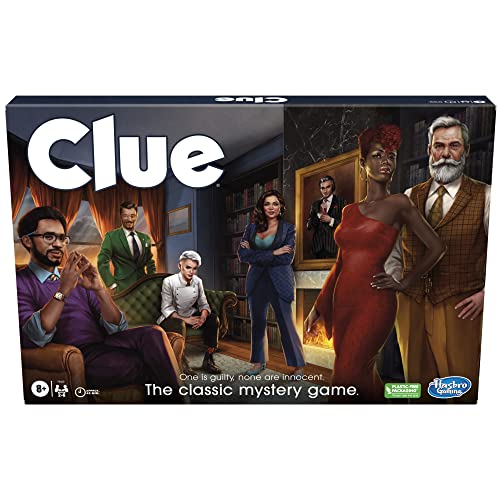
For classic deduction, Clue is the clearest starting point. Its six suspects, weapons, mansion setting, and clue cards create a familiar structure that works well for families. The central question is concrete: identify who committed the murder, where it happened, and which weapon was used. That makes it easier to teach than a case that requires extensive reading or document sorting.
Sherlock Holmes Consulting Detective takes a more substantial approach. Its ten cases, Victorian setting, cooperative rules, and solo option make it better suited to players who want to follow leads and make logical connections over a longer session. The format emphasizes investigation rather than a fast turn cycle, so it is worth choosing when the group enjoys reading, discussion, and careful deduction.
Murdle-style logic is represented here by Kronologic: Paris 1920, which uses suspect cards and tiles to reveal clues. Its 15 investigations across three scenarios give it a broader repeat-play proposition than a one-case file. It also supports solo, team, and competitive play, making it one of the most adaptable choices in the list.
Decide whether you want cooperation or competition
Cooperative games let the group share information and solve a case together. Chronicles of Crime uses a smartphone app to examine scenes, question suspects, and follow leads, while Mystery House uses an app alongside 3D exploration and riddles. These formats can be a good fit when everyone wants to contribute to one shared investigation.
Whitehall Mystery is different because the table is divided between one player controlling Jack and investigators attempting to catch him. That asymmetric structure creates a pursuit rather than a shared solution process. It is a better match for groups that enjoy bluffing, movement decisions, and the tension of one hidden opponent.
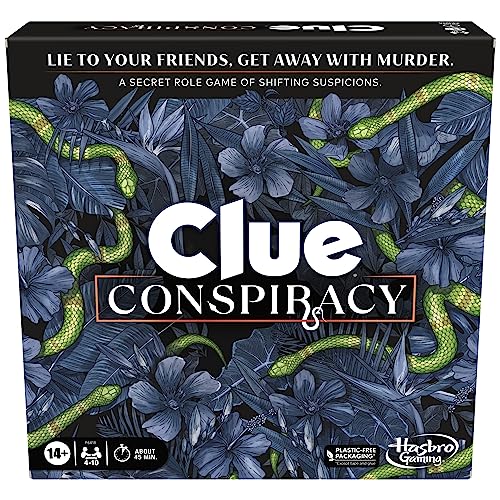
Clue Conspiracy also divides players, but through secret teams and competing objectives. The Friends attempt to protect Mr. Coral while the Conspiracy works toward a murder plot or sabotage-based win. Its four-to-ten-player range is especially useful for larger gatherings. Because the game depends on hidden roles, lying, and social reads, it serves a different purpose from a quiet solo case.
Match the player count to your group
Player count can determine whether a mystery feels focused or crowded. For solo play, Sherlock Holmes Consulting Detective, Kronologic: Paris 1920, Unsolved Case Files, Hunt A Killer: Death at the Dive Bar, and Mystery House all document solo compatibility or individual play. These are useful when you do not want to wait for a full game night.
For couples or small groups, the case-file products offer a direct format. Unsolved Case Files: Veronica Falcone supplies more than 50 documents and photos, while Hunt A Killer: Death at the Dive Bar is listed for a 45-to-60-minute session. The latter is positioned for beginners, so it may be a better first investigation when the group wants a shorter commitment.
For families, Clue has the broadest documented age accessibility among the traditional board choices, beginning at age eight. Sherlock Files: Marvelous Mysteries is also described as easy to learn and supports up to eight players. Always compare the listed age guidance with the reading, concentration, and discussion demands of the people at your table.
For larger groups, Clue Conspiracy and Sherlock Files have the most specification-aligned documented capacity in this selection. Clue Conspiracy supports four to ten players, while Sherlock Files supports up to eight. Chronicles of Crime and Sherlock Holmes Consulting Detective also provide cooperative group options, though their investigation style may be more discussion-heavy than a party game.
Consider replayability carefully
Replayability does not mean the same thing in every mystery format. Chronicles of Crime lists multiple scenarios and randomized elements, and Kronologic: Paris 1920 lists 15 investigations across three scenarios. Those details support repeat sessions with new material or changing information. Mystery House describes changing scenarios and an expandable adventure structure, which may appeal to players who want a continuing puzzle format.
Traditional deduction games can be replayable because the information and player decisions change, even when the core setting remains familiar. Clue and Whitehall Mystery both document features that support repeated sessions: Clue has a recurring suspect-and-weapon deduction system, while Whitehall Mystery includes optional rules and special movements.
One-case products require a different expectation. Unsolved Case Files and Hunt A Killer: Death at the Dive Bar are designed around specific investigations. Once the solution is known, the mystery itself may not offer the same challenge again. Their strengths are evidence presentation, narrative focus, and the ability to deliver a complete case in one sitting. Choose them for the experience of solving that case, not for an indefinite campaign.
Look at technology and physical evidence
If you prefer tangible investigation materials, Unsolved Case Files is the most document-heavy selection based on the supplied listing. It includes photos, newspaper articles, reports, maps, letters, legal documents, interrogations, and witness statements.
If you enjoy digital assistance, Chronicles of Crime and Mystery House both use apps as part of the experience. The apps are described as tools for examining scenes, guiding puzzles, or tracking progress. Clue Conspiracy’s web app is optional and supports setup, instructional content, and a timer rather than serving as the entire game system.
Final recommendation
Sherlock Holmes Consulting Detective ranks first overall in this specification-based comparison under the published weighted criteria.
Sherlock Holmes Consulting Detective is the first overall specification-based choice among these best mystery board games because it combines ten cases, cooperative or solo play, and a clearly documented deduction structure. Choose Kronologic: Paris 1920 instead if you want shorter sessions and the widest combination of solo, team, and competitive formats. Choose Clue for family accessibility, Clue Conspiracy for a larger party, or Unsolved Case Files for physical evidence and a focused cold-case format.
The top mystery board games do not all deliver the same kind of mystery. Before buying, decide whether your group values a classic board, a case file, a hidden opponent, an app-supported puzzle, or a repeatable scenario system. Then check the listed age range and player count so the format matches the people who will actually play.
Frequently Asked Questions
What are the best mystery board games for solo play?
Sherlock Holmes Consulting Detective, Kronologic: Paris 1920, Mystery House, Unsolved Case Files: Veronica Falcone, and Hunt A Killer: Death at the Dive Bar all document solo or individual play. Sherlock Holmes Consulting Detective offers ten cases, while Kronologic lists 15 investigations across three scenarios. The case-file options provide a more focused investigation with physical documents and a defined story.
Which mystery game is best for families?
Clue is the most straightforward family choice in this selection because it is listed for ages eight and up, supports two to six players, and uses a familiar who-where-weapon deduction structure. Sherlock Files: Marvelous Mysteries is another accessible option because its listing describes it as easy to learn and cooperative for up to eight players.
Are case-file mystery games replayable?
Replayability varies. Unsolved Case Files: Veronica Falcone and Hunt A Killer: Death at the Dive Bar are built around specific investigations, so the central solution may not provide the same challenge after it is revealed. For more documented scenario variety, consider Chronicles of Crime, Kronologic: Paris 1920, or Mystery House.
What should a large group choose?
Clue Conspiracy supports four to ten players and uses secret teams, bluffing, sabotage, and multiple win conditions. Sherlock Files: Marvelous Mysteries supports up to eight players and is described as cooperative and easy to learn. These options are better suited to larger groups than the solo-focused case formats.
Do any of these games require an app?
Chronicles of Crime uses a free smartphone app to examine crime scenes, question suspects, and follow leads. Mystery House uses a dedicated app to guide puzzles and track progress. Clue Conspiracy has a free web app for setup guidance, an instructional video, and a timer, but its listing says the app is not required to play.