Buying Guide
The best creative board games are not limited to drawing or crafting. In this comparison, creativity appears as physical construction, storytelling, color association, mosaic placement, timed word generation, hidden-role performance, and cooperative problem-solving. Start by identifying the kind of creative action your group actually wants to perform. A game can have beautiful artwork yet still be primarily strategic; another can use simple components while asking players to invent clues or negotiate meaning every round.
Choose the creative activity first
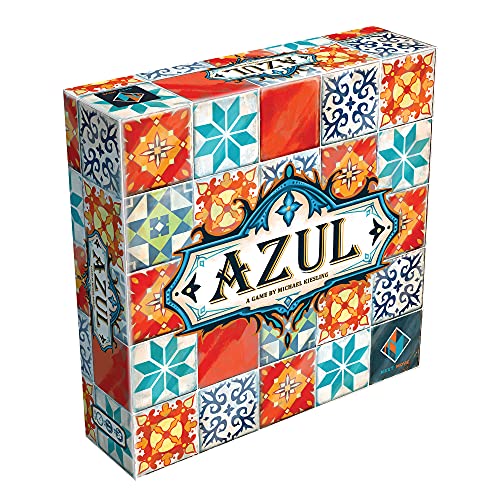
For hands-on making, Junk Art Revolution is the clearest fit. Its listing specifically describes stacking, twisting, balancing, and building with colorful wooden pieces. That makes the creative result physical and visible, but it also means the table needs enough room for components and a willingness to accept occasional collapse. Harmonies and Azul offer a quieter form of creation: players arrange tokens or tiles into landscapes and mosaics while pursuing tactical goals. These are better choices when the group wants an attractive board and structured decisions rather than free-form invention.
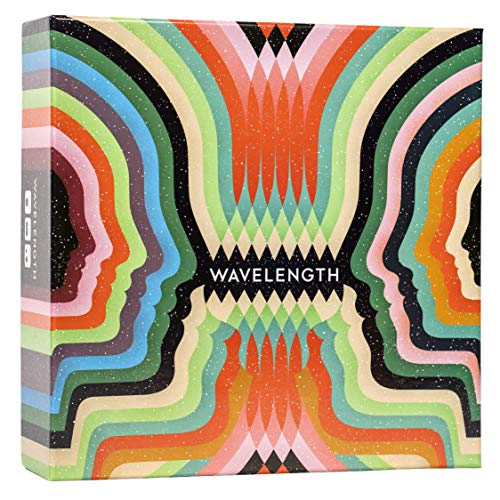
Dixit, Wavelength, and Hues and Cues focus on interpretation. Dixit gives players illustrated cards and asks them to make clues for dream-like images. Wavelength uses a spectrum, such as hot to cold, and asks the group to judge where a clue belongs. Hues and Cues narrows the prompt to color, using 480 hues and short verbal clues. These formats are creative because the same image, word, or color can suggest different answers to different people. They are also useful for groups that want conversation to be more important than component management.
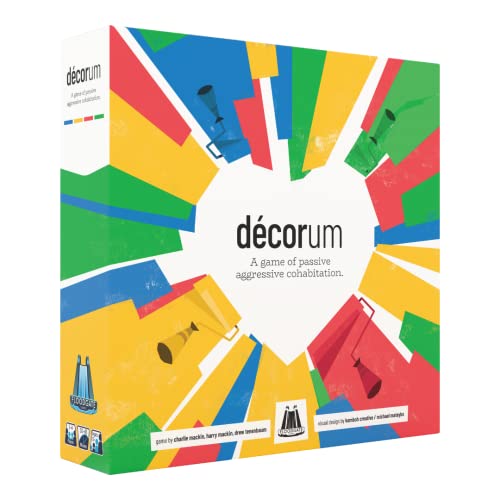
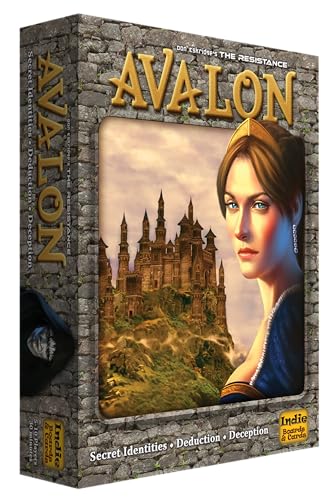
Scattergories is the most direct wordplay option in this selection. Its timer and category cards create pressure to find answers that are both valid and distinctive. Avalon moves creativity into social performance: players interpret behavior, construct arguments, conceal information, and decide whom to trust. Decorum uses a different social challenge, asking players to coordinate a shared home design while keeping personal conditions secret. Unsettled presents creativity as cooperative planning, with players managing resources and responding to variable scenarios and objectives.
Match the game to your group size
Player count is one of the most practical specifications to check. Wavelength is the broadest option in the listing, supporting groups from two to 12 or more. Hues and Cues lists three to 10 players, while Junk Art Revolution lists two to six. These are natural candidates for family gatherings or parties where attendance may vary. Dixit lists three to eight players in its feature copy, making it a flexible middle-ground choice for a mixed gathering.
Smaller groups should look more closely at the stated ranges. Harmonies supports one to four players and includes a solo version. Azul and Unsettled both support two to four, while Decorum is presented as a cooperative design experience but does not provide a player count in the supplied listing. Scattergories is listed for two to four, and Avalon is best considered for a group that can support its hidden-role discussion. Do not assume that a game designed for a large party will retain the same character with only two people; the documented range is a better starting point.
Consider age and rules accessibility
The listings provide useful age signals, but they do not establish how every group will experience the rules. Junk Art Revolution, Dixit, Hues and Cues, and Azul list age recommendations beginning at eight. Harmonies lists ages 10 and up, while Scattergories lists ages 12 and up. Unsettled is described as a hobby board game with resource management and evolving objectives, so it may require more teaching even though no age recommendation is supplied.
For a quick introduction, Wavelength states that it takes one minute to learn and five seconds to set up. Hues and Cues also describes its rules as quick to learn. Those claims make both attractive when the group includes casual players. Dixit and Scattergories have familiar verbal structures, but their creative demands differ: Dixit asks for imaginative clues, whereas Scattergories asks for quick category answers. Avalon and Decorum may require a more careful explanation because secret information affects how players interpret one another.
Evaluate replay and expansion paths
Replayability can come from changing prompts, modular scenarios, or different player decisions. Junk Art Revolution lists city-specific rules and challenges. Dixit identifies an expandable universe with themed expansion packs. Unsettled describes variable scenarios, evolving objectives, and planet modules that can extend the system. These are distinct forms of variety: one changes the physical challenge, one changes the available images, and one changes the cooperative strategic problem.
Other games rely on interpretation. Wavelength’s spectrum and clue combinations can vary from round to round, while Hues and Cues uses a large color field and open-ended associations. Decorum provides 30 scenarios, and Azul notes new tile combinations each round. The important distinction is that no listing can guarantee unlimited replay or prove how long a particular group will remain interested. Treat the documented scenario count, expansion path, or variable setup as an indication of built-in variety rather than a promise of a specific experience.
Check component and table requirements
Component design matters when creativity depends on physical pieces. Junk Art Revolution includes wooden pieces, cards, tokens, and a measuring tape. Azul relies on tiles, factory displays, and mosaic boards. Harmonies lists 120 wooden tokens and 42 illustrated cards. Hues and Cues needs its large color board to make the clue system work. These games may be better suited to a clear table where players can see the shared material.
For compact organization, Scattergories’ vintage bookshelf edition includes integrated storage in its book-style packaging. Avalon is described as portable, which can help when the game travels to social gatherings. Unsettled includes inserts as well as dashboards, custom dice, and tokens, but its broader hobby-game system may need more table planning. Before buying, consider whether you prefer a small portable box, a visually prominent board, or a larger component spread.
Use price language carefully
A higher or lower price does not establish creative quality. Instead, compare what the documented package is designed to provide. A game with many tokens or scenario components may appeal to someone seeking a longer-form tabletop system, while a compact word or clue game may be more practical for occasional gatherings. The right choice depends on player count, available time, teaching tolerance, and the type of creative participation your group enjoys.
Final Recommendation
Dixit ranks first overall in this specification-based comparison under the published weighted criteria.
Junk Art Revolution is the highest-scoring returned product and the first overall specification-based choice. It puts creative construction at the center, supports two to six players, and documents a substantial mix of wooden pieces, cards, tokens, and location-based challenges. Among the best creative board games, it has the broadest combination of hands-on activity, variety, and family accessibility in the supplied evidence.
Choose Dixit if storytelling and visual interpretation are more appealing than physical dexterity. Choose Wavelength or Hues and Cues for larger groups that want quick clue-based discussion. Decorum is the more distinctive choice for cooperative design with hidden preferences, while Harmonies and Azul suit players who prefer visually composed boards with tactical decisions. Scattergories is the practical wordplay pick, Avalon is the social-deduction option, and Unsettled is the most involved cooperative science-fiction selection.
The top creative board games in this list differ substantially in how they express creativity. Match the mechanism to the people at your table instead of selecting only by theme or artwork. If the group includes mixed ages or occasional players, prioritize documented player range and simpler learning claims. If everyone enjoys strategic discussion, modular scenarios, secret conditions, or tile placement can provide a more involved session.
Frequently Asked Questions
What are the best creative board games for families?
Junk Art Revolution, Dixit, Hues and Cues, and Azul all document age recommendations beginning at eight and offer different forms of participation. Junk Art Revolution emphasizes building and dexterity, Dixit uses illustrated storytelling, Hues and Cues focuses on color clues, and Azul uses mosaic tile placement. The best fit depends on whether your family prefers physical action, conversation, visual interpretation, or structured strategy.
Which selected game is best for a large party?
Wavelength has the widest stated group range, supporting two to 12 or more people. Hues and Cues lists three to 10, and Dixit lists up to eight in its feature copy. These games use clues and interpretation, so they can involve many people without requiring every player to manage a large personal board or a complex resource system.
Are these games creative in the same way?
No. Junk Art Revolution documents physical construction; Dixit, Wavelength, and Hues and Cues use clues and interpretation; Scattergories uses timed words; Azul and Harmonies use visual placement; Decorum uses cooperative room design; Avalon uses hidden roles and deduction; and Unsettled uses cooperative scenario planning. The category includes several creative formats rather than one universal mechanism.
Which game offers solo play?
Harmonies explicitly includes a solo version and supports one to four players. The other selected listings describe group formats, including cooperative or competitive play, but do not provide evidence of a solo mode. If solo availability is essential, Harmonies is the supported choice from this comparison.
What should I check before buying a creative board game?
Check the documented player count, age recommendation, play-time claim, component type, and teaching demands. Also decide whether your group wants open interpretation, timed wordplay, physical building, visual arrangement, deduction, or cooperative strategy. These details are more useful than relying on broad labels such as party game or family game.