Buying Guide
Choosing the best blank index cards is easier when you focus on the specifications that actually affect how a card performs: cardstock weight, size, ink behavior, and how cleanly a pack cuts and stacks. Whether you study languages, run meetings, label storage bins, or sketch quick diagrams, the right blank card format can quietly improve your workflow.
Cardstock Weight and Feel
The weight of a blank index card, often expressed in gsm (grams per square meter) or pound (lb) cover weight, is the single biggest factor in how a card feels under the pen. The Olivo Blank Index Cards list 200 gsm cardstock, the Chell 200 Count uses 74 lb cover weight, and the MSKKSM neon set specifies 160 gsm paper, all of which tend to resist bleed-through from gel pens, highlighters, and markers. Lighter retail packs, such as the Oxford 3 x 5 Inches Blank Ruled Index Card, can still work well for pencil and standard ink but may show more bleed with heavy markers.
If you sketch, use brush pens, or write with felt-tip markers frequently, prioritize a heavyweight option. If your workflow is mostly pencil or ballpoint, a standard-weight blank card is usually sufficient and easier on storage space.
Size, Portability, and Standardization
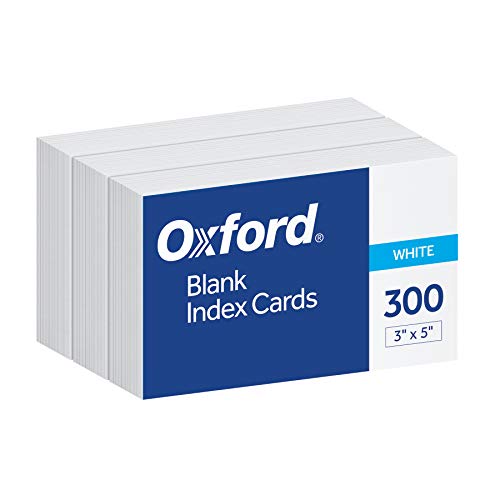
Most blank index cards in this comparison come in two main sizes: 3 x 5 inches and 4 x 6 inches. The 3 x 5 format is the classic flashcard size and fits standard card boxes, recipe holders, and most planner pockets. Products like the Oxford Index Cards 3 x 5 Inches and the Chell 200 Count 3x5 Inch Heavyweight blank index cards use this format, making them easy to integrate into existing study systems.
The 4 x 6 size, seen in the Amazon Basics Blank Index Cards and Oxford Blank Index Cards 4" x 6", offers more room for detailed diagrams, presentation notes, and recipe cards. If portability matters most, stick with 3 x 5. If your notes tend to be longer or include graphs, 4 x 6 may be the better specification match.
Bleed Resistance and Ink Compatibility
A blank index card that bleeds through quickly becomes hard to use on both sides. Manufacturers typically call out bleed resistance in their feature lists. The Chell 200 Count highlights its 74 lb cover weight as ink-resistant, the Olivo Blank Index Cards mention 200 gsm thick cardstock for no ink bleed-through, and the MSKKSM neon set emphasizes 160 gsm paper that prevents marker bleed-through. Standard-weight packs may still accept pencil, ballpoint, and gel pen work, but heavier markers and brush pens are where cardstock weight begins to matter most.
Color-Coding Options
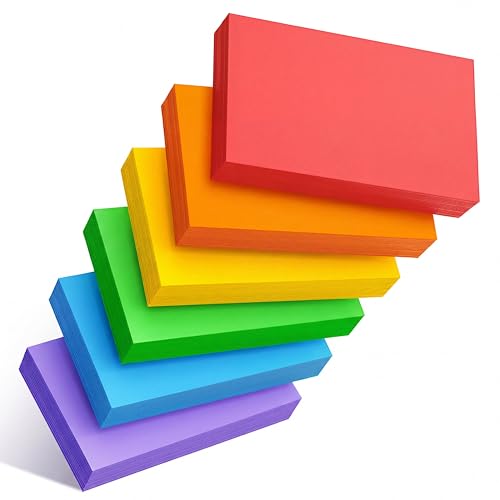
If your study or productivity system relies on color coding, the color variety in a pack matters. Single-color white packs such as the Amazon Basics Blank Index Cards and Oxford Blank Index Cards 4" x 6" keep a clean, professional appearance but offer no built-in subject separation. Multi-color sets like the MSKKSM 300 Count Colored Index Cards, the HEYPLACE 300PCS Colored Index Cards, and the Ciphyfee 300 Sheets Index Cards add visual organization, with the HEYPLACE set offering the broadest eight-color palette in this list.
For minimalist workflows, monochrome blank cards can also be paired with colored pens or stickers if you want a more neutral base. The Oxford Blank Index Cards 3 Inch x 5 Inch pastel packs add a softer color-coding option without neon intensity.
Pack Count and Coverage
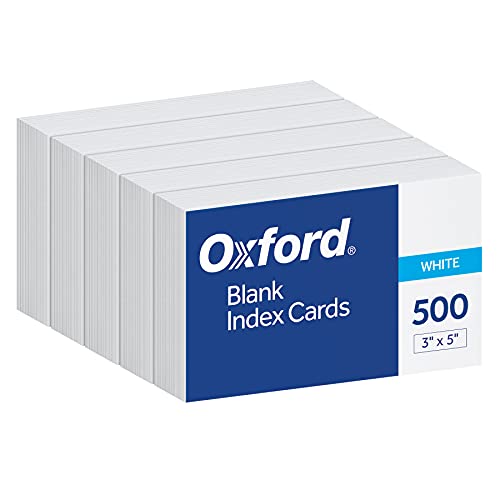
Pack count influences how often you reorder and how much storage the cards take up. The Amazon Basics Blank Index Cards 4" x 6" lead with a 1000-count configuration across two packs, while the Oxford Index Cards 4x6 Pack of 5 and Oxford Index Cards 3 x 5 Inches Pack of 5 each offer 500 cards across five shrink-wrapped bundles. Smaller packs like the Olivo Blank Index Cards 100 Count are easier to store but may require more frequent restocking for high-volume users.
Cut Precision and Stackability
Precision-cut edges help blank cards stack flush, which matters for filing, recipe boxes, and presentation decks. The Amazon Basics listing calls out precision cutting for consistent stacking, and Oxford packs tend to maintain predictable sizing across production runs. If you plan to store cards in a box or binder, look for descriptions that mention uniform cut or commercial-quality card stock.
Final Recommendation
MSKKSM 300 Count Colored Index Cards 3x5 Inch Neon Blank Flash Cards ranks first overall in this specification-based comparison under the published weighted criteria.
The final choice among the best blank index cards depends on the documented features that match your intended use.
It pairs an industry-standard 4 x 6 size with a 1000-count bulk format and consistent cutting, which is well suited to offices, classrooms, and presenters.
For users focused on 3 x 5 study workflows, the Olivo Blank Index Cards 3x5 Unlined Unruled Flash Note Cards deliver a thicker 200 gsm cardstock that handles heavier ink, while the Chell 200 Count 3x5 Inch Heavyweight Blank Index Cards offer a similar heavy feel with a larger 200-count pack. If color coding is central to your study system, the HEYPLACE 300PCS Colored Index Cards provide the broadest eight-color palette, and the MSKKSM 300 Count Colored Index Cards add a brighter neon option on 160 gsm paper. Together, these options represent the top blank index cards and top blank index cards available in this category, each chosen for a specific specification strength rather than a single universal fit.
Frequently Asked Questions
Among the best blank index cards, what size blank index card should I buy for studying?
For most study and flashcard workflows, the 3 x 5 inch format is the most widely supported size. Packs like the Oxford Index Cards 3 x 5 Inches and Chell 200 Count 3x5 fit standard card boxes, recipe holders, and planner pockets. If you need more space for diagrams or longer prompts, the 4 x 6 inch format, seen in the Amazon Basics Blank Index Cards and Oxford Blank Index Cards 4" x 6", is a better specification match.
Are heavier blank index cards better for markers and gel pens?
Heavier cardstock generally resists ink bleed-through more effectively than lighter stock. The Olivo Blank Index Cards specify 200 gsm paper, the MSKKSM neon set uses 160 gsm, and the Chell 200 Count lists 74 lb cover weight, all of which are designed to handle gel pens, highlighters, and markers. Lighter packs can still work well with pencil and ballpoint ink but may show more bleed with heavy markers.
Do color-coded blank index cards help with studying?
Color-coded blank cards can support visual organization by separating subjects, languages, or project phases. Multi-color packs such as the HEYPLACE 300PCS Colored Index Cards, MSKKSM 300 Count Colored Index Cards, and Ciphyfee 300 Sheets Index Cards offer six to eight colors per pack, while pastel options like the Oxford Blank Index Cards pastel sets add a softer palette. If your system depends on visual differentiation, a multi-color blank card pack is worth prioritizing.
How many blank index cards come in a typical pack?
Pack counts vary widely. The Amazon Basics Blank Index Cards 4" x 6" offers 1000 cards across two packs, the Oxford Index Cards Pack of 5 configurations deliver 500 cards, and smaller packs like the Olivo Blank Index Cards 100 Count focus on premium cardstock over volume. Choose based on how quickly you go through cards and how much storage space you have.
What specifications matter most when comparing blank index cards?
The most useful specifications are paper weight, size, bleed resistance, color variety, pack count, and cut precision. Paper weight influences ink behavior and durability, size affects portability and storage, and cut precision helps cards stack cleanly. Reviewing these features across products like the Oxford Blank Index Cards 4" x 6" and the MSKKSM neon set makes it easier to match a blank index card to your specific workflow.