Buying Guide
Choosing the best brass screw terminals starts with identifying the connection format, not simply the metal name. A grounding bus bar, a PCB connector, a marine circuit block, and a cable coupler all use screws differently. The products above are ranked from public specifications and listing features. They were not hands-on tested, and the comparison does not use customer opinions or volatile marketplace information.
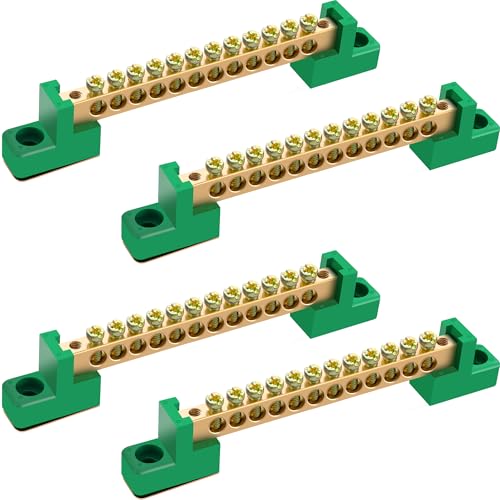
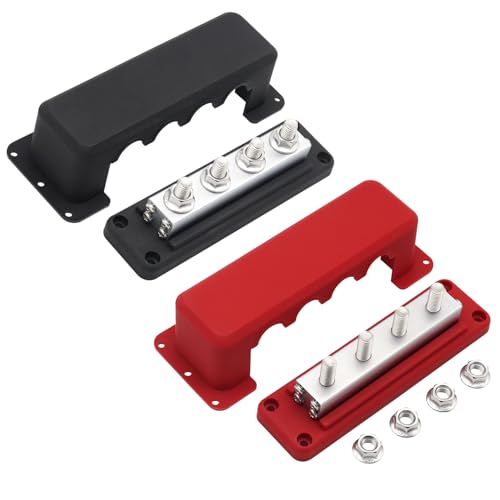
Bus bars are intended to gather multiple grounding or distribution wires in one organized location. The caflower 12-position bar, Tugermoola OLA002-6K, HUAREW, and Bonsicoky products all document multi-position bar layouts with insulated bases or mounting features. The number of positions should match the wires you need to connect, while leaving room for the installation method and enclosure.
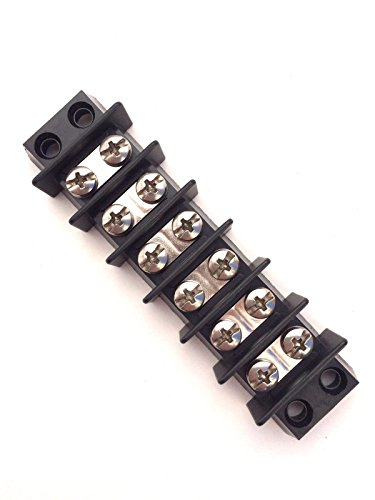
A terminal block is more appropriate when circuits need separate screw positions or a compact double-row arrangement. Meuey Lyot documents a three-position double-row design with separated conductors, a 500V maximum, and a 60A maximum. The Dinkle unit is a six-circuit marine terminal block with a 35A, 600V listing and a 10–18 AWG range. Those ratings are useful selection data, but they do not replace checking the equipment, conductor, enclosure, and applicable electrical requirements.
PCB screw terminals are a different category of connection. Qjaiune uses an 8-pin, 2.54mm format, while XUGERIP documents a 4-pin, 3.81mm through-wall set with plug, sleeve, and socket parts. Confirm the board pitch, pin count, available clearance, and wire size before ordering. A panel bus bar cannot be substituted for a board-mounted connector merely because both use brass contacts and screws.
The phrase brass screw terminals can cover several constructions. Some listings explicitly call the conductor or connector pure brass; others specify nickel-plated brass or tin-plated brass. Plating may be relevant to the intended environment, but the supplied evidence does not establish a universal performance advantage for one finish. The Dinkle and Conext Link products document nickel-plated brass, while BAALA documents pure brass and XUGERIP documents tin-plated brass contacts.
Bonsicoky needs extra care because its title identifies brass while one description point refers to copper contact material. That does not automatically make it unsuitable, but it is a reason to verify the exact conductor specification when brass is a non-negotiable requirement. Material wording should be read together with the full listing rather than inferred from color, brand, or product shape.
Use current, voltage, and wire-size data together
A current rating alone is not enough. Meuey Lyot lists 500V and 60A, Tugermoola lists 40A, Dinkle lists 35A and 600V, Qjaiune lists 150V and 6A, and XUGERIP lists 300V and 8A. These figures describe different product formats and should not be compared as if the terminals were interchangeable.
Wire compatibility is equally important. Dinkle states 10–18 AWG, Qjaiune states 24–12 AWG, BAALA states 14–12 gauge, and Conext Link states 1/0 gauge input and output. A wire that falls outside a listing’s range may not seat correctly under the screw or fit the opening. For bus bars without a supplied wire range or electrical rating, use the available position, screw, mounting, and material information only as a starting point and verify the installation requirements separately.
Consider insulation and mounting
An insulated base can help separate a conductive bar from its mounting surface, but the supplied evidence does not establish a complete installation rating for every product. caflower documents a green insulated base and two mounting holes. Tugermoola and HUAREW also document plastic insulating bases and two-hole mounting. Bonsicoky describes a plastic insulating base and included M4 screws.
For PCB and through-wall products, physical interface details matter more than bus-bar mounting. Qjaiune’s 2.54mm pitch and XUGERIP’s 3.81mm pitch must match the receiving design. XUGERIP also documents PA66 V0 flame-retardant material. For the Conext Link coupler and BAALA splice connectors, cable entry, screw access, and insulation around the completed connection should be checked in the actual installation.
Decide whether a pack size helps
Pack size is practical when several identical connections are required. caflower supplies four 12-position bars, Tugermoola and HUAREW supply four six-position bars, and Bonsicoky supplies two 10-position bars. Qjaiune includes 10 PCB connectors, while BAALA includes 20 screw butt connectors and matching heat-shrink tubes. A single Dinkle terminal block or Conext Link two-pack may be preferable when only one defined connection is needed.
Pack quantity should not override compatibility. A larger pack does not compensate for the wrong pitch, wire range, position count, or rating. Before installation, compare the selected terminal’s documented dimensions and connection format against the enclosure or equipment.
Final recommendation
Tugermoola OLA002-6K 6-Position Grounding Bus Bar ranks first overall in this specification-based comparison under the published weighted criteria.
caflower 12-Position Brass Grounding Bus Bars is the first overall specification-based choice among these best brass screw terminals because it combines the highest documented position count with brass construction, M4 screws, an insulated base, and mounting holes. It is a sensible starting point for compatible panel grounding layouts, provided the missing electrical rating is verified for the intended installation.
For a documented higher electrical rating, Meuey Lyot is the stronger alternative, with listed 500V and 60A maximum figures. Tugermoola is the more clearly specified rated bus bar, with a 40A listing and a four-pack format. Dinkle is the better fit for a marine six-circuit application with a stated 10–18 AWG range and 35A/600V rating.
Among the top brass screw terminals for specialized jobs, Qjaiune is the PCB-oriented option, XUGERIP suits through-wall removable connections, BAALA handles 14–12 gauge screw splices, and Conext Link targets 1/0 gauge cable coupling. Choose by configuration and documented limits rather than by appearance alone.
Frequently Asked Questions
What are the best brass screw terminals for a panel grounding layout?
The caflower, Tugermoola, HUAREW, and Bonsicoky products are the most directly aligned with panel or equipment bus-bar use because their listings document multiple positions, brass construction or brass in the title, and insulating or mounting features. caflower has the highest documented position count. Verify the required current, voltage, conductor size, and mounting method before use.
Are brass screw terminals suitable for PCB projects?
Some are, but only products documenting a PCB format should be considered. Qjaiune specifies an 8-pin, 2.54mm PCB connector with brass pins, plastic insulation, and a 150V/6A listing. XUGERIP documents a 4-pin, 3.81mm through-wall connector set. Match the pitch and pin arrangement to the board; a grounding bus bar is not a PCB substitute.
Which selected terminal supports 1/0 gauge cable?
The Conext Link WCT0N-2 lists 1/0 gauge input and output and uses oversized set screws with deep wire recesses. It is a wire coupler for extending or joining cables, not a multi-position grounding bus bar. The supplied listing does not provide a voltage or current rating, so confirm those requirements separately.
Do all brass screw terminals have a documented electrical rating?
No. Meuey Lyot, Tugermoola, Dinkle, Qjaiune, and XUGERIP provide specific electrical figures, but several bus bars and couplers do not. When a rating is absent, do not infer one from the material, position count, or product appearance. Confirm the manufacturer’s applicable limits and the requirements of the equipment.
What should be checked before installing a screw terminal?
Check the contact material, position or circuit count, wire gauge, screw size, voltage and current ratings, pitch where applicable, insulation, mounting holes, and available clearance. Also verify whether the product is a bus bar, terminal block, PCB connector, butt splice, or cable coupler. This prevents selecting a product that is technically brass but has the wrong connection format.