Buying Guide
The best licorice root capsule supplements are not all the same type. The most important first distinction is between standard licorice root and deglycyrrhizinated licorice, usually abbreviated DGL. Standard-root products in this comparison include Nature’s Way, NOW Foods, Herbal Secrets, and Oregon’s Wild Harvest. DGL options include Swanson High Potency DGL, Nutricost DGL Extract, THORNE GI Relief, Pure Encapsulations DGL Plus, Zazzee, and Vitamatic.
Standard licorice root versus DGL
A standard-root capsule presents licorice root as the central botanical ingredient. Nature’s Way states 900 mg per two-capsule serving, while NOW Foods states 450 mg per capsule and identifies the botanical name Glycyrrhiza glabra. Herbal Secrets also states 450 mg per serving, with one veggie capsule making up that serving. These products are easier to compare when a shopper wants a straightforward root capsule and a stated amount.
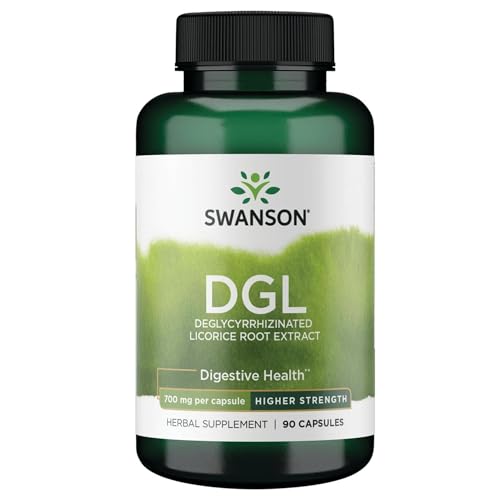
DGL products use a specialized form identified in the listings as deglycyrrhizinated licorice. Swanson provides especially specific information by stating 750 mg and less than 3% glycyrrhizinic acid. Nutricost identifies a 10:1 extract and 500 mg per serving. Zazzee states a 20:1 extract, and Vitamatic states 380 mg of 10:1 DGL extract plus 50 mg of L-glycine per capsule. These extract ratios describe the listed format, but they should not be treated as directly interchangeable with the milligram amounts of standard root.
A milligram number is only useful when its serving basis is clear. Nature’s Way states 900 mg per two capsules, while Herbal Secrets states 450 mg per one capsule. Vitamatic provides amounts per capsule for both DGL extract and L-glycine. Swanson gives a 750 mg formula and instructs users to take one capsule before each meal. Nutricost describes 120 capsules as 120 servings, although the supplied listing does not provide a more detailed schedule.
The selected list includes 90-, 100-, 120-, 180-, and 200-count formats. A larger count does not automatically indicate a more suitable formula; compare it with the stated serving size and whether the product is standard root, DGL, or a multi-botanical blend.
Compare the botanical blend
Single-ingredient products may be easier to evaluate when a shopper wants licorice root without additional botanicals. Nature’s Way, NOW Foods, Herbal Secrets, and Oregon’s Wild Harvest document standard licorice root. Swanson and Nutricost focus on DGL or DGL extract.
Other products deliberately combine ingredients. THORNE GI Relief lists DGL, aloe vera gel, slippery elm bark, and marshmallow root, and says the capsule contents can be mixed with warm water. Pure Encapsulations DGL Plus lists the same general group of botanical ingredients and identifies the product as vegan and gluten-free. Vitamatic adds L-glycine to its DGL extract. These designs can be useful for someone specifically seeking a blend, but they are not equivalent to a single-ingredient capsule.
Review dietary and excipient labels
Dietary labels differ considerably. Nature’s Way is vegan and gluten-free and excludes salt, wheat, corn, soy, dairy, gelatin, and artificial colors, flavors, and preservatives. Zazzee identifies its DGL as USDA Certified Organic, vegan, and non-GMO, with exclusions including wheat, corn, gluten, soy, milk, egg, fish, shellfish, and tree nuts. Vitamatic lists a plant-based, vegetarian, non-GMO, gluten-free formula free of sugar, starch, sodium, soy, yeast, corn, wheat, egg, artificial color, flavor, and preservatives.
Herbal Secrets identifies a veggie capsule and labels the product non-GMO and gluten-free. Pure Encapsulations identifies DGL Plus as vegan and gluten-free and says it excludes common allergens, artificial ingredients, unnecessary ingredients, and GMOs. Oregon’s Wild Harvest takes a different approach by stating that it contains no artificial flavors, colors, excipients, or stearates. If a particular exclusion matters, use the manufacturer-provided label rather than assuming that every capsule in the category shares the same profile.
Look for quality and testing details
Testing and manufacturing information can help distinguish otherwise similar listings. Nutricost DGL Extract states that it is made in an NSF Certified GMP Compliant facility and tested by independent ISO-accredited laboratories. Swanson states that its DGL products are made in GMP-certified facilities and undergo independent third-party purity and potency testing. NOW Foods identifies NPA A-rated GMP certification, including examination of laboratory and formulation processes.
Pure Encapsulations says its products are manufactured and tested to verify potency and purity. THORNE GI Relief is described as third-party certified for label matching and contaminant limits. Herbal Secrets states third-party testing and GMP manufacturing, while Oregon’s Wild Harvest identifies SGS non-GMO verification. These are documentation features, not proof of a particular personal outcome, so compare the specific claim with the level of detail you want.
Consider capsule preferences
Vegan and vegetarian wording is not interchangeable across every listing. Nature’s Way, Zazzee, and Pure Encapsulations explicitly identify vegan formulas. Herbal Secrets and Vitamatic identify veggie or vegetarian formats. Other selected products do not provide a capsule-material statement in the supplied evidence. If capsule composition is important, choose a product with explicit wording.
A capsule-opening option is documented only for THORNE GI Relief, which can be mixed with warm water according to its listing. That makes it distinct from products presented only as conventional capsules. For everyone else, follow the supplied product directions and do not infer a different preparation method from the capsule format alone.
Use product claims carefully
The listings use terms such as digestive support, gastrointestinal wellness, traditional herb, and daily wellness support. Those phrases describe the supplied marketing and product positioning; they do not establish that a supplement will produce a particular result for every person. The most specification-aligned comparison points here are measurable label details: form, amount, extract ratio, capsule count, dietary design, serving directions, and testing statements.
Final Recommendation
Nutricost DGL Extract 500 mg ranks first overall in this specification-based comparison under the published weighted criteria.
Swanson High Potency DGL 750 mg is the first overall specification-based choice because it combines a clearly stated DGL amount, a less-than-3% glycyrrhizinic acid specification, meal-timed directions, and quality-testing documentation. Nutricost DGL Extract is a close alternative for shoppers who prioritize a 10:1 extract, 500 mg serving, and detailed facility and laboratory information.
Among the top licorice root capsule supplements, THORNE GI Relief and Pure Encapsulations DGL Plus stand out for multi-botanical designs, while Zazzee is the clearest organic 20:1 extract option. Vitamatic adds a documented amount of L-glycine, and Nature’s Way offers a well-labeled standard-root formula with vegan and gluten-free positioning. NOW Foods, Herbal Secrets, and Oregon’s Wild Harvest round out the list with different combinations of botanical identity, testing, serving, and excipient information.
The best licorice root capsule supplements depend on whether the priority is standard root, DGL, a concentrated extract, a botanical blend, a vegan capsule, or minimal excipients. Compare the label details that matter to your routine, and consult a qualified healthcare professional before adding a botanical supplement when personal health considerations or other products could affect the decision.
Frequently Asked Questions
Among the best licorice root capsule supplements, what is the difference between licorice root and DGL capsules?
Standard licorice-root products present the root as the primary ingredient, while DGL products identify deglycyrrhizinated licorice. The selected listings show both designs: Nature’s Way and NOW Foods are standard-root examples, while Swanson and Nutricost identify DGL formats. Amounts and extract ratios should be compared only within the same formulation type.
Nutricost DGL Extract states a 10:1 ratio, Vitamatic states a 10:1 ratio, and Zazzee states a 20:1 ratio. Zazzee also identifies USDA Certified Organic status, while Nutricost supplies particularly detailed facility and third-party laboratory information. The ratio alone does not provide a complete comparison because the listed milligram amounts and serving bases differ.
Are the selected licorice capsules vegan or vegetarian?
Some are explicitly labeled. Nature’s Way, Zazzee, and Pure Encapsulations identify vegan formulas. Herbal Secrets identifies veggie capsules, and Vitamatic identifies a vegetarian format. The supplied listings for Swanson, Nutricost DGL Extract, NOW Foods, THORNE, and Oregon’s Wild Harvest do not all provide the same capsule-material detail, so check the product label when this distinction matters.
Which products include other botanicals?
THORNE GI Relief lists aloe vera gel, slippery elm bark, and marshmallow root alongside DGL. Pure Encapsulations DGL Plus also combines DGL with aloe vera, marshmallow root, and slippery elm bark. Vitamatic adds L-glycine to its DGL extract. The other selected products are presented as standard licorice root, DGL, or DGL extract formulas without the same documented blend.
Start by checking whether the stated amount applies to one capsule or a multi-capsule serving. Nature’s Way states 900 mg per two capsules, Herbal Secrets states 450 mg per one capsule, and Vitamatic provides per-capsule amounts. Swanson gives one capsule before each meal, while NOW Foods lists two capsules one to three times daily. Follow each product’s own label directions rather than transferring instructions between formulas.