Buying Guide
The best kiritsuke knives are usually chosen for geometry first, then steel and handle details. A kiritsuke-style blade typically combines a relatively straight cutting edge with an angled or pointed k-tip. That shape favors push cuts, straight slicing, vegetable work, trimming, and detail preparation. It is not automatically the right tool for bones, frozen foods, or hard materials; the FINDKING listing expressly advises avoiding those tasks, and several listings describe use with boneless proteins.
Choose the blade length
Blade length changes the knife’s working character. The selected products range from the compact 6-inch Global to 9-inch models from Mitsumoto Sakari, SANMEIHO, FINDKING, and Grand Sharp. A 6-inch blade can be easier to maneuver for small prep areas and shorter ingredients. An 8-inch or 8.5-inch blade is a middle-ground choice for general home cooking. A 9-inch blade offers more reach for long slicing strokes and larger cutting-board tasks, but it also needs more workspace and deliberate tip control.
Length should not be confused with weight. The Global listing gives a listed weight of the current price, while Mitsumoto Sakari lists the current price. Those specifications suggest very different handling priorities, although the listings do not establish how either knife feels in actual use. Shun’s Dual Core is listed at 0.the current price, giving it a documented lighter profile without relying on an unsupported performance claim.
Compare steel construction
Steel descriptions are useful when they are specific. Shun’s Dual Core uses alternating VG10 and VG2 layers, while the Premier and Classic models name VG-MAX cores with 68 layers of Damascus cladding. Other selected knives use three-layer construction, including the Mitsumoto Sakari 9Cr18MoV model, HEZHEN’s 10Cr15CoMoV model, and Grand Sharp’s AUS10 model.
Hardness figures appear on several listings, but they should be read as product specifications rather than guarantees of edge life. SANMEIHO lists 62 HRC, HEZHEN lists 60±2 HRC, Grand Sharp lists 60±2 HRC, and Dalstrong lists 56+ Rockwell hardness. The Global listing gives a C56-C58 range. These figures help separate the products on paper, but they do not replace appropriate cutting-board choice, storage, cleaning, or sharpening practices.
Look at edge geometry
The listed edge specifications vary. Shun’s three selected models document a 16-degree edge. Dalstrong lists 16-18 degrees per side, HEZHEN lists 15 degrees per side, and SANMEIHO lists a 12-degree edge. Mitsumoto Sakari describes a flatter cutting edge and angled tip but does not provide an edge angle in the supplied specifications.
A narrower stated angle may appeal to shoppers prioritizing fine slicing, but the evidence here does not establish comparative durability or real-world sharpness. The practical takeaway is to match the documented edge to your habits. If you prefer detailed vegetable work and controlled slicing, the Shun, SANMEIHO, or HEZHEN specifications are especially easy to compare. If you want a broader stated range, Dalstrong may be more suitable on paper.
Evaluate the handle
Handle shape affects how confidently a shopper can interpret the listing. Octagonal handles appear on Shun Dual Core, Mitsumoto Sakari, SANMEIHO, HEZHEN, Grand Sharp, and FINDKING Dynasty. Several use wood or wood-composite materials, while SANMEIHO combines G10 with rosewood and Dalstrong uses a black G10 handle with full tang and triple rivets.
Shun’s Dual Core is specifically described for left- and right-handed users. HEZHEN also states that its 15-degree-per-side edge is suitable for both right- and left-handed users, while the FINDKING listing emphasizes blade-angle control from its African rosewood octagonal handle. These are useful documented distinctions, but they should not be treated as substitutes for holding a knife before purchase.
Consider finish and storage
Hammered finishes are common in this selection. Shun Premier, Mitsumoto Sakari, SANMEIHO, HEZHEN, FINDKING Dynasty, and other listings describe textured surfaces intended to reduce drag or food contact. Because those are listing claims, this comparison treats them as feature differences rather than verified performance results.
Storage is another practical point. Shun Dual Core includes a sheath, HEZHEN lists a wooden knife sheath, and the Dalstrong listing also includes a sheath. Several other products come in gift boxes. A box can help with presentation, but a sheath or other protective storage detail is more directly relevant to drawer or transport safety. The supplied evidence does not establish whether every package is suitable for long-term storage.
Match the knife to your prep
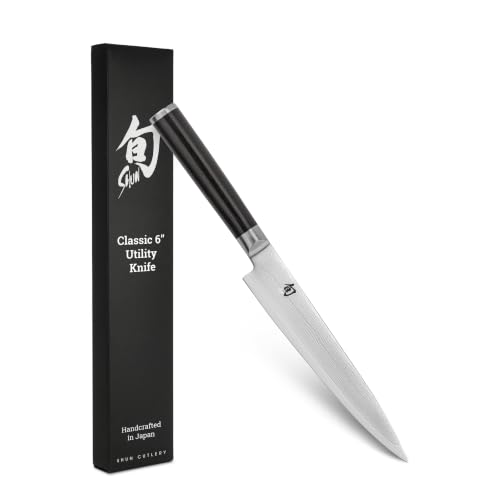
For a compact option, the Global 6-inch model is the clearest fit. For a Japanese-made choice with detailed steel and edge information, Shun Dual Core, Premier, and Classic are the most specification-aligned documented options. For a full-tang construction, Dalstrong is the selected model with the clearest structural description. For longer blades, Mitsumoto Sakari, SANMEIHO, FINDKING Dynasty, and Grand Sharp provide 9-inch alternatives with different steel and finish claims.
Use the product’s documented limitations as part of the decision. The listings generally focus on vegetables, fish, boneless meat, herbs, fruit, and sushi-style preparation. They do not support using these knives on bones, frozen foods, or other hard materials. In every case, follow the individual manufacturer’s care directions.
Final Recommendation
Shun Dual Core 8-inch Kiritsuke ranks first overall in this specification-based comparison under the published weighted criteria.
Shun Dual Core is the first overall specification-based choice among these best kiritsuke knives. Its combination of an 8-inch kiritsuke purpose, 71 alternating VG10 and VG2 layers, a stated 16-degree edge, light listed weight, ambidextrous octagonal handle, sheath, and sharpening support gives it the most complete evidence profile in this comparison.
The Shun Premier is a close alternative for shoppers who specifically want a hammered finish, while the Shun Classic suits those who prefer a D-shaped handle. Choose the Global if compact size matters most. Dalstrong is the clearest full-tang option. For longer blades, Mitsumoto Sakari and SANMEIHO offer detailed geometry and steel specifications, while HEZHEN and Grand Sharp provide strong three-layer constructions with octagonal wood handles. These top kiritsuke knives are not interchangeable: blade length, edge claims, handle style, and storage details should decide the final choice.
Frequently Asked Questions
What are the best kiritsuke knives for a first purchase?
The Shun Classic, FINDKING Dynasty, and HEZHEN are reasonable specification-based starting points because their listings clearly identify the blade format, handle design, and intended kitchen tasks. The best fit depends on whether you prefer an 8-inch or 9-inch blade, a D-shaped or octagonal handle, and a more premium layered construction.
Is a 6-inch kiritsuke useful?
The Global 40th Anniversary 6-inch Kiritsuke is the selected compact example. Its shorter format may suit smaller prep areas or users who prefer a lighter knife. It will not provide the same reach as the 8.5- and 9-inch options, so consider the ingredients and board space you typically use.
What steel details matter most when comparing these knives?
Look for the named steel, construction, hardness claim, and edge specification together. The selected listings include VG10, VG-MAX, VG2, CROMOVA 18, 9Cr18MoV, 10Cr15CoMoV, 10Cr15MoV, and AUS10. These details support comparison, but they do not prove one knife will outperform another in every kitchen.
Can a kiritsuke knife replace a chef’s knife?
Several selected products are described as multipurpose chef knives for vegetables, fish, fruit, herbs, and boneless meat. That makes them plausible main prep knives for some cooks. However, the supplied evidence does not support using them on bones or frozen foods, and the pointed k-tip may require more deliberate handling than a rounded chef-knife tip.
Should I choose an octagonal or Western-style handle?
An octagonal handle appears on many Japanese-style selections and is associated in the listings with grip or blade-angle control. Dalstrong instead documents a full-tang, triple-riveted G10 handle. Choose based on the construction and grip description that best matches your preference; the supplied listing data cannot determine which shape will feel more comfortable in your hand.