Buying Guide
Choosing among the best cast iron sump pumps starts with the pit, discharge plumbing, expected water volume, and desired control method. This is a specification-based comparison using public listing data, not a hands-on test or a summary of customer opinions. Cast iron can provide a substantial housing for a permanently installed pump, but the material alone does not determine whether a model fits your system.
Match capacity to the installation
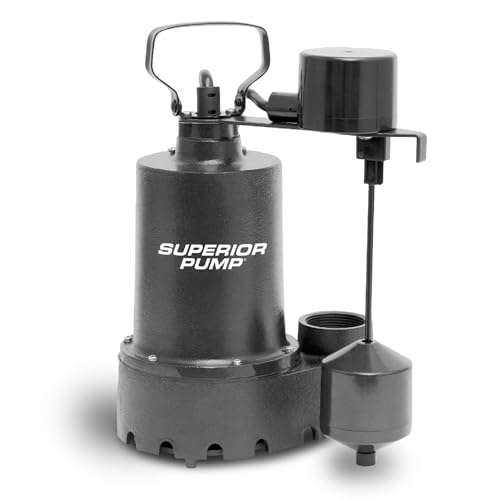
Flow figures are usually stated at a particular lift. Zero-lift capacity is not the same as water delivered through a real discharge line. The Glentronics CIS-33V lists 4,000 GPH at zero feet and 3,200 GPH at 10 feet. The Superior Pump 92341 lists up to 2,760 GPH and a 25-foot vertical lift, while the Little Giant 506158 lists 2,760 GPH at five feet and an 18-foot shut-off specification.
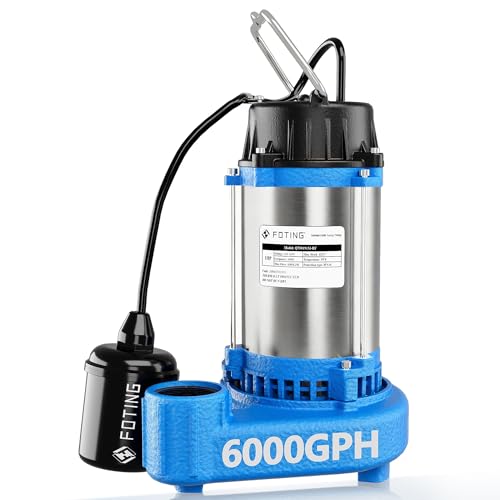
Higher-capacity options include the Wayne CDU800 at up to 5,100 GPH, the Wayne CDU980E at up to 5,490 GPH, and the FOTING 1 HP model at up to 6,000 GPH. The FOTING listing also states a 32-foot lift. These figures may suit heavy rainfall, snow melt, or a larger basin, but a larger motor is not automatically the right choice. Check the discharge route, actual lift, pipe diameter, and electrical requirements first.
Choose a switch design
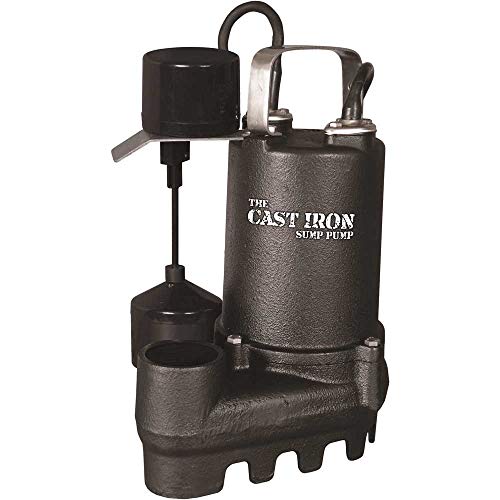
Automatic switching lets the pump respond as the water level changes. Vertical switches, documented on the Wayne CDU800, Wayne CDU980E, and Superior Pump 92341, may help where a pit has limited horizontal room. The Wayne listings describe their switches as tested to one million cycles, while the Superior 92341 supplies switch-on and switch-off points.
The Zoeller M63 and M98 use built-in snap-action float switches. The Little Giant 506158 uses a pressure-activated diaphragm switch with listed on and off ranges. The Superior Pump 92551 uses a fully adjustable automatic switch in a pedestal design. Tethered switches appear on the FOTING model and need enough room for the float to move without interference.
Compare housing and impeller details
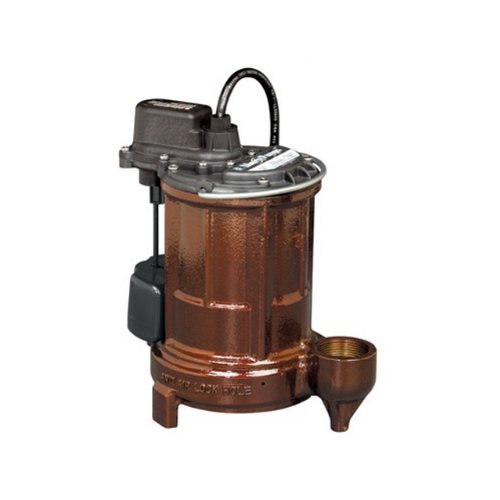
The Wayne pumps combine cast iron and stainless steel construction. Zoeller’s M63 and M98 listings describe oil-filled motors and cast iron housings; the M98 also lists stainless steel hardware. The Liberty 257 emphasizes a one-piece housing with an epoxy powder-coat finish.
Impeller design matters when the sump may contain sediment or small solids. Vortex or non-clogging descriptions appear on the Zoeller M63 and M98, the Wayne models’ top-suction designs, the Glentronics CIS-33V, and the Little Giant 506158. The Glentronics listing specifically states that its cast iron vortex impeller can pass 1/2-inch solids. Do not assume every sump pump has the same solids capability; use the stated limit for the exact model.
Submersible or pedestal?
Most products here are submersible pumps designed to sit in the sump basin. That arrangement is represented by the Wayne, Zoeller, Liberty, Glentronics, Little Giant, and Superior 92341 models. The Superior Pump 92551 is a pedestal pump, so its motor sits above the water while the pump assembly extends into the pit.
A pedestal model can work when the pit supports it and access above the basin is available. It may not suit a covered pit or an installation with limited overhead clearance. Confirm physical dimensions and switch movement area before buying. The supplied Glentronics dimensions appear inconsistent, so verify those measurements before fitting it into a tight basin.
Check discharge and cord requirements
Many selected pumps use a 1-1/2-inch discharge, including the Wayne CDU800, Wayne CDU980E, Superior Pump 92341, Superior Pump 92551, Little Giant 506158, and FOTING 1 HP model. The Liberty 257 also lists a 1.5-inch size.
Cord length can affect placement. The Zoeller M63 and M98 include nine-foot cords, while several Wayne and Superior models list 10-foot cords. Do not use the cord or float switch as a lifting handle. Follow the installation instructions and verify that the outlet, check valve, discharge pipe, and basin dimensions are compatible.
Consider protection and warranty support
Thermal or overload protection is explicitly documented for the Little Giant 506158, Superior Pump 92551, and FOTING 1 HP model. The FOTING listing also describes air venting to help prevent air lock. The Wayne CDU800 and CDU980E emphasize top suction, while the Zoeller listings describe oil-filled motors for heat dissipation. These are specification clues, not guarantees of service life or performance in every installation.
Warranty terms differ. The Wayne CDU980E and Zoeller M63 list five-year coverage. The Wayne CDU800, Superior Pump 92341, Glentronics CIS-33V, and Little Giant 506158 list three-year coverage. Liberty lists two years. Read exclusions and installation requirements before treating warranty length as decisive.
Final recommendation
Wayne CDU980E 3/4 HP Sump Pump ranks first overall in this specification-based comparison.
It is the first overall specification-based choice among the best cast iron sump pumps here. Its 3/4 HP motor, 5,490 GPH rating, vertical float switch, top-suction design, cast iron and stainless steel construction, and five-year warranty provide a well-rounded documented package for demanding basement drainage.
The Wayne CDU800 is a strong alternative when 1/2 HP capacity is sufficient, while the Zoeller M63 suits buyers who prioritize an LED power plug, vortex impeller, factory testing, and a stated long warranty. For a documented lift comparison, the Superior Pump 92341 is practical. The Superior Pump 92551 is the distinct choice for a compatible pedestal pit, and the FOTING 1 HP model is aligned with applications calling for higher listed flow and lift.
The top cast iron sump pumps are not interchangeable in every basin. Confirm pit dimensions, switch clearance, discharge size, lift, and intended use before installation. This ranking is based on supplied public listing specifications rather than hands-on testing or customer opinions.
Frequently Asked Questions
What should I check before choosing among the best cast iron sump pumps?
Measure the basin, identify the vertical lift from the pump to the discharge point, check the existing discharge diameter, and determine how much room the float switch needs. Also compare whether the pump is submersible or pedestal and whether its documented application is ordinary sump drainage, sewage, or effluent handling.
Are higher GPH ratings always better for a basement sump?
No. A higher rating may help with heavy inflow, but actual output changes with lift and plumbing resistance. The Glentronics CIS-33V lists different flow figures at zero and 10 feet. Match the pump to the lift and discharge arrangement rather than comparing only the headline GPH number.
Which selected pump is suited to a narrow sump pit?
The Wayne CDU800 and Wayne CDU980E document vertical float switches and describe those switches as fitting narrow sump pits. The Superior Pump 92341 also uses a vertical float switch. The basin still needs clearance for the pump body, discharge pipe, and unobstructed switch movement.
What is the difference between a submersible and pedestal sump pump?
A submersible pump operates in the basin, while a pedestal model places its motor above the water. The Superior Pump 92551 is the selected pedestal example. Its layout may work where above-pit access is available, but it may not fit a covered or space-constrained basin.
Do cast iron sump pumps handle solids automatically?
Not automatically. Some selected models document vortex or non-clogging designs, and the Glentronics CIS-33V specifically states that it can pass 1/2-inch solids. Other pumps may have different limits. Use the manufacturer’s specification for the exact model and do not assume that a cast iron housing indicates a particular solids capacity.